Category: P shot

  • Movember Men’s Health Checks: 5 Checks Worth Booking This Month

    Movember Men’s Health Checks: 5 Checks Worth Booking This Month

    ✅Medically reviewed

    Cars receive an annual MOT, yet many men go years without a routine health check. Movember men’s health checks give that habit a deadline. Every November, the UK campaign spotlights prostate cancer, testicular cancer and male suicide. Movember 2026 also offers something practical: a calendar prompt to book overdue appointments.

    Delay carries a cost. Prostate cancer is the most common cancer in UK men. Testicular cancer mainly affects men aged 15 to 49. High blood pressure, raised cholesterol and type 2 diabetes often cause no symptoms for years. Low mood and anxiety also build quietly. A short appointment can catch several of these problems early.

    This guide explains five checks worth booking. Each section describes what the check measures, who needs it and what the result can and cannot show. Sources include the NHS, NICE, the UK National Screening Committee and peer-reviewed research. The aim is informed choice, not alarm. Some checks suit every adult man. Others, such as the PSA test, involve real trade-offs that need a clinician’s guidance first.

    Why Movember 2026 Prompts a Men’s Health Check-Up

    Movember began in Australia in 2003 and now runs across the UK each November. The campaign funds prostate cancer, testicular cancer and mental health work. A separate Men’s Health Week runs in June, organised by the Men’s Health Forum. November therefore offers a second annual reminder. Movember men’s health checks turn that awareness into booked appointments.

    What Does a Men’s Health Check Include?

    A men’s health check-up combines a conversation with a few measurements. Age, family history and symptoms shape the exact content. A typical appointment covers:

    • Blood pressure, pulse, height, weight and body mass index
    • A cholesterol test and an HbA1c blood sugar test
    • Smoking, alcohol, activity and diet
    • Mood, sleep and stress
    • A discussion of urinary or sexual symptoms
    • Decisions on PSA testing or a testicular examination

    The NHS Health Check follows a similar pattern. Adults aged 40 to 74 receive an invitation every five years. Men with heart disease, stroke or diabetes follow separate care pathways. The check estimates the risk of heart disease, stroke, kidney disease, type 2 diabetes and dementia. Men who miss an invitation can ask the GP practice about eligibility.

    Check 1: Prostate Check (PSA Test)

    The prostate is a walnut-sized gland below the bladder. It surrounds the urethra, so enlargement often changes urinary flow. Early prostate cancer usually causes no symptoms. Because of this silence, the PSA test attracts more debate than any other check in this guide.

    Who Can Request a PSA Test

    NHS guidance lets men aged 50 and over request a PSA test from a GP. The GP first explains the benefits and risks. Prostate Cancer UK advises Black men and men with a close family history to discuss testing from age 45. Men of any age with urinary symptoms or blood in the urine should see a GP promptly.

    What a PSA Test Measures

    PSA is a protein that the prostate makes. A blood test measures the level. Prostate cancer raises PSA. Benign enlargement, infection and inflammation also raise it. Ejaculation and vigorous exercise, including cycling, can push the level up for about 48 hours. NHS advice therefore asks men to avoid both before sampling.

    Benefits and Limits of PSA Testing

    Potential Benefit

    A large European screening trial (ERSPC) reported a 20% relative fall in prostate cancer deaths after 16 years. Researchers attribute this effect to earlier treatment of aggressive cancers.

    Potential Harm

    A raised PSA result does not confirm cancer, and a normal result does not exclude it. NHS information states that roughly three in four men with a raised PSA do not have prostate cancer. Raised results trigger MRI scans and sometimes biopsies. Biopsies carry risks of infection and bleeding. Treating slow-growing cancers that never threatened life can cause incontinence and erectile dysfunction. Clinicians call this overdiagnosis.

    When Should Men Start Prostate Screening?

    No NHS population screening programme for prostate cancer exists. The UK National Screening Committee confirmed in 2026 that population screening should not begin. Overdiagnosis and overtreatment, in the committee’s judgement, outweigh the benefits. The committee supports targeted screening only for men with a confirmed BRCA2 gene variant. Evidence remains under review, including results from the TRANSFORM trial.

    Men’s health screening in the UK therefore stays targeted rather than universal. Timing depends on individual risk. Informed requests start at 50 on the NHS and at 45 for higher-risk groups, according to Prostate Cancer UK.

    Check 2: Testicular Self-Examination

    Testicular cancer is uncommon. It mainly affects younger men, with most cases appearing between ages 15 and 49. Cancer Research UK reports high survival when diagnosis comes early. The NHS runs no testicular cancer screening programme. Testicular self-examination therefore works as an awareness habit rather than a formal test.

    How to Examine the Testicles

    NHS guidance suggests checking after a warm bath or shower, when the scrotal skin relaxes. The steps are simple:

    1. Hold the scrotum and examine one testicle at a time.
    2. Roll the testicle gently between thumb and fingers.
    3. Feel for lumps, swelling or areas of hardness.
    4. Locate the soft, cord-like epididymis at the back, which is normal.
    5. Repeat the check monthly.

    One testicle often hangs lower or feels slightly different. This variation is normal. A change from the usual pattern matters more than the pattern itself.

    When to See a GP

    A GP assessment suits any of the following:

    • Any new lump or swelling
    • Changes in size, shape or firmness
    • Heaviness in the scrotum
    • A dull ache that does not settle

    Most lumps have benign causes, such as cysts or infection. An examination and ultrasound scan separate benign from serious causes. Sudden, severe testicular pain is an emergency. Testicular torsion cuts off blood supply and needs surgery within hours. Men with this pain should attend A&E or call 999.

    Check 3: Blood Pressure Check for Men and Cholesterol Test

    Blood Pressure Check for Men

    High blood pressure rarely causes symptoms. It raises the risk of heart attack, stroke, kidney disease and vascular dementia. NHS thresholds define high blood pressure as 140/90 mmHg or above in clinic, or 135/85 mmHg at home. The ideal range sits between 90/60 and 120/80 mmHg.

    NICE guideline NG136 advises confirming a high clinic reading with home or 24-hour monitoring. Many community pharmacies in England offer free checks to adults aged 40 and over. A blood pressure test takes minutes and needs no preparation beyond resting first. Validated home monitors also give readings in familiar surroundings, which helps confirm a high result.

    Cholesterol Test

    A cholesterol test, or lipid profile, measures total cholesterol, LDL, HDL and triglycerides. Non-fasting samples usually suffice. NHS guidance suggests total cholesterol of 5 mmol/L or below for most adults. LDL should sit at 3 mmol/L or below.

    Clinicians combine the result with age, smoking status, blood pressure and family history. The QRISK3 tool then estimates ten-year cardiovascular risk. NICE guideline NG238 advises discussing statins when that risk reaches 10% or higher.

    A single reading has limits. Anxiety can lift clinic blood pressure, and diet or illness can shift lipid values. Repeat testing confirms a pattern before treatment begins.

    Check 4: Diabetes Test (HbA1c)

    Type 2 diabetes often develops without obvious symptoms, so prediabetes frequently goes unnoticed without testing. An HbA1c test measures average blood glucose over the previous two to three months. The test needs no fasting. NHS thresholds classify 48 mmol/mol or above as diabetes and 42 to 47 mmol/mol as prediabetes. A clinician usually repeats an abnormal result in a man without symptoms before confirming the diagnosis.

    Symptoms include excessive thirst, frequent urination, tiredness, unexplained weight loss and slow wound healing. Recurrent genital thrush also occurs. Risk rises with age, excess weight, a family history of diabetes and South Asian or Black African-Caribbean ethnicity.

    Lifestyle changes reduce the risk of progression from prediabetes to type 2 diabetes. Weight loss, a balanced diet and regular activity all contribute. HbA1c can mislead in anaemia and some inherited haemoglobin variants. Clinicians then choose a different glucose test.

    Diabetes also damages blood vessels and nerves. Erectile problems sometimes appear before the diagnosis.

    Check 5: Men’s Mental Health Check

    Office for National Statistics data show that men account for about three in four suicides in England and Wales. A men’s mental health check needs no equipment. Clinicians ask about mood, anxiety, sleep, appetite, alcohol use and concentration. Validated questionnaires, including PHQ-9 for depression and GAD-7 for anxiety, structure the conversation.

    Men often present differently from the textbook picture. Irritability, anger, heavier drinking, risk-taking and physical complaints can signal depression. Sadness may not feature at all.

    A questionnaire score guides a conversation; it does not diagnose depression. NICE guideline NG222 sets out assessment and treatment options.

    Two men talking while walking along a canal path, illustrating a men’s mental health check-in
    Talking early makes support easier to reach.

    Where to Find Support

    NHS Talking Therapies accept self-referral in England without a GP appointment. Samaritans answer calls free on 116 123, at any hour. NHS 111 offers a mental health option. Anyone in immediate danger should call 999 or attend A&E.

    How Often Should Men Get a Health Check?
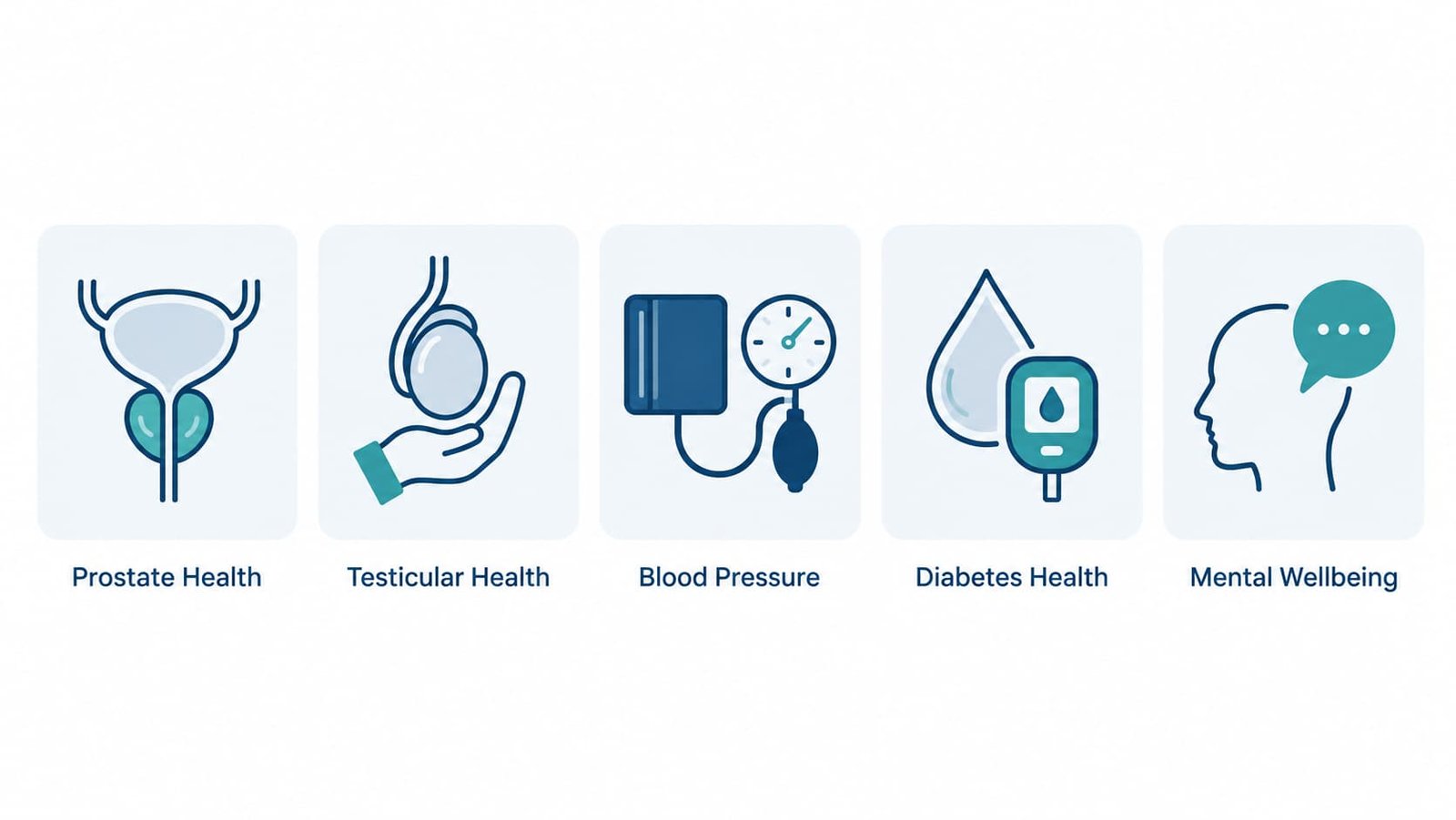
    Icon row showing five men’s health checks: prostate, testicular, blood pressure, diabetes and mental health
    The five checks in this guide, from prostate risk to mental health.

    Frequency depends on age, risk and results. The table summarises common UK guidance.

    CheckSuggested frequencyMain source
    Testicular self-examinationMonthlyNHS
    Blood pressureAt least every five years from age 40, more often if highNHS
    Cholesterol and HbA1cEvery five years through the NHS Health Check, sooner with risk factorsNHS
    PSA testIndividual choice from age 50 (45 for higher risk) after discussionNHS, Prostate Cancer UK
    Mental healthWhenever mood, sleep or drinking changesNICE

    Health checks for men over 40 deserve particular attention. Cardiovascular and metabolic risks rise with age, and NHS Health Check eligibility starts at 40. Men with high readings, a strong family history or diabetes need more frequent monitoring. Movember men’s health checks work best as the start of a recurring habit rather than a one-off event.

    Private Men’s Health Check UK: NHS and Private Options

    What a Private Check Offers

    A private men’s health check UK typically bundles blood pressure, body measurements and blood tests into one visit. Panels often add liver, kidney and hormone tests. Appointments usually arrive faster than NHS invitations.

    Limitations deserve equal attention. Broad panels can flag borderline results of uncertain meaning. Those findings may trigger further tests and anxiety without improving health outcomes. Men should also share private results with the GP so records stay complete.

    How to Find and Book a Men’s Health Check

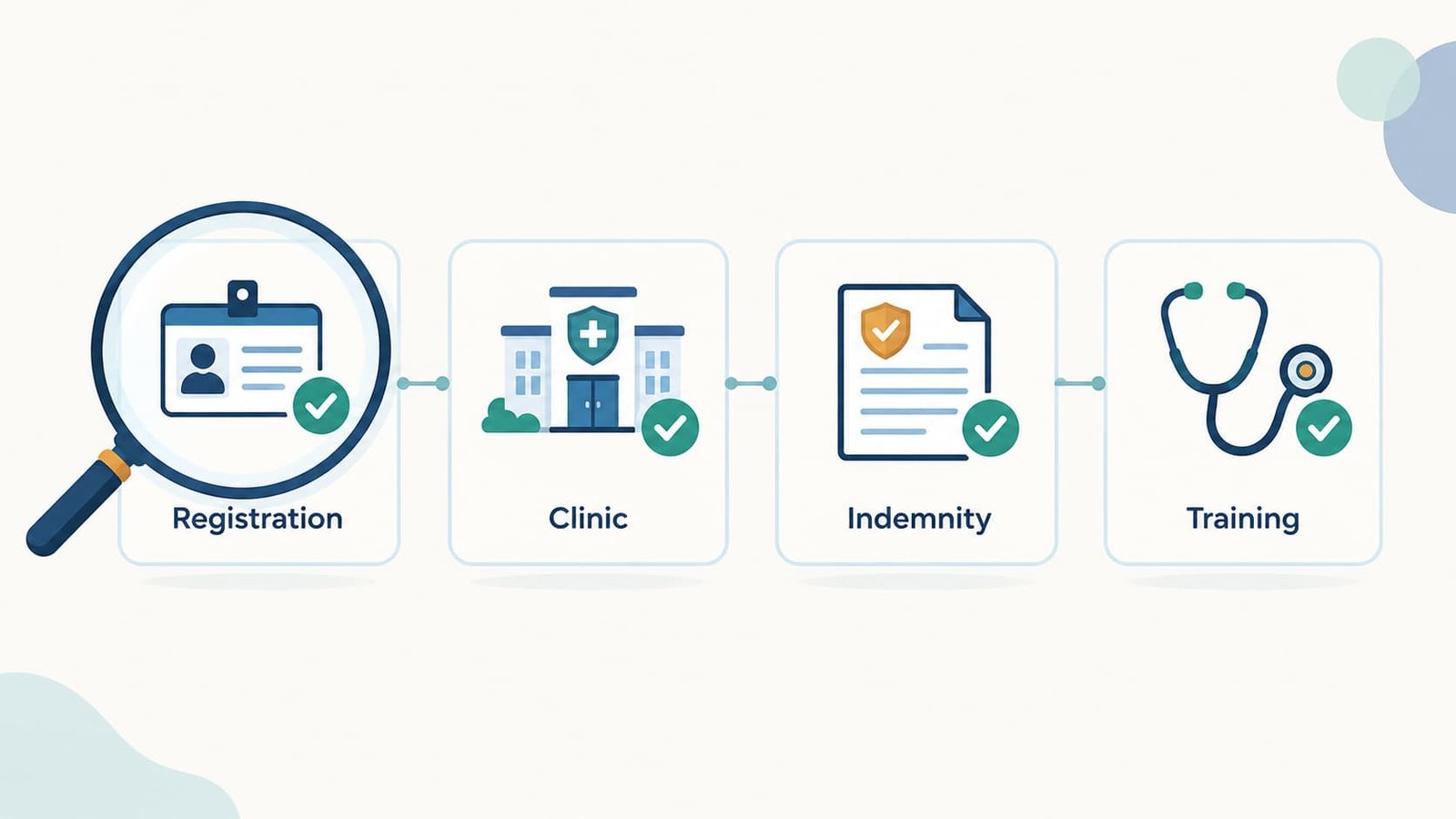
    Men searching for a men’s health check near me can start with a GP practice, pharmacy or private clinic. Private providers in England should hold Care Quality Commission registration. The General Medical Council register confirms a doctor’s qualifications. Before booking, men can ask which tests the package includes and how the clinic handles abnormal results.

    To book a men’s health check, most NHS practices offer online or telephone booking. Private clinics list direct booking options online. Movember men’s health checks fit either route.

    Erectile Symptoms, Heart Health and P Shot Treatment

    Consulting room desk with blood pressure monitor, stethoscope and blood sample tube for Movember men’s health checks
    Blood pressure, cholesterol and HbA1c checks form part of any erectile assessment.

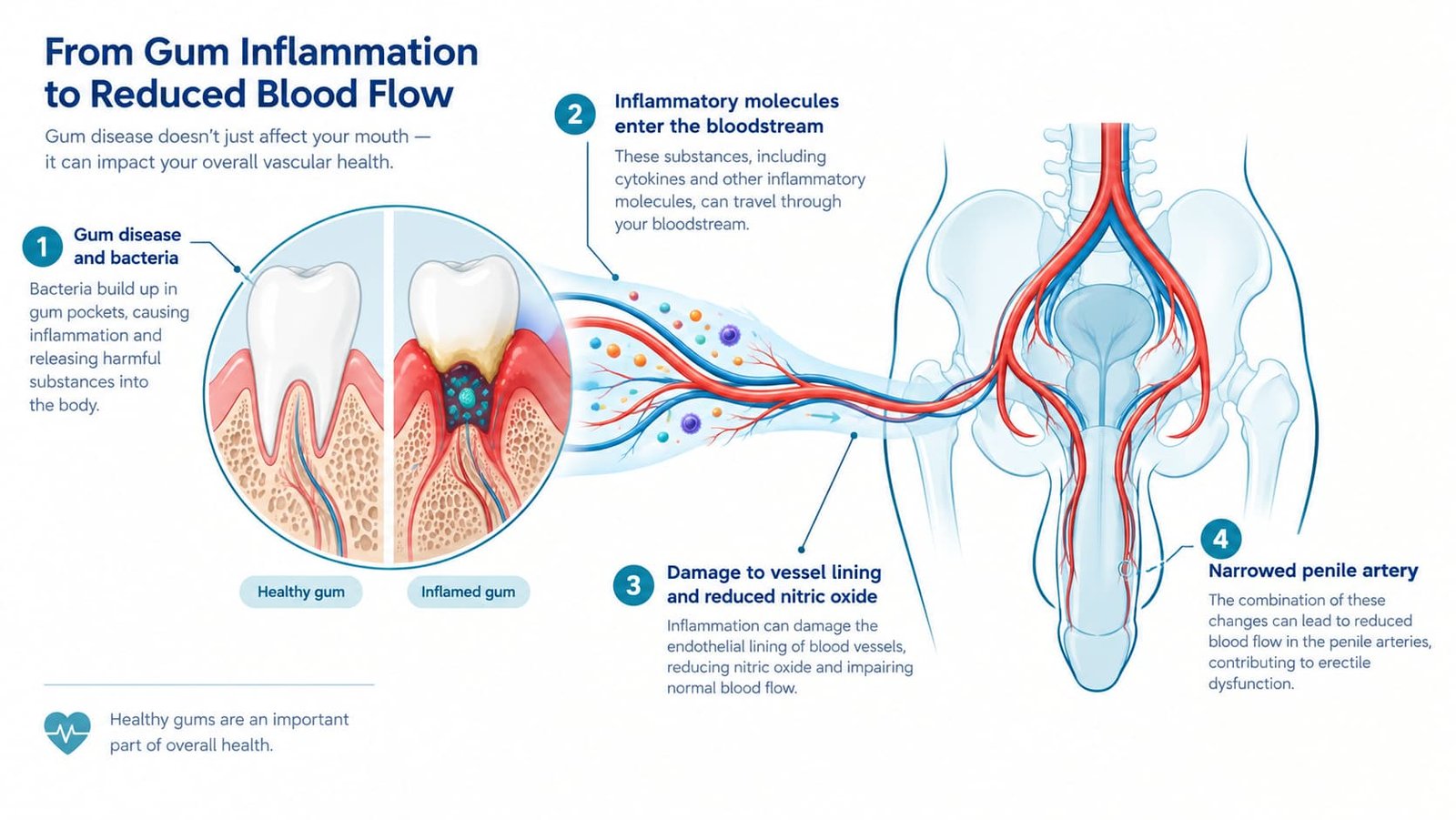
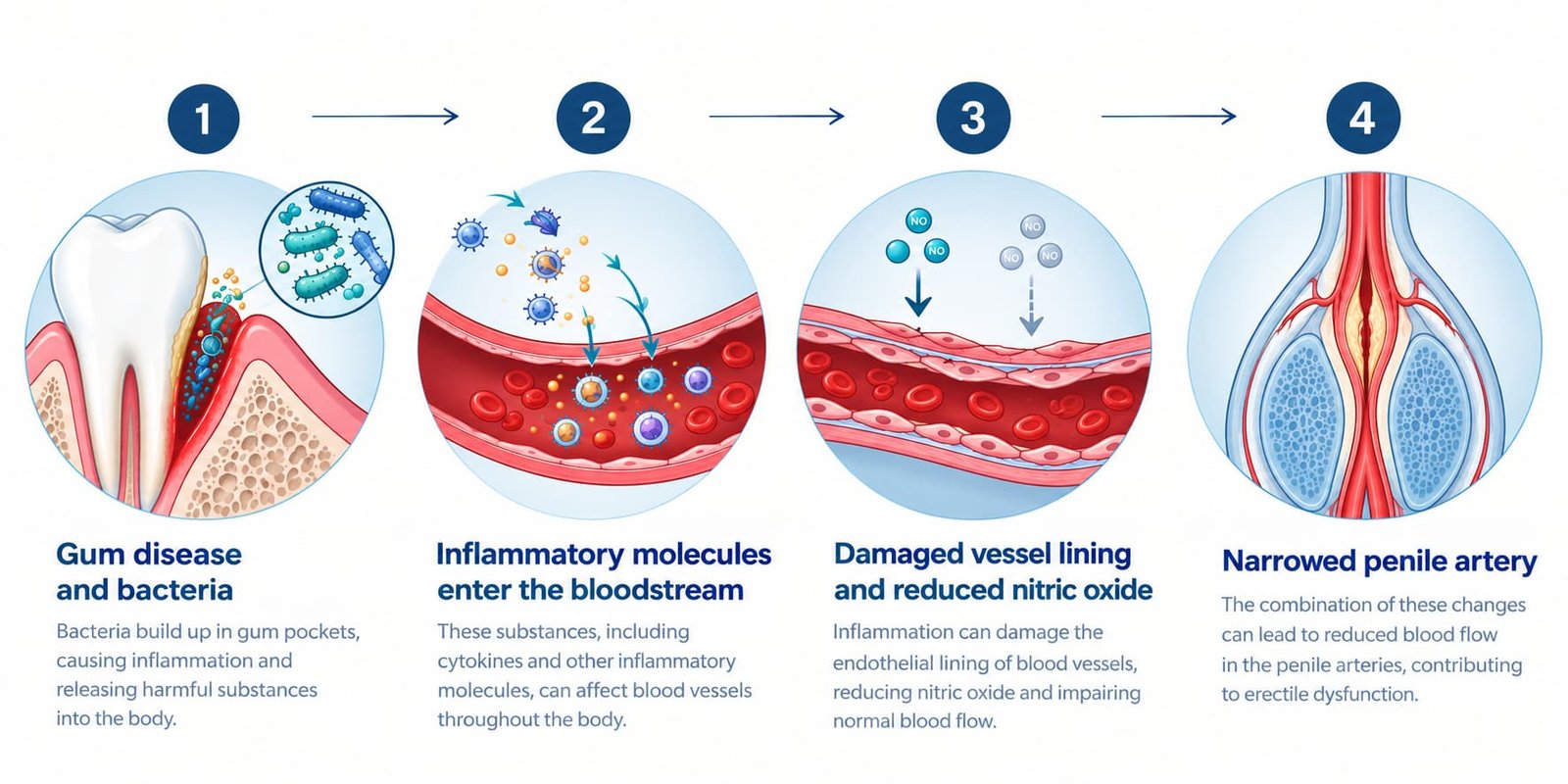
    Vascular or metabolic disease can first appear as erectile dysfunction. A JAMA analysis of the Prostate Cancer Prevention Trial linked new erectile dysfunction with later cardiovascular events. Blood pressure, cholesterol and HbA1c checks therefore form part of any sound assessment of erectile problems. Movember men’s health checks give men a natural moment to raise these symptoms.

    NHS guidance lists lifestyle changes and PDE5 inhibitors, such as sildenafil, as standard first-line options. Some men explore regenerative approaches. P Shot treatment, also called the Priapus shot, injects platelet-rich plasma into penile tissue. Evidence comes mainly from small trials, and long-term benefit remains uncertain. Major UK guidance does not list PRP injection among standard erectile dysfunction treatments. Results vary, and no outcome is guaranteed.

    Pshots clinic UK is a Harley Street clinic in Marylebone. Dr Syed Nadeem Abbas (MBBS, MRCS RCS Edinburgh, MRCGP) leads it. The clinic provides P Shot UK services, including Priapus shot London appointments, after medical assessment. A full health check should precede any decision about P Shot treatment.

    Frequently Asked Questions

    What Are Movember Men’s Health Checks?

    Movember men’s health checks are routine checks that men book during the November awareness month. Common components include blood pressure, cholesterol, HbA1c, testicular awareness, a prostate risk discussion and mental health. Any GP practice, pharmacy or clinic can provide the underlying checks.

    Does a Normal PSA Result Rule Out Prostate Cancer?

    No. NHS guidance states that some men with prostate cancer have a normal PSA result. A GP also considers symptoms, age and family history. Repeat testing or an MRI scan may follow when concern persists.

    Can a Private Check Replace the NHS Health Check?

    A private check can duplicate many NHS Health Check measurements. Private results do not enter NHS records automatically. Men should share the report with the GP to keep care joined up.

    Do Men Need Symptoms Before Booking a Health Check?

    No. Several checks, including blood pressure and HbA1c, target silent conditions. A testicular lump, blood in the urine or persistent low mood needs prompt assessment instead.

    Is P Shot Treatment Part of a Men’s Health Check?

    No. A health check assesses risk and screens for disease. P Shot treatment addresses erectile symptoms and sits outside standard NHS guidance. A clinician can explain the evidence, limits and alternatives.

    Conclusion

    Movember offers a rare shared prompt for men’s health. Five checks cover the largest preventable risks. Those checks span prostate risk, testicular awareness, blood pressure, cholesterol, HbA1c and mental health. Each carries limits. A PSA test can mislead, and a single blood pressure reading can mislead too.

    Informed decisions beat both avoidance and over-testing. Men who understand what each check measures can weigh benefits and harms with a clinician. Movember men’s health checks supply the deadline. Evidence supplies the guide.

    Which overdue check will move from intention to calendar before November ends?

    Read more:

    Tests to Take Before a P Shot: HbA1c, Testosterone, Lipids and Blood Pressure

    Can Type 2 Diabetes-Related Erectile Dysfunction Be Reversed? What Research Shows

    Dr Syed Nadeem Abbas, MBBS, MRCSEd, MSc Aesthetic Plastic Surgery (Distinction) Medical Director, Pshot Clinic | CQC Regulated | Monday to Saturday 10:00–18:00 +44 7955 836986 

  • Priapus Shot in London and Enlarged Prostate Tablets: What the Evidence Shows

    Priapus Shot in London and Enlarged Prostate Tablets: What the Evidence Shows

    ✅Medically reviewed

    An enlarged prostate can disrupt sleep, and its treatment can sometimes disrupt sexual confidence. Benign prostatic hyperplasia (BPH) affects many men from midlife onward. Tablets ease a weak stream and night-time toilet trips for most patients. Yet some men notice a second problem within weeks. Erections feel weaker, desire falls, or ejaculation changes.

    Men in this position often search online for answers. Many type Priapus Shot London into a search bar and hope for a quick fix. A careful, evidence-based reply serves such men better than a sales pitch.

    This guide explains how BPH medicines affect sexual function. Later sections review research on platelet-rich plasma (PRP) for erectile dysfunction (ED). Clear limits follow: what remains unproven, who may benefit, and when to seek review. The aim is an informed decision, not a rushed one.

    Understanding BPH and Enlarged Prostate Tablets

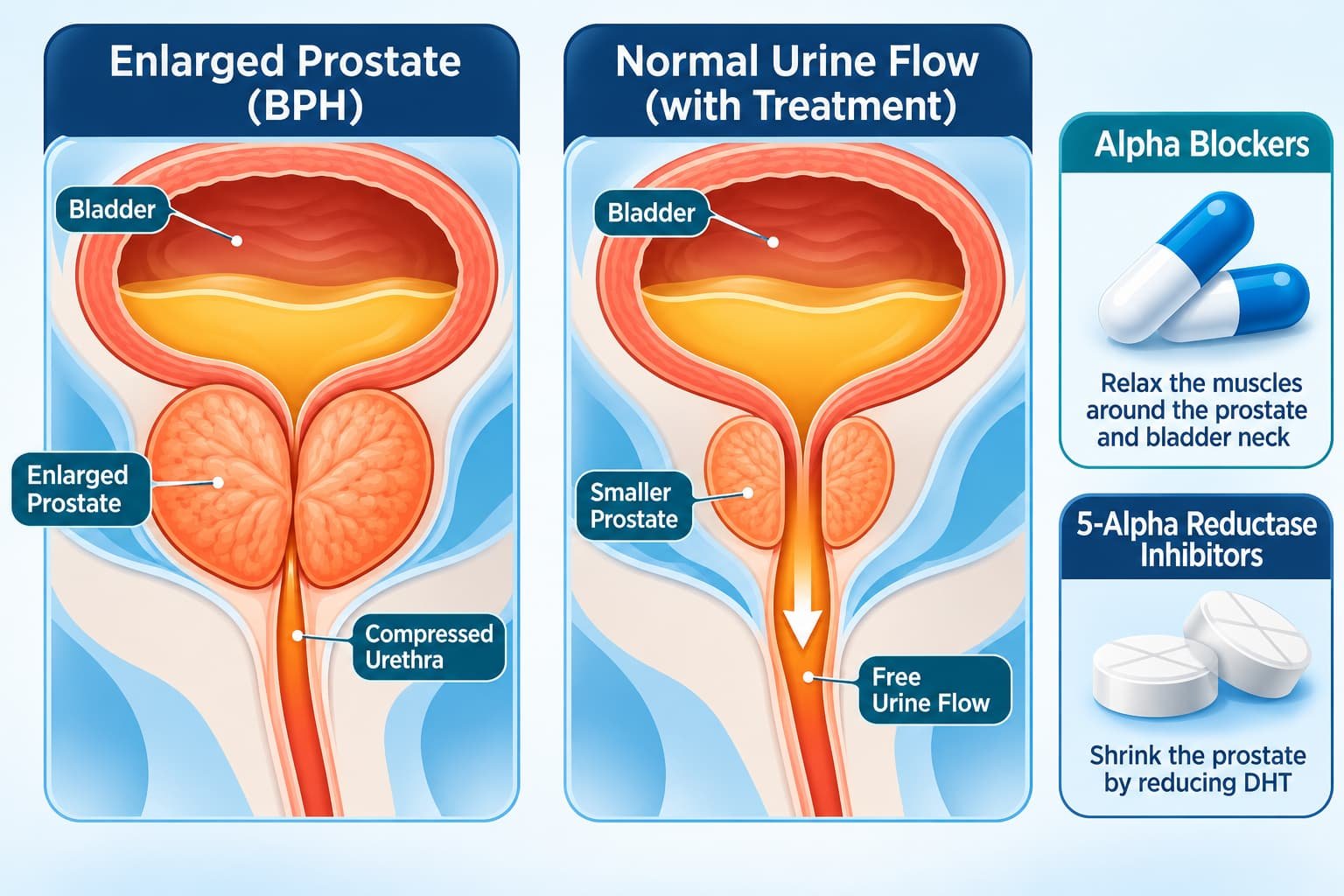
    BPH describes a non-cancerous growth of the prostate gland. The gland wraps around the urethra, the tube that carries urine. Growth squeezes the tube and slows flow. Typical symptoms include a weak stream, urgency and waking at night to pass urine.

    NICE guideline CG97 covers the assessment and management of lower urinary tract symptoms in men. Clinicians usually start with lifestyle advice. Tablets follow when symptoms bother the patient. Surgery suits selected cases.

    Alpha blockers

    Alpha blockers include tamsulosin, alfuzosin and doxazosin. The NHS describes tamsulosin as a once-daily alpha blocker that relaxes muscle around the bladder and prostate. Urine then passes more easily.

    5-alpha reductase inhibitors

    Finasteride and dutasteride belong to this class. These tablets lower dihydrotestosterone, a hormone that drives prostate growth. The gland shrinks slowly. Full response can take up to six months.

    Combination treatment

    Larger prostates sometimes need both classes together. Combination treatment relieves symptoms and slows growth. It also adds the side effects of each medicine.

    BPH Medications and Erectile Dysfunction: What the Research Shows

    Illustration of an enlarged prostate narrowing the urethra, with icons for alpha blockers and 5-alpha reductase inhibitors
    Alpha blockers relax muscle, while 5-alpha reductase inhibitors slowly shrink the prostate.

    Sexual side effects differ by drug class. Alpha blockers mainly affect ejaculation. 5-alpha reductase inhibitors affect desire and erections more often. Enlarged prostate medication side effects deserve a frank conversation before the first prescription.

    Tamsulosin and erectile dysfunction

    The NHS lists dizziness and ejaculation problems, such as little or no semen, as the main tamsulosin side effects. Erection problems appear less often. Even so, a 2017 review reported effects on libido, erectile function and ejaculation.

    One study measured complete loss of ejaculation in 15% of men taking tamsulosin, 5% taking finasteride and 23% on combination therapy. Reduced semen volume does not equal erectile failure. Many men confuse the two.

    Alpha blockers and sexual function

    Ejaculation depends on coordinated muscle contraction. Alpha blockers relax that muscle. Retrograde ejaculation can follow, where semen travels backwards into the bladder. The semen then leaves with the next urine. Clinicians consider this harmless to health, though many men find it distressing.

    Finasteride sexual side effects

    A hospital urology leaflet lists loss of interest in sex and difficulty getting or keeping an erection among common finasteride effects. Published figures vary. One review reported erection problems in 4.9% to 15.8% of men, libido problems in 3.1% to 5.4% and ejaculation problems in 2.1% to 7.7%.

    Timing and persistence

    A Northern Ireland prescribing bulletin states that sexual problems affect 10–15% of men taking 5-alpha reductase inhibitors. The bulletin adds that problems mostly occur in the first year and decline with continued treatment. Some men report symptoms that continue after stopping. Evidence on persistence remains debated, so prescribers review symptoms early.

    Dutasteride and erectile dysfunction

    Dutasteride blocks the same hormone pathway as finasteride. Its sexual side effect profile looks similar: erectile dysfunction, lower libido and ejaculation disorders. Reviewers note that subjective symptom reporting makes it hard to name an ideal drug.

    Enlarged Prostate Tablets and ED: Tablet Effect or Underlying Condition?

    BPH and ED share risk factors. Age, diabetes, obesity and cardiovascular disease raise the risk of both. The International Society for Sexual Medicine notes that some men with BPH develop ED or ejaculation problems, and that treatments can contribute. Prostate surgery adds further risk. TURP, a resection of the inner prostate, can cause retrograde ejaculation.

    Prostate medication and erectile dysfunction therefore need joint assessment. Careful review separates drug effects from disease effects. That distinction decides which treatment makes sense.

    Balancing BPH Treatment and Sexual Health

    Never stop BPH tablets without medical advice. Untreated BPH can cause painful urinary retention and infection. A GP or urologist can adjust treatment in several ways:

    • Lower the dose or change the drug.
    • Switch to a different class of medicine.
    • Consider tadalafil, a PDE5 inhibitor with a UK licence for both ED and BPH symptoms.
    • Refer the patient to a urologist or sexual medicine specialist.

    PDE5 inhibitors can lower blood pressure when combined with alpha blockers. Nitrate medicines make PDE5 inhibitors unsafe. Prescribers check both interactions before prescribing.

    What Is the Priapus Shot?

    Clinicians also call this treatment the P Shot. Dr Charles Runels, a US physician, popularised the name. P Shot treatment uses PRP from the patient’s own blood. A clinician draws a small sample and spins it in a centrifuge. The spin concentrates platelets. The clinician then injects the PRP back into the patient.

    Platelets release growth factors. Proponents suggest these factors support tissue repair and blood flow. Human evidence for that mechanism remains limited.

    P Shot for erectile dysfunction: how an appointment works

    A typical pathway has five steps:

    • Medical history, examination and medicines review
    • Blood tests where indicated
    • Blood draw and PRP preparation
    • Local or topical anaesthetic, then injection
    • Aftercare advice and follow-up

    Appointments usually last under an hour. Soreness, bruising and swelling are common afterwards.

    Choosing a P Shot UK provider

    Men should confirm that a GMC-registered doctor leads care. The clinic should hold Care Quality Commission registration. Written consent should explain risks, alternatives and uncertainty. Clear records of PRP preparation methods add transparency.

    Priapus Shot London: What Does the Evidence Show?

    Doctor reviewing printed clinical research papers on platelet-rich plasma and erectile dysfunction at a clinic desk
    Doctor reviewing printed clinical research papers on platelet-rich plasma and erectile dysfunction at a clinic desk

    Evidence for PRP in ED remains mixed. Four recent analyses show the debate:

    • A 2024 PLoS ONE meta-analysis pooled 12 controlled trials with 991 patients. PRP outperformed controls on erectile function scores. The authors still requested larger trials with longer follow-up.
    • A 2025 analysis covered seven randomised trials with 660 patients. Scores improved at 12 and 24 weeks but not at four weeks.
    • A 2025 meta-analysis of seven placebo-controlled trials with 479 patients found no difference from placebo at one, three or six months. The authors rated certainty low to moderate.
    • Another review of 512 participants concluded that evidence does not support consistent, clinically meaningful improvement with PRP alone.

    PRP shows promise in some analyses and no clear benefit in others. Small trials, varied protocols and different PRP preparation methods explain much of the gap.

    What the evidence does not show

    The studies above target erectile function. None addresses BPH symptoms or drug-related ejaculation changes. A Priapus Shot London appointment therefore targets erections only. It does not shrink the prostate or relieve urinary symptoms.

    Risks and realistic outcomes

    PRP uses the patient’s own blood, which lowers allergy risk. Procedural risks remain. These include pain, bruising, swelling, bleeding and infection. Some men notice no change. Published guidance does not currently list PRP as routine ED care in standard NHS pathways. Private treatment carries a cost, and no clinic can guarantee a result.

    Who May Consider a P Shot for Erectile Dysfunction?

    Assessment must come first. Men with BPH and ED may consider a P Shot after weighing several points:

    • ED persists despite lifestyle change and a trial of PDE5 inhibitors.
    • PDE5 inhibitors suit the patient poorly or cause side effects.
    • ED ranges from mild to moderate.
    • The patient accepts uncertain results.

    Clinicians screen for bleeding disorders, anticoagulant use, active infection and unstable medical conditions. New ED can signal heart disease or diabetes. Men with urinary symptoms and ED need a GP or urology review before elective treatment. A Priapus Shot London consultation should include that review.

    Comparing P Shot Treatment With Other ED Options

    Several options carry stronger evidence than PRP:

    • Lifestyle change: weight loss, exercise, less alcohol and stopping smoking improve vascular health.
    • PDE5 inhibitors: sildenafil and tadalafil remain first-line, established options.
    • Vacuum devices: these work without drugs and suit men who cannot take tablets.
    • Intracavernosal injections: alprostadil produces reliable erections in many men.
    • Psychosexual therapy: this addresses anxiety, which often accompanies medication side effects.
    • Penile implants: surgeons reserve these for refractory cases.

    P Shot London services sit in the emerging category. Shockwave therapy sits there too. Men should try established options first unless medical reasons say otherwise.

    Frequently Asked Questions

    Do enlarged prostate tablets cause erectile dysfunction?

    Sometimes. Finasteride and dutasteride affect erections and desire in a minority of men. Tamsulosin mainly affects ejaculation. Age and shared vascular risk factors also contribute, so doctors assess both causes.

    Does tamsulosin cause erectile dysfunction?

    Tamsulosin chiefly causes dizziness and ejaculation changes. Some reports describe effects on libido and erections. A GP can review the dose or alternatives.

    Can the Priapus Shot London treat an enlarged prostate?

    No. Published trials examine PRP for erectile function. None demonstrates prostate shrinkage or relief of urinary symptoms. BPH needs standard medical assessment and treatment.

    Is a P Shot safe alongside BPH tablets?

    No major trial examines this combination. PRP uses the patient’s own blood, so drug interaction concerns appear low. A doctor should still review the full medicine list. Anticoagulants need particular attention.

    Can men stop finasteride to restore erections?

    Stopping without advice risks symptom return and retention. A prescriber can review alternatives. Some men switch class or add a PDE5 inhibitor.

    How soon might results appear?

    Timing varies. One analysis found improvement at 12 weeks but not at four weeks. Another found no difference from placebo. Realistic expectations matter.

    Does the NHS offer the P Shot?

    Standard NHS pathways do not currently offer PRP routinely for ED. Private clinics provide it. A GP remains the first contact for ED.

    The Bottom Line

    BPH tablets help many men, yet some pay a sexual price. Alpha blockers mostly alter ejaculation. 5-alpha reductase inhibitors more often affect desire and erections. Shared risk factors blur the picture further.

    PRP offers an emerging, unproven option for ED. Research gives mixed results, and no study shows benefit for the prostate itself. A Priapus Shot London consultation should begin with a medicines review, not a booking.

    Informed decisions rest on three steps. First, keep taking prescribed BPH tablets until a doctor advises otherwise. Second, try established ED treatments. Third, weigh PRP only after honest discussion of benefits, risks and limits.

    Each man faces a trade-off between urinary relief and sexual function. Has a doctor ever discussed that trade-off before prescribing, and does the current balance still suit the patient?

    Read more:

    Tests to Take Before a P Shot: HbA1c, Testosterone, Lipids and Blood Pressure

    Natural Male Enhancement in London: Real Benefits and Timeline of the Priapus Shot

    Dr Syed Nadeem Abbas, MBBS, MRCSEd, MSc Aesthetic Plastic Surgery (Distinction) Medical Director, Pshot Clinic | CQC Regulated | Monday to Saturday 10:00–18:00 +44 7955 836986 

  • P Shot and Penile Shrinkage with Age: What Is Normal?

    P Shot and Penile Shrinkage with Age: What Is Normal?

    ✅Medically reviewed

    A slightly shorter penis in later life worries many men, yet most age-related changes fall within normal ageing. Men notice the change in the mirror, in the shower or during intimacy. Some measure it. Others avoid the subject entirely. Silence leaves space for anxiety, and online claims often add to it.

    Penile shrinkage with age raises a fair clinical question: does penis size decrease with age? The evidence says yes, sometimes, and usually by a small amount. Blood flow, tissue quality, body weight, hormones and medical conditions all contribute. Some causes respond to treatment. Others need prompt medical review.

    A second question follows quickly. Can a P shot restore lost length? Platelet-rich plasma (PRP) therapy attracts growing interest, yet evidence for size gain remains thin. This article explains normal penile changes, the main causes of penile shrinkage and the realistic role of PRP. It draws on NHS guidance, NICE guidance and peer-reviewed research.

    Understanding what is normal removes much of the fear. Accurate information helps men separate harmless change from signs that need attention. A new curve, a lump or a sudden loss of length can signal treatable disease. Gradual softening over many years usually reflects ageing circulation.

    Key Points at a Glance

    • Most men lose little true length with age. Published summaries describe changes of up to one inch, and often half an inch or less.
    • Reduced blood flow, tissue scarring, low testosterone and extra body fat drive most age-related penile changes.
    • Peyronie’s disease, prostate surgery and buried penis can cause larger changes. These need medical review.
    • No robust trial shows that PRP increases penile length.
    • Lifestyle change and early treatment of erectile problems protect penile health.

    Does Penis Size Decrease with Age?

    What Counts as a Normal Penis Size

    A 2015 systematic review in BJU International measured more than 15,000 men. Veale and colleagues reported a mean erect length of about 13 cm. Mean flaccid length reached about 9 cm. Normal penis size covers a wide range, and no single number defines it. Few long-term studies follow the same men across decades. Most data compare different age groups instead. This limits firm conclusions about change within one man.

    How Doctors Measure Penile Length

    Clinicians usually measure stretched or erect length along the top of the shaft. Clinicians press the ruler gently against the pubic bone. Pressing into the fat pad gives a longer reading than measuring from the skin surface. Flaccid length varies with temperature, anxiety and arousal. Home measurements therefore fluctuate and mislead. Standard technique allows fairer comparison over time.

    How Much Length Can a Man Lose?

    The penis gets smaller with age in some men, but the change stays modest. Clinical summaries describe a loss of up to about one inch. Most men lose half an inch or less. Some of this reflects true tissue change. Surrounding fat can also hide the shaft and exaggerate the visible change. Body weight therefore alters the picture as much as age does.

    A small, gradual change in length usually does not prevent satisfying sexual activity.

    Normal Penile Changes with Ageing

    Tissue and Blood Vessel Changes

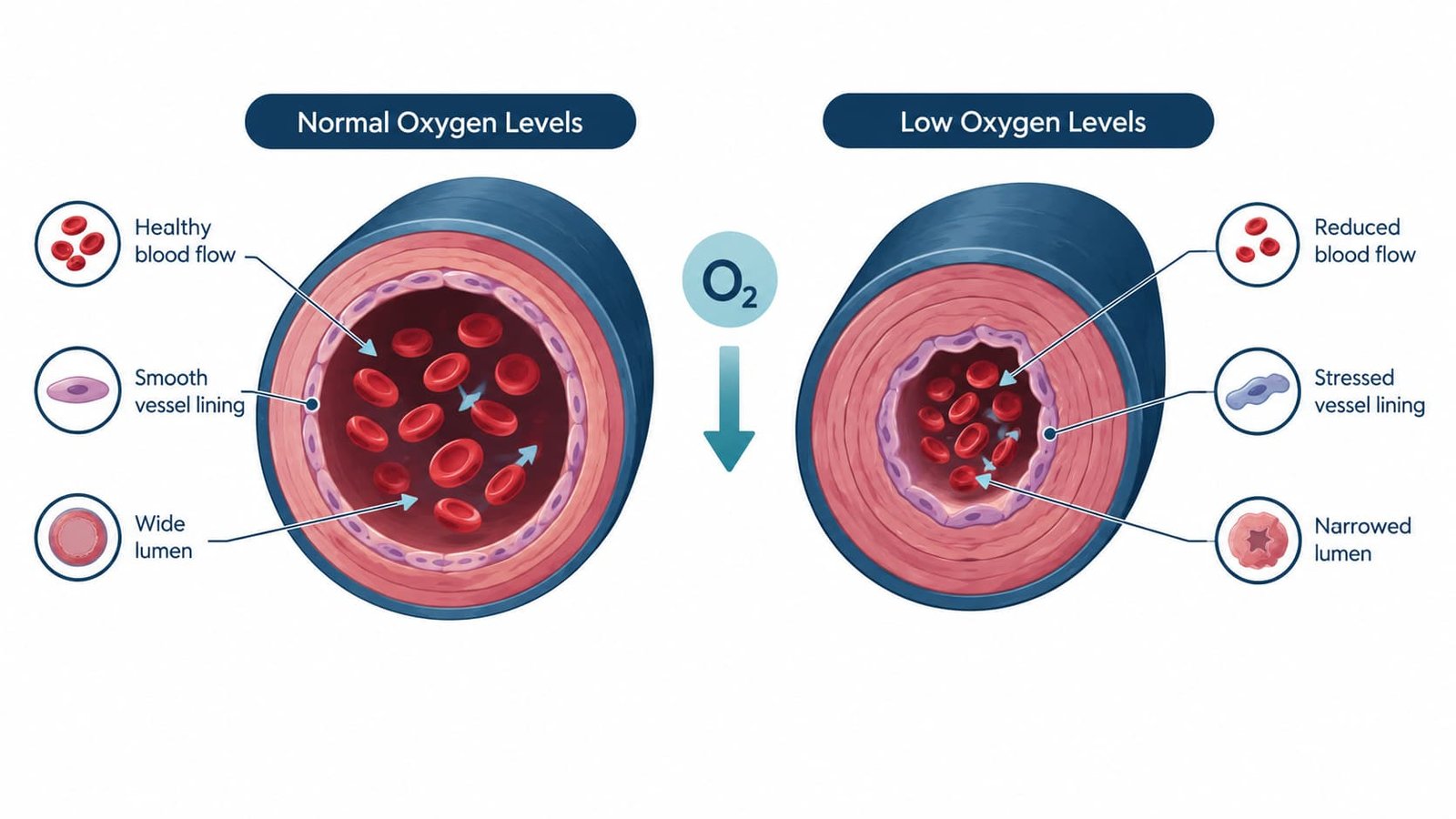
    Illustration comparing a healthy artery with a narrowed artery that reduces blood flow with age
    Narrowing arteries reduce blood flow, which links blood flow and penile size.

    Erections depend on the corpora cavernosa. These two chambers fill with blood during arousal. Smooth muscle inside them relaxes and expands. With age, collagen gradually replaces some smooth muscle. Elastic fibres decline. The tissue stiffens and expands less. Arteries also narrow over time. Narrow arteries deliver less blood, so erections may feel softer or slower.

    Hormonal Changes

    Testosterone levels fall gradually in many men. Androgens support smooth muscle health and nitric oxide signalling in penile tissue. Lower levels may therefore reduce tissue quality and erectile strength. Testicular volume can also decrease. NICE Clinical Knowledge Summaries include hormone assessment in the review of erectile dysfunction. A GP can arrange a morning blood test when symptoms suggest deficiency.

    Skin, Fat and the Pubic Fat Pad

    Skin thins and loses elasticity with age. Weight gain around the lower abdomen builds a fat pad above the penis. This pad covers part of the shaft. The penis then looks shorter although the tissue itself changes little. Weight loss often restores some visible length.

    Changes Most Doctors Consider Normal

    These age-related penile changes usually develop slowly over years:

    • Slightly reduced stretched or erect length
    • Softer erections that take longer to develop
    • Thinner, less elastic skin
    • Smaller testicles
    • Longer recovery time between erections

    Causes of Penile Shrinkage

    Several conditions cause loss of penile length. Each carries a different outlook. Identifying the cause guides treatment.

    Penile Atrophy in Older Men

    Doctors use atrophy to describe tissue wasting. Penile atrophy in older men often follows long-term vascular disease, diabetes, smoking or low testosterone. Lack of erections may add to the problem. Researchers propose that regular erections deliver oxygen to penile tissue. Low oxygen may then promote scarring. This hypothesis explains why erectile function and tissue health appear linked. Evidence remains incomplete.

    Peyronie’s Disease

    The NHS describes Peyronie’s disease as a condition where scar tissue forms a hard lump, called a plaque, in the penis. The scar tissue causes curvature and pain. It can also shorten the penis. A new bend, a lump or pain during erections needs prompt review. Treatment options exist, and early assessment improves choices. A GP can refer men to urology.

    Prostate Surgery and Cancer Treatment

    A 2012 long-term study by Vasconcelos and colleagues followed men after radical prostatectomy. Mean stretched length fell by about 1 cm at three months. The loss narrowed to about 0.3 cm by 48 months. Erectile recovery appeared to help length recovery. Androgen deprivation therapy may also reduce penile size. Penile rehabilitation programmes try to protect length and function. Evidence for these programmes remains mixed. Oncology teams can advise on realistic expectations before treatment.

    Buried Penis in Older Men

    A buried penis stays intact but hides beneath surrounding skin and fat. Buried penis in older men commonly follows obesity, lymphoedema, lichen sclerosus or scarring after surgery. The shaft looks much shorter, yet the erectile tissue may remain healthy. Treatment targets the underlying cause. Options include weight management, skin treatment and surgical referral.

    Lifestyle and Medical Risk Factors

    Smoking, heavy alcohol intake, inactivity and obesity all harm blood vessels. Diabetes, high blood pressure and raised cholesterol add further damage. The NHS lists these conditions among common physical causes of erectile problems. Controlling them protects circulation and tissue health. Some medicines also affect erections, so a medication review helps.

    Psychological Factors and Perceived Shrinkage

    Perception can differ from measurement. Men often compare the view from above with images online. Looking down shortens the apparent length through foreshortening. Anxiety and low mood also affect erections and confidence. Persistent worry about size deserves a calm conversation with a GP. Counselling and psychosexual therapy help in suitable cases.

    Erectile Dysfunction and Penile Shrinkage

    Penile Length and Erectile Function

    Erectile dysfunction and penile shrinkage often appear together. Both share vascular and hormonal roots. A penis that fills less fully measures shorter during erection. Reduced penile length in older men can signal reduced erectile quality, not only ageing. The NHS notes that erectile problems become more common after 50. NICE Clinical Knowledge Summaries advise cardiovascular risk assessment in men with erectile dysfunction. Erectile change can warn of wider vascular disease. New erectile symptoms therefore deserve a GP review.

    Blood Flow and Penile Size

    Blood flow and penile size link directly during erection. Healthy arteries fill the chambers and stretch the tissue to full capacity. Poor inflow limits that stretch. Improving vascular health therefore offers a sound route to protect function. Exercise, weight control, smoking cessation and blood pressure management all support it.

    What Supports Penile Health with Age

    Lifestyle Measures

    NHS self-help advice for erectile problems includes:

    • Stopping smoking
    • Cutting down alcohol
    • Exercising regularly
    • Losing excess weight
    • Doing pelvic floor exercises
    • Managing stress

    Medical Treatment Options

    NICE Clinical Knowledge Summaries place PDE5 inhibitors, such as sildenafil and tadalafil, as first-line medicines. Vacuum devices, injections and implants serve as later options. A GP can start assessment and treatment. Specialist urology referral suits complex or persistent cases.

    When to See a Doctor

    A GP review suits any of these:

    • Sudden loss of length
    • New curvature, lump or pain
    • Persistent erectile difficulty
    • Skin changes, such as white patches or scarring
    • Urinary symptoms or swelling
    • Length loss after prostate treatment

    P-Shot for Penile Size and Length: What Does the Evidence Show?

    How PRP Treatment for Penile Health Works

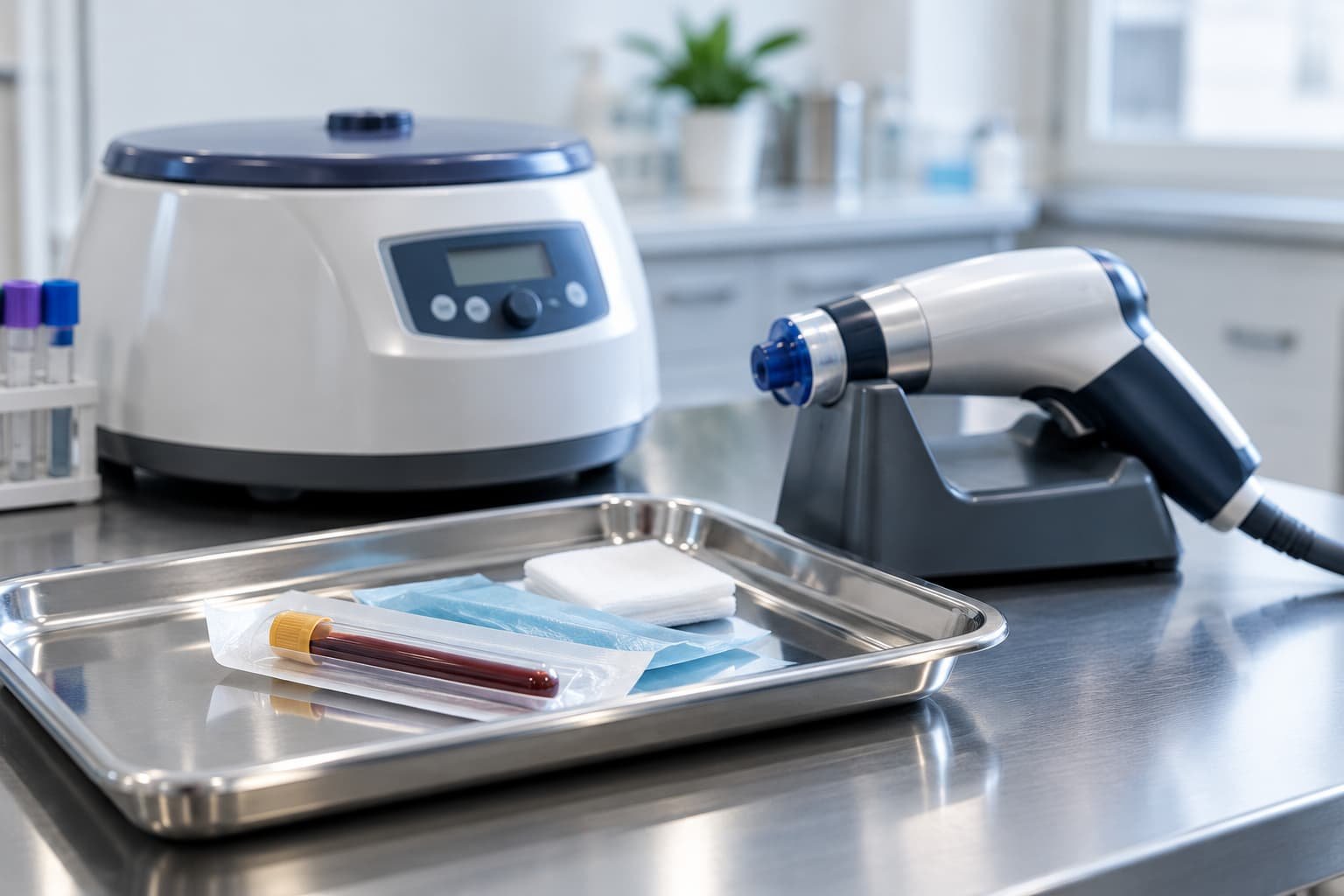
    Blood sample tubes and centrifuge showing platelet-rich plasma preparation in a UK clinic
    PRP comes from the patient’s own blood, but trials do not show that it restores lost penile length.

    The P shot, also called the Priapus shot, uses the body’s own platelets. A clinician draws a small blood sample. A centrifuge concentrates the platelets into PRP. The clinician then injects the PRP into penile tissue. Platelets release growth factors, including PDGF and VEGF. Laboratory work suggests these factors may promote new blood vessels and tissue repair. Human evidence remains limited.

    Evidence on P-Shot for Penile Length

    Online material often presents P-Shot for penile size as a growth treatment. The research does not support that claim. Published randomised trials focus on erectile function, not length. These trials do not show that P-Shot for penile length produces lasting gain.

    Results for erectile function appear mixed. Poulios and colleagues reported in the Journal of Sexual Medicine in 2021 that 69% of PRP recipients reached a clinically important improvement at six months. Only 27% of the placebo group did so. A 2023 Journal of Urology trial by Masterson and colleagues randomised 61 men. It found no difference between PRP and placebo one month after the second injection.

    Both trials found PRP safe, with few adverse events. Small samples and short follow-up limit both studies. NICE Clinical Knowledge Summaries do not list PRP among standard erectile treatments. European Association of Urology guidance calls for further trials before routine use.

    Realistic Outcomes and Limits

    Some men may notice better erection quality after PRP. Better filling can make the erect penis look fuller. This differs from true tissue growth. PRP does not replace lost tissue, reverse established scarring or reliably treat Peyronie’s curvature.

    Bruising, swelling, discomfort and rare infection can follow the procedure. One trial recorded a small penile plaque in a PRP recipient. Active infection, platelet disorders and blood-thinning medicines need medical assessment first. Men with unexplained length change need a diagnosis before any injection.

    Choosing a P Shot Provider in London and the UK

    Men who search for P Shot London or P Shot UK services should check regulation first. Private clinics that provide medical treatment in England normally register with the Care Quality Commission. The doctor should hold current GMC registration. A consultation should include medical history, examination and a clear discussion of limits. A Priapus shot London provider should explain the evidence gap and avoid guaranteed outcomes.

    Dr Syed Nadeem Abbas leads Pshots Clinic UK on Harley Street in Marylebone. Dr Abbas holds MBBS, MRCS (RCS Edinburgh) and MRCGP, plus an MSc in Aesthetic Plastic Surgery with Distinction from Queen Mary University of London. Training included Cambridge, Oxford and the Royal London Hospital.

    Frequently Asked Questions

    Does penis size decrease with age?

    Yes, a small decrease can occur. Published summaries describe losses of up to about one inch, and most men lose half an inch or less. Vascular change, tissue scarring and body fat explain most cases.

    Can the P shot reverse penile shrinkage?

    No trial shows that PRP reverses true length loss. Some men report better erections after treatment, which may improve apparent fullness. A doctor should diagnose the cause of shrinkage before any injection.

    Is penile shrinkage with age permanent?

    That depends on the cause. Fat that hides the shaft often recedes with weight loss. Length lost after prostate surgery partly recovers over several years in many men. Scarring from Peyronie’s disease or atrophy may persist.

    Does weight loss restore penile length?

    Weight loss reduces the pubic fat pad and exposes more of the shaft. True tissue length does not usually change. Visible length therefore improves.

    Can erectile dysfunction cause the penis to shrink?

    Research has not proven that erectile dysfunction shrinks the penis directly. Poor erectile quality can reduce erect length. Long-term low oxygen may also promote scarring. Early treatment may protect tissue health.

    When should a man see a doctor about penile changes?

    A GP review suits sudden change, curvature, pain, lumps, skin changes or erectile difficulty. A painful erection lasting longer than four hours needs emergency care.

    Key Takeaways

    Penile shrinkage with age usually involves small changes with clear, often modifiable causes. Reduced blood flow, tissue stiffening, hormone shifts and body fat explain most cases. Peyronie’s disease, prostate treatment and buried penis explain many larger changes. Each deserves diagnosis, not guesswork.

    PRP treatment for penile health remains an emerging option. Trials show mixed results for erectile function and no proven length gain. A P shot may suit selected men who understand these limits and meet medical criteria. Informed decisions start with a GP or urology assessment, realistic goals and regulated care.

    Healthy circulation protects the penis at every age. If circulation drives both length and function, which daily habit deserves attention first?

    Read more:

    Can Type 2 Diabetes-Related Erectile Dysfunction Be Reversed? What Research Shows

    Tests to Take Before a P Shot: HbA1c, Testosterone, Lipids and Blood Pressure

    Dr Syed Nadeem Abbas, MBBS, MRCSEd, MSc Aesthetic Plastic Surgery (Distinction) Medical Director, Pshot Clinic | CQC Regulated | Monday to Saturday 10:00–18:00 +44 7955 836986
  • Erectile Dysfunction and Kidney Disease: Causes, Links and Treatment

    Erectile Dysfunction and Kidney Disease: Causes, Links and Treatment

    ✅Medically reviewed

    Few men connect a problem in the bedroom with a problem in the kidneys. Yet the two share the same biological roots. Blood vessels, hormones, nerves and mood all shape an erection. Kidney disease disturbs all of these systems. The scale of the overlap surprises many clinicians. A 2020 systematic review pooled 34 studies and 5,986 men. It found erectile problems in about three in four men with chronic kidney disease.

    Most patients never raise the subject. Many doctors avoid it as well. Silence leaves a treatable condition untreated. This article explains erectile dysfunction and kidney disease from a clinical angle. It covers causes, warning signs, safe medicines and the limits of newer options. Sources include NHS guidance, NICE guidance and peer-reviewed research. Each section states what the evidence shows and where the evidence stops.

    Understanding Erectile Dysfunction and Kidney Disease

    What erectile dysfunction means

    The NHS defines erectile dysfunction (ED) as trouble getting or keeping an erection firm enough for sex. Occasional difficulty is common and rarely signals disease. Persistent difficulty deserves medical attention. It often reflects a wider health problem rather than a local one.

    What kidney disease means

    The kidneys filter waste, balance fluid and help control blood pressure. They also activate vitamin D and support red blood cell production. NICE guideline NG203 defines chronic kidney disease (CKD) as abnormal kidney structure or function lasting longer than three months. Clinicians grade CKD from stage 1 to stage 5. Grading uses the estimated glomerular filtration rate (eGFR) and urine protein levels. Stage 5 means kidney failure.

    How the two conditions connect

    An erection needs healthy arteries, steady hormone signals, intact nerves and a settled mind.Kidney disease can damage all four systems at once. That overlap explains why kidney disease and erectile dysfunction appear together so often. Shared risk factors add to the picture. Diabetes, high blood pressure, smoking and obesity harm both the kidneys and the penile arteries.

    Can Kidney Disease Cause Erectile Dysfunction?

    Yes, kidney disease can cause erectile dysfunction, although it rarely acts alone. Most men have several contributing causes at once. Researchers describe the problem as multifactorial.

    Erectile problems are the rule rather than the exception in advanced kidney disease. Pooled data show how common the problem is:

    • A 2020 meta-analysis in the International Journal of Impotence Research found ED in 78% of men with CKD.
    • The same analysis reported 77% prevalence among men on haemodialysis.
    • Prevalence fell to 64% among men with a kidney transplant.
    • A separate end-stage kidney disease meta-analysis reported 59% in transplant recipients. Haemodialysis reached 79% and peritoneal dialysis 71%.

    Heterogeneity between studies is high. Figures therefore describe a range, not a precise rate. The message stays consistent across every review. Erectile dysfunction and kidney disease overlap in most men with advanced disease. Chronic kidney disease and ED therefore deserve joint assessment from the first clinic visit.

    Causes of Erectile Dysfunction in Men with Kidney Disease

    Diagram of six causes of erectile dysfunction in men with chronic kidney disease
    Vascular, hormonal, nerve, blood, medicine and psychological factors often act together.

    The causes of erectile dysfunction in men with kidney disease fall into six groups. Most patients show a mix of several groups.

    Vascular damage

    Atherosclerosis narrows arteries throughout the body. Penile arteries are small, so narrowing shows there early. CKD accelerates the process through chronic inflammation, high blood pressure, abnormal blood fats and disturbed calcium and phosphate balance. Diabetes adds further harm. Reduced blood flow remains a leading physical cause of ED in kidney patients.

    Hormonal changes

    The kidneys help clear and regulate hormones. Failing kidneys disturb the signalling between the brain and the testes. Testosterone often falls and prolactin often rises. Low testosterone reduces libido, energy and erection quality. Kidney Care UK notes that fragmented sleep can blunt the normal morning rise in testosterone.

    Nerve damage

    Diabetes, a leading cause of kidney disease, also injures nerves. Uraemic toxins add to the damage in advanced disease. Autonomic nerves control blood flow to the penis. Any disruption weakens the erection response.

    Anaemia, fatigue and uraemia

    Anaemia lowers oxygen delivery and energy. Dialysis schedules, poor sleep and muscle weakness add to the fatigue. Waste products that build up in advanced disease may also dull desire. Low energy often reduces sexual interest before any structural change appears.

    Medicines

    Blood pressure drugs treat a core kidney risk factor but can affect erections. Diuretics and beta-blockers carry the strongest reputation for this effect. Some antidepressants, including SSRIs, also contribute. Patients should never stop a kidney or heart medicine without medical advice. A prescriber can often switch to a better-suited alternative.

    Psychological factors

    Chronic illness, dialysis and body-image changes raise rates of anxiety and depression. Both conditions reduce desire and arousal. Performance anxiety then deepens the problem. Kidney Care UK explains how the adrenaline surge linked to worry can reduce an erection quickly. Worry about the next attempt then compounds the cycle.

    Kidney Disease Symptoms in Men: Recognising the Warning Signs

    General symptoms

    Early kidney disease often causes no symptoms. Advancing disease produces recognisable signs. Kidney disease symptoms in men include:

    • Persistent tiredness and poor concentration
    • Swollen ankles, feet or hands
    • Foamy or bloody urine
    • Needing to pass urine more often, especially at night
    • Dry, itchy skin
    • Muscle cramps and loss of appetite
    • Poor sleep and shortness of breath

    Sexual symptoms

    Chronic kidney disease and sexual health problems often start quietly. Fewer night-time and morning erections frequently appear first. Libido may fall. Erections may soften or fade during sex. Ejaculation and orgasm can also change. Fewer spontaneous erections deserve a medical conversation, not private worry.

    Can erectile dysfunction signal kidney problems?

    Some men notice ED before receiving a kidney diagnosis. Evidence for ED as an early kidney marker remains limited, though. ED serves more reliably as a marker of cardiovascular risk. NICE advises eGFR and urine albumin-to-creatinine ratio testing for adults with diabetes, hypertension or cardiovascular disease. Persistent ED in those groups justifies a question about kidney checks.

    Kidney Failure and Erectile Dysfunction: Dialysis and Transplant

    Men on dialysis

    Kidney failure and erectile dysfunction often worsen together. Dialysis replaces part of the filtering role but cannot restore hormonal and vascular balance. Treatment also brings fatigue, fluid shifts and heavy time demands. Pooled studies place ED prevalence near 80% in haemodialysis. Better anaemia control and dialysis adequacy may improve energy and wellbeing. ED often persists despite these gains.

    Men with a kidney transplant

    Transplantation clears uraemic toxins and often restores hormone balance. Pooled prevalence falls from near 80% to between 59% and 64%. Transplant improves erectile function for many men but never guarantees recovery. Established vascular damage can persist. Immunosuppressive drugs, diabetes and high blood pressure may also contribute. Kidney Care UK notes that implant infection risk rises after transplant because of immunosuppression.

    Chronic Kidney Disease and Sexual Health Beyond Erections

    Chronic kidney disease and sexual health problems extend past erections alone. Low desire, reduced sperm quality, altered ejaculation and body-image concerns all occur. Each affects relationships as much as physical function.

    Why conversations stall

    Embarrassment silences both patients and clinicians. Many nephrology staff receive little training in sexual medicine. Patients often assume that sexual symptoms belong to normal ageing. Kidney Care UK highlights that most people would welcome a professional raising the topic. A single direct question from a clinician can open the door to treatment.

    Involving partners

    ED affects both partners. Partners may read reduced interest as rejection. Clear explanation of the physical causes removes that misunderstanding. Shared appointments allow questions from both sides. Same-sex partners may also need a separate sexual health review. Couples counselling adds support when anxiety dominates intimacy.

    Practical steps before a consultation

    Men can prepare notes before a clinic visit. Useful details include symptom onset, morning erections, current medicines and recent blood pressure readings. A written list keeps the discussion focused. It also reduces the pressure of speaking from memory.

    Diagnosing ED in Men with Kidney Disease

    Assessment starts with a private, structured history. Clinicians ask about onset, morning erections, libido, medicines, smoking, alcohol and mood. The five-item International Index of Erectile Function (IIEF-5) scores severity. Examination checks blood pressure, the genitals and signs of low testosterone.

    Blood tests commonly include morning testosterone, HbA1c, blood fats and eGFR. Prolactin testing follows when libido is low. The NHS notes that a GP may check blood pressure and test for diabetes and cholesterol. Nephrology and urology teams should share the results. Shared records prevent conflicting advice.

    ED Treatment for Kidney Disease Patients

    Managing erectile dysfunction and kidney disease together needs coordinated care. Nephrology, urology and primary care teams each hold part of the picture. Treatment depends on CKD stage, cardiovascular risk and current medicines.

    Lifestyle and risk factor control

    Regular exercise, smoking cessation, weight control and moderate alcohol intake improve vascular health. Tight blood pressure and glucose control protect both the kidneys and erections. A renal dietitian can adapt food advice to kidney limits. These measures work slowly. Benefits take months, not days.

    Medicine review

    A pharmacist or nephrologist can review every prescription. Swapping a drug that harms erections sometimes helps. Changes always need medical supervision.

    PDE5 inhibitors

    The NHS lists sildenafil, tadalafil, vardenafil and avanafil as first-choice tablets. These drugs suit many men with CKD, dialysis or a transplant after medical review. Kidney function affects drug clearance. Prescribers therefore lower the starting dose in severe kidney impairment.

    Nitrate medicines, including GTN spray, must never combine with PDE5 inhibitors. Alpha-blockers can also cause a sharp blood pressure drop. Men should avoid buying tablets from unregulated online sellers. Counterfeit products carry unknown ingredients.

    Testosterone replacement

    Low testosterone confirmed on morning blood samples may justify hormone therapy. Specialists weigh benefits against risks to the heart, red blood cell count and prostate. Hormone therapy suits only men with proven deficiency.

    Injections, devices and implants

    Alprostadil injections and urethral pellets bypass the tablet pathway. Vacuum erection devices draw blood into the penis mechanically. Bleeding disorders and anticoagulant use require caution with injections. Penile implants suit men with severe, treatment-resistant ED. A joint nephrology and urology discussion should precede surgery, especially after transplant.

    Psychosexual therapy

    Counselling reduces performance anxiety and improves communication. NHS services and Relate offer support for individuals and couples. Partners benefit from understanding the physical causes of ED.

    P Shot for Erectile Dysfunction: Where the Evidence Stands

    What the procedure involves

    The P Shot uses platelet-rich plasma (PRP) prepared from the patient’s own blood. A clinician injects the processed plasma into penile tissue. The theory holds that growth factors support tissue repair and new blood vessel formation. Searches for P Shot London, Priapus shot London and P Shot UK all describe this same PRP approach.

    Evidence and limitations

    Small trials and pilot studies report modest improvements in some men. Study sizes remain small, protocols differ and follow-up stays short. NHS guidance does not list PRP among standard ED treatments. Robust trial data in men with CKD, dialysis or transplants remain scarce. Evidence on the P Shot in erectile dysfunction and kidney disease stays thin. PRP does not treat kidney disease, and no guarantee of benefit exists.

    Dr Syed Nadeem Abbas leads pshots clinic UK on Harley Street, Marylebone. He holds MBBS, MRCS (Edinburgh) and MRCGP qualifications. His MSc in Aesthetic Plastic Surgery came from Queen Mary University of London.

    Safety considerations in kidney disease

    Bleeding and platelet function

    Uraemia impairs platelet function, and haemodialysis often involves heparin. Anticoagulant and antiplatelet drugs add further risk. A nephrologist should review bleeding risk before any injection.

    Infection and immune status

    Immunosuppression after transplant raises infection risk. Anaemia and poor circulation may slow healing. Any invasive procedure needs specialist input and clear informed consent.

    Men should treat the P Shot as an option for discussion after standard therapy. It does not replace PDE5 inhibitors, risk factor control or kidney care.

    When to See a Doctor

    Doctor discussing blood test results with a man during a kidney and sexual health consultation
    Blood tests and blood pressure checks guide safe ED treatment in kidney disease.

    Medical review becomes important in several situations:

    • Persistent ED alongside swollen ankles, foamy urine or constant tiredness
    • New ED after starting a blood pressure or antidepressant medicine
    • Sudden loss of libido with fatigue and low mood
    • Chest pain during sexual activity, which needs urgent assessment

    An erection lasting longer than four hours needs emergency care. This applies after any injection treatment.

    Frequently Asked Questions

    Is Viagra safe in kidney disease?

    Sildenafil suits many men with kidney disease after medical review. Prescribers often start at a lower dose in severe impairment. Nitrates make the drug unsafe. A doctor must check every medicine first.

    Does a kidney transplant cure ED?

    A transplant often improves erections but does not cure ED for everyone. Vascular damage, immunosuppressants and diabetes can keep symptoms active. Additional treatment frequently remains necessary.

    Does kidney disease lower testosterone?

    Low testosterone is common in kidney disease. Hormonal disruption, inflammation and fatigue all contribute. A morning blood test confirms the level. Specialists decide whether treatment is safe.

    Can treatment improve erectile dysfunction and kidney disease together?

    Joint management often helps both. Blood pressure control, glucose control and exercise protect the kidneys and the arteries. Medicines then target the erection directly. Results vary between men.

    Can men with kidney disease have a P Shot?

    No standard guideline answers this question. Evidence in kidney disease is thin. Bleeding risk, infection risk and medicines need review first. A nephrologist should agree before treatment begins.

    Key Takeaways

    Erectile dysfunction and kidney disease share vascular, hormonal, nerve and emotional pathways. That overlap makes ED common, and it makes ED treatable in many cases. Evidence supports a stepwise approach. Men should start with kidney and cardiovascular control. A medicine review and a safe PDE5 inhibitor often follow. Hormone testing, devices, injections and implants come next when needed.

    Newer options such as PRP carry limited evidence in this group. Realistic expectations protect patients from disappointment and avoidable risk. Honest discussion with a nephrologist, a urologist and a GP supports informed decisions. Sexual health forms part of kidney care, not a separate issue to hide.

    Which conversation with a doctor would make the biggest difference to a man’s health this month?

    Read more:

    Can Type 2 Diabetes-Related Erectile Dysfunction Be Reversed? What Research Shows

    Tests to Take Before a P Shot: HbA1c, Testosterone, Lipids and Blood Pressure

    Dr Syed Nadeem Abbas, MBBS, MRCSEd, MSc Aesthetic Plastic Surgery (Distinction) Medical Director, Pshot Clinic | CQC Regulated | Monday to Saturday 10:00–18:00 +44 7955 836986 

  • P Shot and Finasteride: What Men Taking Hair-Loss Tablets Should Know

    P Shot and Finasteride: What Men Taking Hair-Loss Tablets Should Know

    ✅Medically reviewed

    A small daily tablet protects the hairline, yet some men notice changes in the bedroom within months. Finasteride has helped millions of men slow pattern baldness. Hair loss already dents confidence, and a new sexual symptom adds worry on top of worry. Many men then search online, and the answers conflict.

    Two questions dominate those searches. First, can the tablet itself cause erectile problems? Second, can a regenerative option such as the P Shot help while hair-loss treatment continues? Honest answers need careful evidence, not marketing claims.

    Most online guides treat platelet-rich plasma as a scalp treatment. Few address penile platelet-rich plasma in men who already take finasteride. That gap leaves patients guessing about safety, timing and realistic benefit. This article closes the gap using NHS information, MHRA safety updates and peer-reviewed research.

    The sections below explain how finasteride works and what UK regulators say about sexual side effects. A review of the evidence for platelet-rich plasma in erectile dysfunction follows. The article also sets out limits, risks and questions worth raising with a doctor. Readers should treat the procedure as unlicensed and evidence-limited, and should seek medical assessment before any decision.

    Why Men on Hair-Loss Tablets Ask About Sexual Health

    How Finasteride Works

    Finasteride blocks the enzyme 5-alpha reductase. This enzyme converts testosterone into dihydrotestosterone, or DHT. DHT shrinks hair follicles in men with genetic pattern baldness. Lower DHT slows the shrinkage and often stabilises hair loss.

    Doctors prescribe the 1 mg dose for male pattern hair loss. The 5 mg dose treats an enlarged prostate. Private prescribers supply most 1 mg tablets, because the NHS does not usually provide this tablet for hair loss.

    Hormones influence more than hair. DHT also acts in the prostate, skin and nervous system. A drug that lowers DHT can therefore affect more than the scalp. Researchers continue to study how these changes shape sexual function.

    How Hair Loss Worry and Sexual Function Interact

    Visible thinning affects self-esteem and mood. Anxiety and low mood both impair erections. This overlap complicates every assessment, because the tablet, the worry or an unrelated cause may each contribute.

    Warning labels add another layer. Some research suggests that awareness of side effects heightens attention to normal changes in sexual function. Specialists call this the nocebo effect. It does not mean symptoms are imaginary, and clinicians take every report seriously.

    What the NHS and MHRA Say About Side Effects

    The NHS lists erection problems and reduced interest in sex as common side effects of finasteride. Common means more than 1 in 100 men. The NHS adds that these effects usually improve with time but can sometimes continue after treatment stops.

    In 2024, the MHRA reviewed finasteride safety and introduced a patient alert card. The card warns about psychiatric and sexual side effects. Regulators also warn that sexual dysfunction may persist after men stop the tablet. A later update added a warning that sexual dysfunction may contribute to mood disorders. The same update noted that sexual dysfunction also occurs without mood changes.

    Yellow Card data up to April 2024 held 426 reports linking finasteride with sexual dysfunction. Almost half recorded no recovery at the time of reporting. Spontaneous reports cannot prove cause or frequency. Such reports still show why regulators take the signal seriously.

    Reading Risk Figures Correctly

    Risk figures confuse many readers. A common side effect in trials does not mean most men experience it. Absolute risk describes how many men in a hundred notice an effect. Relative risk compares one group with another.

    Trial figures also differ from clinic experience. Trials enrol selected volunteers and track set outcomes over fixed periods. Real-world use includes older men, other medicines and other health conditions. Trials and Yellow Card reports answer different questions, so doctors weigh both.

    Finasteride and Erectile Dysfunction: What the Evidence Shows

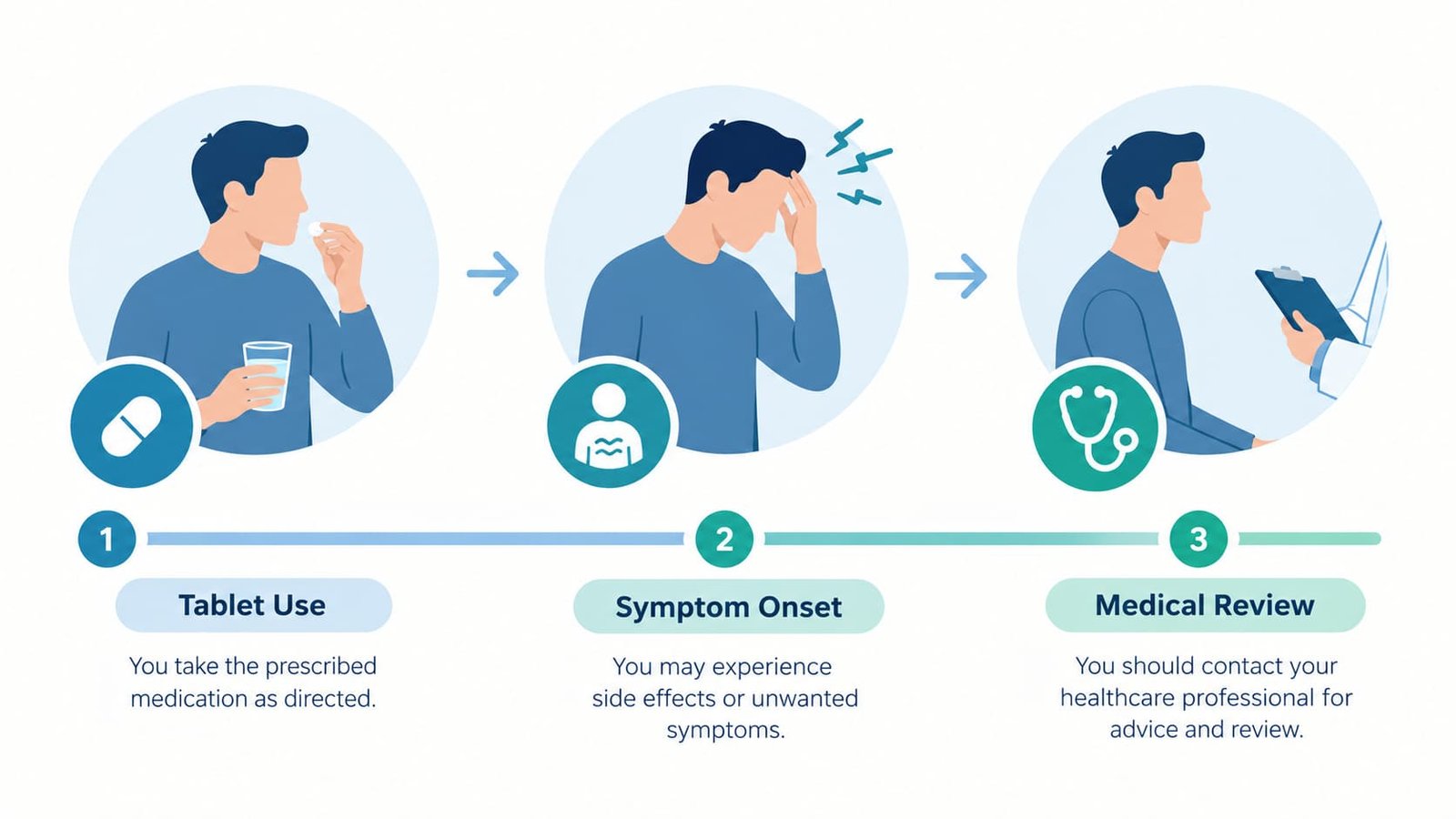
    Timeline graphic showing finasteride use, symptom onset and medical review
    Doctors ask when sexual symptoms began relative to the first tablet.

    Finasteride and erectile dysfunction share a complicated relationship. Large trials, regulator reviews and patient reports each tell part of the story. Clear separation of fact from fear helps men judge personal risk. The next sections follow that approach.

    Can Finasteride Cause Erectile Dysfunction?

    Can finasteride cause erectile dysfunction? Yes, in some men. The NHS and the MHRA both recognise erection problems as a known effect. Most men on the tablet never develop the problem.

    Trial data in the product information report sexual side effects in about 3.8% of finasteride users. Men on placebo reported such effects at about 2.1%. Placebo figures matter. Ageing, stress and hair loss itself all affect erections without any drug involved.

    Finasteride Sexual Side Effects Beyond Erections

    Finasteride sexual side effects extend beyond erections. The MHRA lists reduced sex drive, erectile dysfunction and ejaculation disorders. Libido and erectile changes often overlap. Low desire can mimic erectile failure, so the two need separate assessment. A doctor asks about morning erections, desire, partner factors and mood.

    Mood Changes Need Urgent Attention

    The NHS advises men taking finasteride for hair loss to stop the medicine straight away if low mood develops. Men should then contact a doctor promptly. The MHRA encourages men to show the alert card to family. Mood changes can pass unnoticed. No sexual treatment replaces this safety step.

    Persistent Symptoms After Stopping

    Some men report symptoms that last months or years after stopping. Researchers use the label post-finasteride syndrome for this pattern. The cause remains uncertain. A review in Neurobiology of Stress calls it an emerging clinical problem. Evidence on frequency remains limited, and expert opinion differs.

    Other Causes Doctors Check Before Blaming the Tablet

    Erectile dysfunction has many causes. Vascular disease, diabetes, obesity, low testosterone, smoking, alcohol, depression and anxiety all contribute. A symptom that starts after finasteride does not always come from finasteride.

    Routine checks by a GP cover blood pressure, weight, glucose or HbA1c, cholesterol and testosterone. Medication review and mood screening complete the picture. Erectile dysfunction can also signal early cardiovascular disease, so assessment matters beyond sexual health.

    Questions That Separate Drug Effects From Other Causes

    Several patterns help doctors separate drug effects from other causes. Timing comes first. Symptoms that began soon after the first tablet raise suspicion of a drug effect. Constant problems in every situation suggest a physical cause. Problems that appear only with certain partners or under stress suggest a psychological cause.

    Normal morning erections point toward intact blood flow and nerves. Doctors also ask whether symptoms eased during any treatment break. Clear improvement strengthens the case for a drug effect, although no single clue settles the question.

    What Is the P Shot?

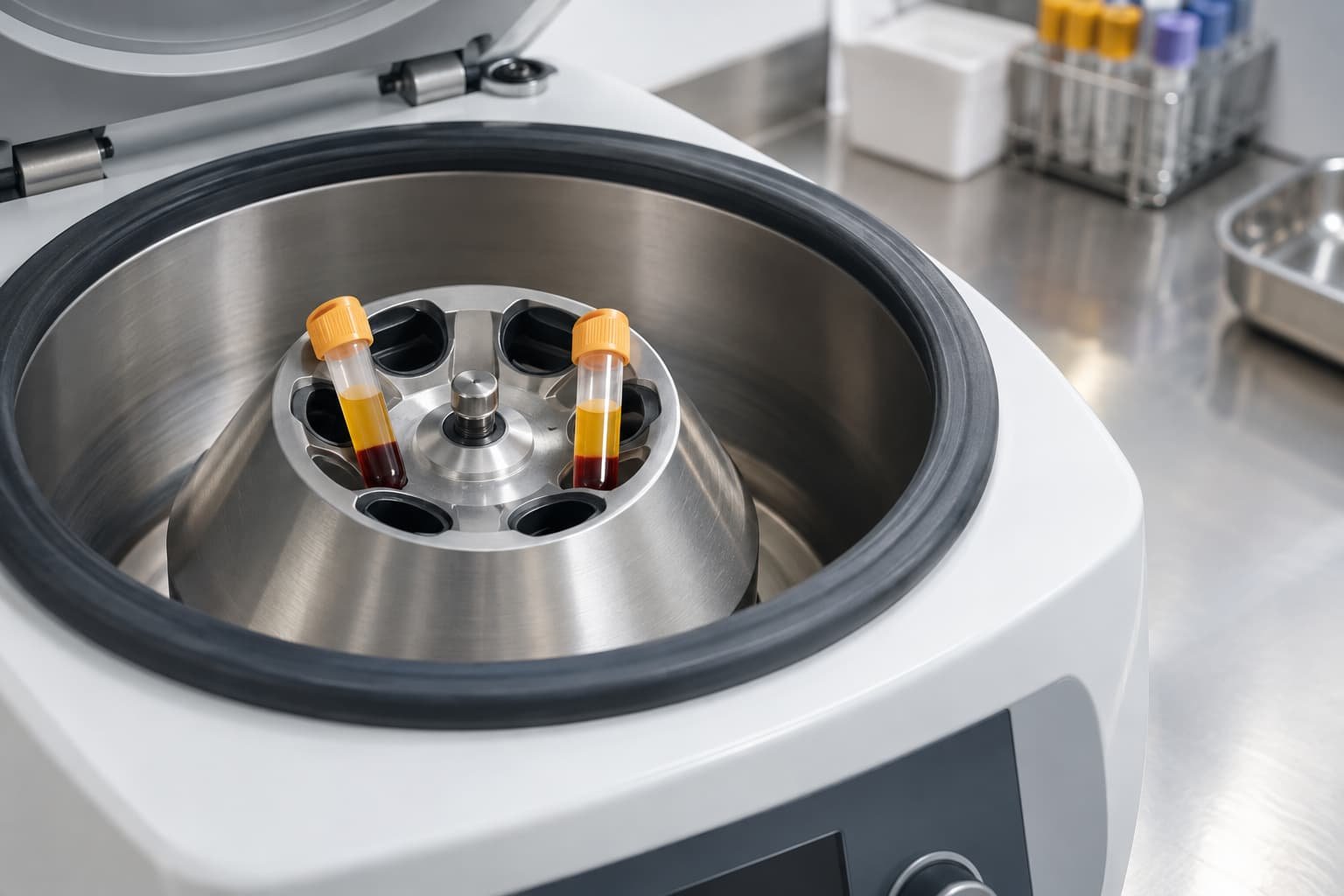
    Centrifuge tubes showing separated platelet-rich plasma in a clinic laboratory
    Platelet-rich plasma comes from the patient’s own blood, concentrated by centrifugation.

    How the Procedure Works

    The procedure uses platelet-rich plasma from the patient’s own blood. A clinician draws a small sample and spins it in a centrifuge. This step concentrates platelets, which release growth factors. The clinician then injects the concentrate into penile tissue after numbing.

    Some clinics call the procedure the Priapus shot. Searches for Priapus shot London usually describe the same PRP injection. Researchers propose that growth factors may support new blood vessels and nerve repair. Most supporting evidence comes from laboratory and animal studies.

    Procedure details vary between clinics, including numbing method, injection sites and number of sessions. Men should ask for the full protocol in writing. Variation makes trial results hard to compare with clinic practice.

    NHS services do not routinely offer this treatment for erectile dysfunction. Private clinics supply it, and the use remains outside standard licensing.

    What Research Says About PRP for Erectile Dysfunction

    Evidence remains mixed. A 2024 PLoS One meta-analysis pooled controlled trials involving 991 men. It found better erectile function scores than control groups and called for larger trials. A 2024 meta-analysis of three randomised trials reported gains lasting up to six months in mild to moderate cases.

    Newer work tempers that picture. A 2025 meta-analysis pooled seven placebo-controlled trials covering 479 men. It found low-to-moderate certainty evidence of no advantage over placebo. Another recent systematic review found no consistent, clinically meaningful gain from PRP alone.

    Taken together, the evidence neither proves nor rules out benefit. Trials differ in preparation method, injection volume and schedule. Small samples and short follow-up limit firm conclusions.

    Finasteride and ED Treatment: Where the P Shot Fits

    Standard Options Come First

    Finasteride and ED treatment decisions start with proven options. NICE Clinical Knowledge Summaries place phosphodiesterase type 5 inhibitors, such as sildenafil and tadalafil, first line. Prescribing information lists no clinically important drug interactions for finasteride. A doctor still reviews the full medication list, especially nitrates, before prescribing.

    Lifestyle changes, psychosexual therapy and vacuum devices follow. Some men also change the hair-loss drug under medical advice. If finasteride drives the symptom, PRP may not address the underlying mechanism.

    Weighing Hair Benefit Against Sexual Symptoms

    Finasteride protects hair only while men keep taking it. Hair loss usually resumes within about a year of stopping. That trade-off shapes every decision. Some men accept a small sexual risk for hair retention. Others place sexual function first and stop the tablet.

    Neither choice is wrong, but each deserves an informed discussion. Alternatives include minoxidil and topical finasteride, which may lower systemic exposure. A prescriber can explain the options and monitor the response.

    Does Finasteride Interact With PRP?

    PRP contains the patient’s own platelets and plasma. Finasteride acts on the DHT pathway. The two use different mechanisms. Published research on combining penile PRP with finasteride remains scarce. No study clearly tests the combination for sexual outcomes.

    Hair research does exist. A 2022 study examined scalp PRP alone and with finasteride and minoxidil. That work addresses hair, not erections. Men should never stop finasteride only to receive a P Shot, and a doctor should guide any change.

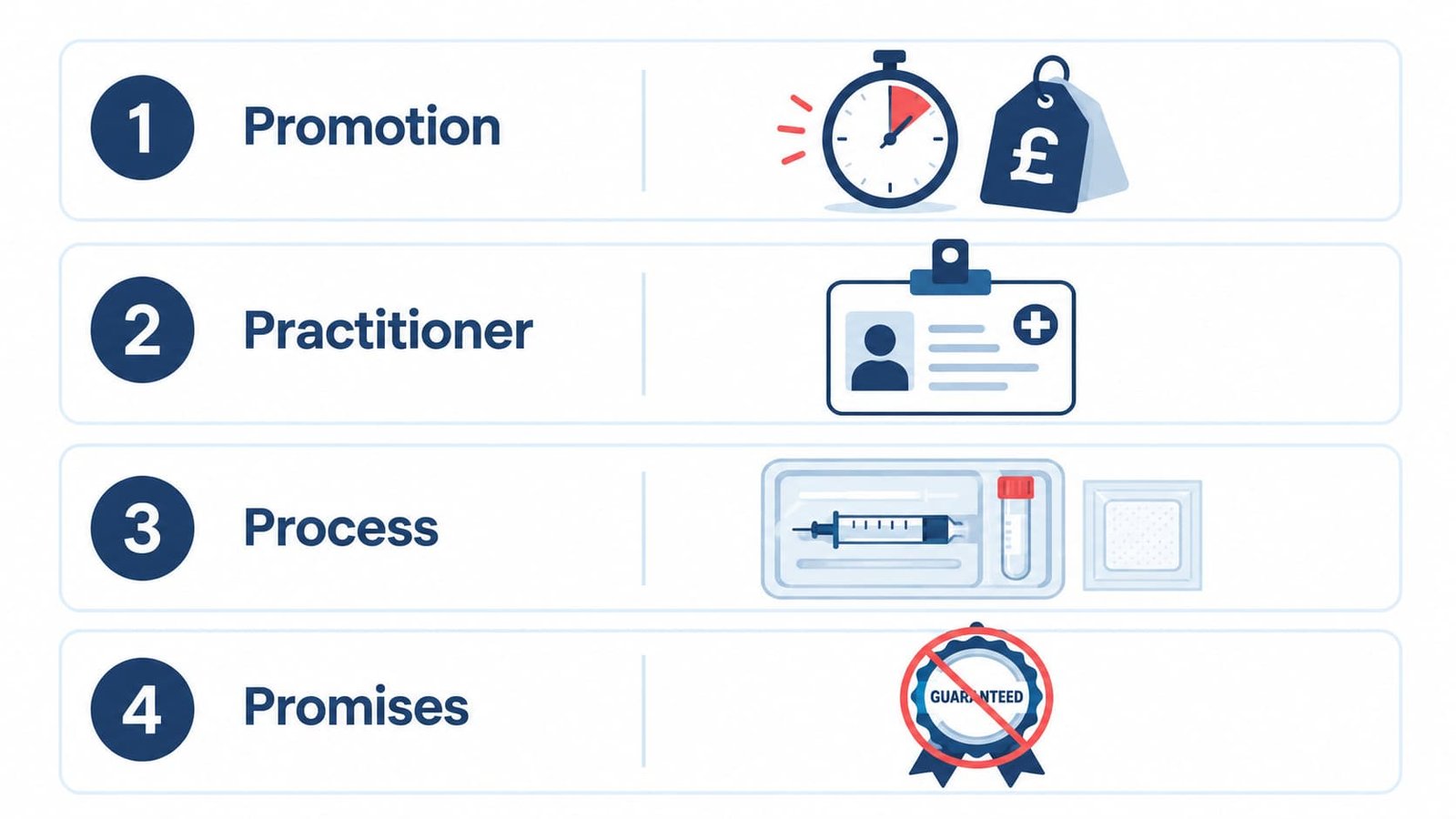
    P Shot London and P Shot UK: What to Check in a Provider

    Clinics across the P Shot UK market vary widely in training and standards. Men considering a P Shot London appointment can check four points:

    • Confirm the doctor appears on the GMC register.
    • Check that the clinic holds Care Quality Commission registration.
    • Request a written explanation of evidence limits and unlicensed status.
    • Share a full medication and mood history, including finasteride.

    A clinic that asks about finasteride shows good practice. Promises of guaranteed results show the opposite.

    Risks, Limits and Realistic Outcomes

    Injection-site pain, bruising and swelling occur and usually settle within days. Infection and bleeding are rare. PRP uses the patient’s own blood, which lowers allergy risk, yet every injection carries procedural risk.

    Clinicians usually delay PRP in men with active infection or a bleeding disorder. Low platelet counts and anticoagulant use also need review first. These checks protect safety and sometimes change the plan.

    Outcomes vary. Some men report modest improvement, while others notice none. Effects may fade, and clinics sometimes advise repeat sessions. No clinic can promise a result, and an honest provider says so plainly.

    The procedure does not treat hair loss, depression or hormonal causes. No evidence shows that PRP changes DHT activity. Cost also matters, because private fees vary and the NHS does not reimburse those fees.

    Providers usually describe changes over weeks to months, not days. Trials measured outcomes at one, three and six months. Evidence on durability beyond six months remains thin. Men should ask how long a clinic expects any effect to last and what evidence supports that estimate.

    Clinical Assessment Before Any Decision

    Consultation at the pshots clinic UK, led by Dr Syed Nadeem Abbas, starts with history, medication review and examination. The clinic sits on Harley Street in Marylebone, London. Dr Abbas holds MBBS, MRCS (RCS Edinburgh) and MRCGP qualifications. Queen Mary University of London awarded an MSc in Aesthetic Plastic Surgery with Distinction. Training took place at Cambridge, Oxford and the Royal London Hospital.

    A thorough assessment records finasteride dose and duration. It notes when symptoms began relative to the first tablet. Validated questionnaires, such as the International Index of Erectile Function, measure severity. Blood tests and cardiovascular risk review follow where appropriate.

    Shared decision-making follows assessment. The doctor explains benefits, limits, costs and alternatives, and the patient decides without pressure. Written consent records that discussion.

    Some men need referral to urology or mental health services. Where finasteride appears responsible, a conversation with the prescriber about stopping or switching comes first.

    Documentation helps every later conversation. A simple diary of mood, desire and erection quality over several weeks gives a doctor concrete data. Patterns in that record often guide the next step more reliably than memory.

    Practical Steps for Men on Finasteride

    • Read the patient alert card and the leaflet in every pack.
    • Record when sexual symptoms began relative to the first tablet.
    • Report symptoms to the prescriber and through the Yellow Card scheme.
    • Seek urgent help for low mood or suicidal thoughts, and stop the tablet as the NHS advises.
    • Ask a GP about cardiovascular and metabolic checks.
    • Mention finasteride before any PSA test, because the tablet lowers PSA readings.
    • Discuss symptoms openly with a partner, because performance anxiety worsens erectile difficulty.
    • Review standard ED options before considering regenerative therapy.

    Frequently Asked Questions

    Can finasteride cause erectile dysfunction?

    Yes, in some men. The NHS lists erection problems as a common side effect. Most men taking finasteride do not develop erectile dysfunction.

    Does PRP treat finasteride sexual side effects?

    No trial tests this question directly. Evidence for PRP in erectile dysfunction generally remains mixed, so benefit stays uncertain.

    Should men stop finasteride before a P Shot?

    No decision should rest on the procedure alone. Hair loss usually resumes after stopping finasteride. A prescriber should guide any change.

    Is the Priapus shot London treatment available on the NHS?

    No. Private clinics provide it, and the NHS does not routinely offer PRP for erectile dysfunction.

    How long do finasteride sexual side effects last?

    Most improve with time. Some persist after stopping, according to the MHRA. Persistent symptoms deserve medical review.

    Can PRP combine with erectile dysfunction tablets?

    Clinicians sometimes combine treatments. Research on specific combinations remains limited, so a doctor should review the full medication list first.

    Where can patients report suspected side effects?

    The Yellow Card scheme accepts reports from patients and healthcare professionals.

    Key Takeaways

    Finasteride remains a widely used and effective hair-loss medicine. It also carries recognised sexual and mood warnings. Informed decisions start with accurate information about both benefit and risk.

    The evidence for PRP in erectile dysfunction stays mixed, and research on men taking finasteride is thin. Standard assessment and proven treatments deserve priority. Regenerative options belong after that conversation, not before it.

    Men with new sexual symptoms should record the timeline, protect mental health and seek medical review. Careful questions at the start prevent costly mistakes later. If a symptom appears after a tablet, should treatment target the symptom or the cause first?

    Read more:

    Tests to Take Before a P Shot: HbA1c, Testosterone, Lipids and Blood Pressure

    Stress and ED: How Work Stress, Poor Sleep and Alcohol Contribute to Erectile Dysfunction in Men

    Dr Syed Nadeem Abbas, MBBS, MRCSEd, MSc Aesthetic Plastic Surgery (Distinction) Medical Director, Pshot Clinic | CQC Regulated | Monday to Saturday 10:00–18:00 +44 7955 836986 

  • P-Shot Near You: Red Flags in Cheap P-Shot Offers

    P-Shot Near You: Red Flags in Cheap P-Shot Offers

    ✅Medically reviewed

    A low price draws attention fast. On an injection into sensitive tissue, that attention deserves scrutiny. A search for P-Shot near me returns dozens of clinics, banners and countdown deals within seconds. Search engines rank listings by location, advertising spend and keyword use. Clinical standards play no part in that order.

    The P-Shot, also called the Priapus Shot, injects platelet-rich plasma (PRP) from a patient’s own blood into penile tissue. Clinics promote the procedure for erectile dysfunction (ED) and sensitivity concerns. The evidence base remains mixed. Safe delivery therefore depends on the person who holds the needle and the setting around that person.

    Price adds another layer. Published UK prices differ by hundreds of pounds. Some of that gap reflects real differences in doctor time, equipment and aftercare. Other parts reflect shortcuts. A discount cannot reveal which explanation applies.

    This guide separates the two. It sets out the main P-Shot red flags in cheap offers. Targeted questions and register checks expose each one in minutes. Sources include NHS and NICE guidance, peer-reviewed research and General Medical Council (GMC) standards. This article aims to support informed decision-making, not a sale.

    Why a P-Shot Near Me Search Cannot Show Clinical Quality

    Proximity feels like a safe filter. Nearby clinics save travel time and simplify follow-up. Proximity says nothing about training, hygiene or governance.

    Map listings reward review volume and discounts. Review counts measure marketing activity as much as clinical skill. Clinics often choose which testimonials appear. A search for P Shot London shows the same pattern. Specialist clinics and general aesthetic practices share one results page.

    A P-Shot near me search should start the research, not finish it.

    What the P-Shot Involves

    The procedure follows several steps. A clinician draws a small blood sample. Next, a centrifuge separates the plasma and concentrates the platelets. The clinician then injects the preparation into the penis, usually after local anaesthetic. Clinics that advertise a Priapus shot London service describe the same basic PRP approach.

    Each step carries a quality variable. Kit choice, preparation method, hygiene and injection technique all influence safety.

    What the Evidence Shows

    Research on PRP for ED remains inconsistent. A 2025 meta-analysis of seven randomised trials, covering 479 men, found no superiority over placebo. The authors rated the certainty of evidence as low to moderate. Another 2025 meta-analysis reported a mean gain of 3.28 points on erectile function scores against placebo. A further 2025 review found no consistent, clinically meaningful improvement from PRP alone. Small trials, varied protocols and short follow-up complicate comparison. Platelet concentration, spin protocol and injection schedule also differ between studies. P-Shot and Priapus Shot function as branded names rather than standardised protocols.

    Standard care looks different. NHS guidance and NICE Clinical Knowledge Summaries start with cardiovascular risk assessment, medicines review and lifestyle advice. Phosphodiesterase type 5 (PDE5) inhibitors usually follow as first-line treatment. ED can signal heart disease or diabetes, so assessment matters before any injection. Current NICE summaries do not present PRP injection as a standard option.

    A clinic that skips this medical context and sells on price alone falls short of good practice.

    P-Shot Cost UK: What Drives the Price

    P-Shot cost UK figures vary widely. Published clinic price lists show single-session prices from roughly £900 to above £1,500. P-Shot price London quotations fall across that whole range.

    A fair price covers genuine costs:

    • Doctor time for consultation and injection
    • A single-use sterile kit and PRP preparation system
    • Local anaesthetic or a nerve block
    • Clinical premises that meet regulatory standards
    • Medical indemnity insurance
    • Scheduled follow-up appointments

    Any p shot near me listing far below market price invites a simple question. Which of these items has the clinic removed? Price alone never proves quality, and a low price never proves danger. The red flags below separate the two.

    Published comparisons describe three broad price bands:

    • Below about £900: the budget end
    • About £1,000 to £1,400: the mid-range, typically with doctor-led care and follow-up
    • Above £1,500: the premium end, sometimes bundling add-ons such as shockwave therapy

    These comparisons link the budget end to simpler PRP preparation or less experienced practitioners. That link remains anecdotal. A budget price can still reflect safe, transparent care. Premium pricing can still hide weak governance.

    Total cost matters more than headline cost. Some listings advertise a “from” price and add anaesthetic, follow-up or repeat sessions later. Patients should request a written, itemised quotation before booking a P-Shot consultation.

    Ten P-Shot Red Flags in Cheap Offers

    P-Shot red flags cluster into four groups: promotion, practitioner, process and promises. Several red flags together mark a clinic to avoid, whatever the price.

    Checklist showing P-Shot red flags such as countdown offers, unitemised prices and guaranteed results
    Ten P-Shot red flags fall into four groups: promotion, practitioner, process and promises.

    Red Flags in Pricing and Promotion

    1. Countdown Timers, Two-for-One Deals and Prize Draws

    GMC guidance for doctors who offer cosmetic interventions bars promotions that push rushed decisions. Two-for-one offers and prizes appear on that list. The principle applies equally to any injection marketed to men. Reputable clinics give patients time to reflect before committing. The Advertising Standards Authority (ASA) also urges particular care with time-limited offers on cosmetic interventions. Any deal that expires tonight deserves suspicion.

    2. Unitemised “From” Prices and Prepaid Packages

    A “from” price hides the real total. Anaesthetic, follow-up and repeat sessions can arrive as extras. Prepaid multi-session packages raise further concern. Published trials use varied protocols, so no single course suits every patient. Non-refundable upfront payments leave patients with little recourse after a disappointing first session.

    Red Flags in Practitioner Credentials

    3. No Named, Verifiable Practitioner

    Every doctor who practises in the UK needs GMC registration and a licence to practise. The online register shows both, and a search takes under a minute. A clinic that hides the injecting practitioner’s name removes that safeguard. Vague titles such as “aesthetic specialist” or “wellness expert” carry no regulatory meaning.

    4. Delegated Injections and Non-Clinical Premises

    A procedure that enters the penis belongs in a clinical setting. Salons, hotel rooms and pop-up events cannot guarantee sterile conditions. Independent clinics that provide regulated healthcare in England must register with the Care Quality Commission (CQC). Scotland, Wales and Northern Ireland use separate regulators. Clinics should state who performs the injection. Delegation to junior or non-medical staff changes the risk profile.

    Red Flags in Clinical Process

    5. No Genuine Medical Consultation

    A proper P-Shot consultation covers symptom history, medical conditions, medicines and cardiovascular risk. Clinicians often use a validated questionnaire such as the International Index of Erectile Function. Blood tests, including testosterone, may follow. Booking by online checkout alone skips the safeguard that protects patients most. Payment before any clinical conversation raises the same concern.

    6. Unclear PRP Kit, Hygiene and Consent Process

    Clinics should name the PRP preparation system and confirm single-use sterile equipment. Recognised device marking, such as UKCA or CE, should appear on the kit. Hygiene protocols should cover skin preparation and safe disposal. Written informed consent should list risks, alternatives and expected outcomes. Verbal reassurance alone does not meet that standard.

    7. No Discussion of Alternatives or Underlying Causes

    ED often reflects cardiovascular, hormonal, neurological or psychological factors. NICE guidance recommends assessing these first. A clinic that never mentions the GP, PDE5 inhibitors or lifestyle change offers a narrow picture. Responsible providers refer patients onward when assessment reveals a wider health issue.

    Red Flags in Claims and Aftercare

    8. Guaranteed Results, Permanent Cures and Size Claims

    No clinic can guarantee a P-Shot outcome. Trials show variable response, and some men notice no change. Claims of permanent cure or reliable penile enlargement lack robust support. Advertising rules require clinics to substantiate efficacy claims.

    9. Unverifiable Before-and-After Photos and Testimonials

    Photographs vary with lighting, angle and arousal state. Stock images and edited photos circulate widely online. The ASA cautions against misleading before-and-after images in cosmetic advertising. Testimonials describe personal experience and prove nothing about average outcomes.

    10. No Aftercare Plan or Emergency Route

    Follow-up appointments let clinicians review response and complications. Many clinics schedule reviews at around six and twelve weeks. A clinic that offers no review, no contact number and no complication pathway leaves patients exposed. Spreading redness, fever, severe pain or prolonged swelling need urgent advice from NHS 111 or emergency care.

    P-Shot Treatment Risks and P-Shot Safety

    P-Shot treatment risks mirror those of other penile injections. Reported effects include pain, bruising, swelling, bleeding and infection. Trials generally report mild, short-lived effects. A 2024 analysis of three randomised trials, covering 221 men, found no major adverse events. Small trials cannot detect rare complications, so long-term safety data remain limited.

    Autologous PRP lowers the chance of allergic reaction. It does not remove infection risk.

    P-Shot safety depends on sterile technique, correct patient selection and competent injection. Active genital infection, bleeding disorders, anticoagulant use and untreated underlying disease need careful assessment first. Peyronie’s disease and penile curvature need separate specialist review.

    How to Verify a P-Shot Near Me Before Booking

    Verification takes less time than a typical booking process. Public registers and a short list of questions expose most weak providers.

    Four-step check of P-Shot provider qualifications: registration, clinic, indemnity and training
    Four quick checks confirm a provider’s registration, clinic regulation, indemnity cover and training.

    P-Shot Provider Qualifications to Check

    P-Shot provider qualifications need verification through public sources. Four checks cover the essentials:

    • GMC register: confirm the name, licence to practise and any restrictions
    • Training: look for surgical, urological or general practice training relevant to injections and anatomy
    • Regulator register: confirm the clinic holds CQC registration, or the devolved equivalent
    • Indemnity: request confirmation of medical indemnity cover

    As one factual example, Dr Syed Nadeem Abbas leads the pshots clinic UK on Harley Street, London. Published qualifications include MBBS, MRCS (Edinburgh) and MRCGP. An MSc in Aesthetic Plastic Surgery with Distinction from Queen Mary University of London completes the academic record. Training posts included Cambridge, Oxford and the Royal London Hospital. Patients can confirm such details independently on public registers.

    What a Proper P-Shot Consultation Includes

    A thorough consultation covers six areas:

    • Detailed symptom and sexual history
    • Medical history, medicines and allergies
    • Cardiovascular risk assessment and blood pressure check
    • Genital examination where clinically appropriate
    • Discussion of alternatives, including NHS pathways
    • Written consent with a reflection period

    The consultation should end without pressure. A reflection period matches the GMC principle that patients need enough time to decide.

    Questions to Ask Before Paying a Deposit

    • Who performs the injection, and what is the GMC number?
    • Which PRP system does the clinic use, and does the kit carry device marking?
    • What does the quoted price include?
    • Which risks and alternatives does the consent process cover?
    • What follow-up and emergency support follow treatment?
    • If treatment brings no benefit, what does the clinic offer?

    Who Should Speak to a GP Before Booking

    Some situations call for medical assessment first. New-onset ED, diabetes, high blood pressure, high cholesterol, smoking and heart symptoms all raise cardiovascular concern. Low mood, relationship stress and medicine side effects can also drive erectile problems.

    Men with any of these features gain more from a GP review than from a promotional offer. ED can precede cardiovascular events, which makes early assessment worthwhile. A GP can order blood tests, review medicines and arrange referral. NHS assessment costs nothing and may reveal a treatable cause.

    Realistic Outcomes and Limitations

    Honest providers describe the P-Shot as an emerging option. Evidence for benefit remains inconsistent. Improvement, where it occurs, develops over weeks rather than days. Published trials use short follow-up, so durability remains uncertain.

    The P-Shot does not replace assessment of the underlying cause. Severe vascular or neurological disease may limit any response. Clinics that promise otherwise overstate the evidence.

    Realistic goals set during consultation help patients judge response. A measurable target, such as a change in erectile function score, supports an honest review at follow-up.

    P-Shot Near Me: Frequently Asked Questions

    Is the cheapest P-Shot near me unsafe?

    Not automatically. Price alone cannot show safety. Safety depends on practitioner registration, clinical setting, sterile equipment and consent. A very low price warrants direct questions about each item.

    How much does a P Shot UK treatment cost?

    P Shot UK prices range from roughly £900 to above £1,500 per session. Differences often reflect practitioner level, PRP system and included follow-up. Patients should request an itemised written quotation.

    Does Priapus shot London pricing include follow-up?

    Inclusions differ between clinics. Some quotes include reviews at six and twelve weeks. Others charge separately. Written confirmation prevents later surprises.

    What should a P-Shot clinic near me provide before treatment?

    A reputable P-Shot clinic near me should provide a full consultation, written consent, an itemised quote and aftercare instructions. Pressure to pay on the day signals a problem.

    Can a clinic guarantee P-Shot results?

    No. Trials show variable response, and no clinic can predict individual outcomes. A written guarantee should prompt scepticism rather than reassurance.

    Does the NHS offer the P-Shot?

    The NHS does not routinely offer the P-Shot for ED. NHS pathways start with GP assessment, lifestyle advice and PDE5 inhibitors. New or severe ED warrants a GP visit, because ED can signal wider health conditions.

    How can patients verify a doctor and a clinic?

    The GMC online register lists registered doctors and licence status. Registered clinics in England appear on the CQC website. Both checks are free.

    Conclusion: Choose on Evidence, Not on Discounts

    A search for a P-Shot near me opens a crowded market. Price, proximity and promotion dominate the results. Clinical quality demands deeper checks.

    The strongest protection is verification: a named doctor, a registered clinic, an itemised quote and an honest consultation. Countdown offers, guaranteed outcomes and absent follow-up justify walking away. Evidence for PRP in ED remains mixed, so realistic expectations matter as much as technique. NHS and NICE pathways remain the baseline for comparing any private option.

    Informed decisions take time. Reputable providers allow that time. If a discount demands an answer today, what does that urgency protect: the patient’s health or the clinic’s calendar?

    Read more:

    Priapus Shot Price: What Affects the Cost in 2026?

    Tests to Take Before a P Shot: HbA1c, Testosterone, Lipids and Blood Pressure

    Dr Syed Nadeem Abbas, MBBS, MRCSEd, MSc Aesthetic Plastic Surgery (Distinction) Medical Director, Pshot Clinic | CQC Regulated | Monday to Saturday 10:00–18:00 +44 7955 836986 
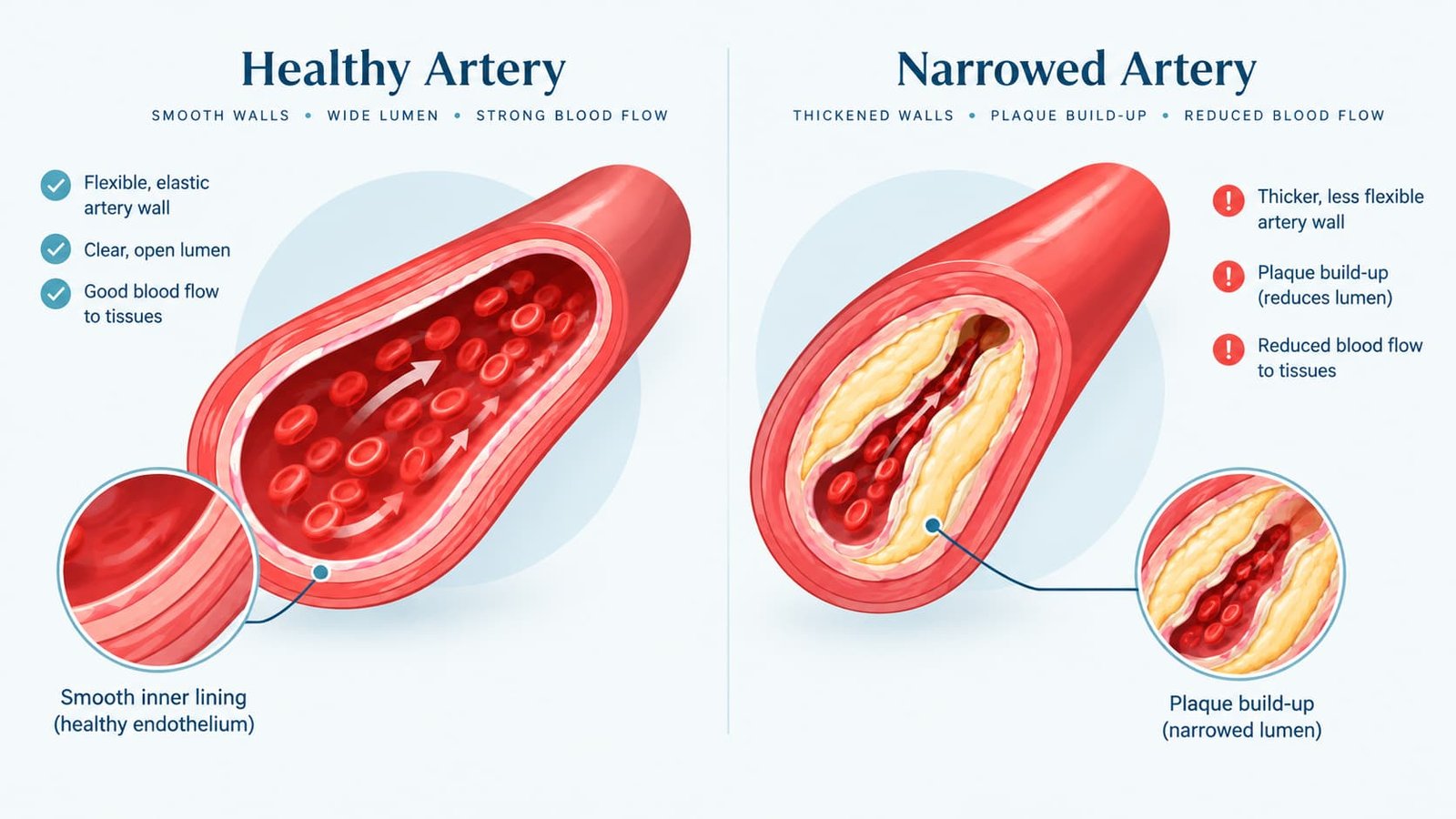
  • Erectile Dysfunction and Gum Disease: The Surprising Link

    Erectile Dysfunction and Gum Disease: The Surprising Link

    ✅Medically reviewed

    A bleeding gum and a failing erection look like unrelated problems. Medical research now challenges that assumption. Studies from Turkey, Taiwan, India and Israel report a consistent pattern. Men with severe gum disease show higher rates of erectile problems than men with healthy gums. This pattern places erectile dysfunction and gum disease in the same clinical conversation.

    The numbers deserve attention. A 2021 meta-analysis covered 215,008 participants. It reported an odds ratio of 2.56 for erectile dysfunction (ED) in men with periodontitis. That figure shows association, not proof of cause. Researchers still debate what drives the link. Inflammation, damaged blood vessels and shared lifestyle risks all feature in the discussion.

    Inflammation sits at the centre of the debate. Gum disease keeps the immune system active for years. Erectile function depends on healthy, flexible blood vessels. Chronic inflammation can damage exactly those vessels.

    Oral health rarely features in a consultation about sexual function. Dentists seldom ask about erections. GPs seldom examine gums. Each specialty therefore sees only half of the picture. A joined-up view may help men spot warning signs earlier.

    This article examines erectile dysfunction and gum disease using peer-reviewed evidence. Sources include the NHS, NICE and the European Federation of Periodontology (EFP). The sections below explain how gum inflammation might affect blood flow. Limits of the current research receive equal attention. Practical steps for oral and vascular health follow.

    Understanding the Link Between Gum Disease and ED

    What Gum Disease Involves

    Gum disease starts when plaque builds up along the gum line. Plaque is a sticky film of bacteria. The NHS describes the earliest stage as gingivitis. Gums turn red, swollen and sore, and bleed during brushing. Gingivitis can reverse with good oral hygiene.

    Untreated gingivitis can progress to periodontitis. This stage damages the bone and tissue that hold teeth in place. Gums recede, breath turns unpleasant and teeth may loosen. Periodontitis often causes little pain, so many men carry the disease unaware. The NHS stresses that regular dental check-ups matter for this reason.

    Dentists use the term chronic periodontitis for the slowly progressing, long-standing form. Most studies on ED examine this form.

    What Erectile Dysfunction Involves

    Erectile dysfunction means persistent difficulty achieving or keeping an erection firm enough for sex. The NHS describes the condition as common, especially with age. An erection depends on healthy blood vessels, intact nerves, balanced hormones and a settled mind. Disruption in any of these systems can impair function.

    ED often reflects the health of blood vessels throughout the body, not only the penis. NICE Clinical Knowledge Summaries therefore advise clinicians to assess cardiovascular risk in men with ED. This vascular link explains the interest in gum inflammation. Clinicians now ask whether erectile dysfunction and gum disease share a common vascular root.

    What Does Research Say About Erectile Dysfunction and Gum Disease?

    Evidence From Meta-Analyses

    Several systematic reviews have examined periodontal disease and erectile dysfunction. A 2016 meta-analysis in the International Journal of Impotence Research pooled five studies with 213,006 participants. It reported an odds ratio of 2.28 for ED in men with chronic periodontitis. The 2021 meta-analysis in the American Journal of Men’s Health added newer data. It reported an odds ratio of 2.56 across six studies.

    A 2018 systematic review of nine studies found a positive association in every study. Four studies reported odds ratios between 1.53 and 3.35. A 2019 British Dental Journal review covered nine case-control studies and three meta-analyses. Odds ratios there ranged from 1.53 to 5.94. Every analysis reviewed here points the same way. Men with periodontitis report ED more often than men with healthy gums.

    Evidence From Treatment Trials

    Intervention trials ask a sharper question. They test whether treating gum disease changes erectile function. A 2013 randomised controlled trial enrolled 120 men with moderate or severe ED and chronic periodontitis. It appeared in the Journal of Clinical Periodontology. Half received periodontal treatment. The other half received none.

    Researchers measured erectile function with the International Index of Erectile Function questionnaire. Scores matched between the groups at one month. At three months, the treated group showed a greater improvement. The EFP cites a second trial, from 2020, with a similar direction.

    Treating gum disease may therefore add a benefit for men who have both conditions. Both trials were small and short. Neither establishes that the benefit lasts. Larger, longer trials must confirm the result. Publication bias may also play a role.

    Limits of the Evidence

    Honest interpretation requires caution. Most studies use cross-sectional or case-control designs. These designs show association but cannot prove cause. The 2016 meta-analysis reported very high heterogeneity, with an I² of 97.8%. A 2019 British Dental Journal review also flagged considerable heterogeneity.

    Several other problems limit interpretation. Studies on oral health and erectile dysfunction define both conditions in different ways. Small samples affect some trials. Unmeasured confounders may remain even after statistical adjustment. Association alone does not prove a causal chain between erectile dysfunction and gum disease.

    Can Gum Disease Cause Erectile Dysfunction?

    Current evidence cannot confirm a direct cause. Biological plausibility exists, though. Three routes receive most attention: inflammation, impaired blood flow and shared risk factors.

    Gum Inflammation and Erectile Dysfunction

    Periodontitis creates a chronic inflammatory burden. Bacteria and bacterial products accumulate in the gum pockets. According to the EFP, microorganisms, bacterial components and inflammatory molecules enter the systemic circulation in severe periodontitis. These agents can damage blood vessels in distant organs.

    Inflammation and erectile dysfunction share a well-described biological route. Proinflammatory cytokines promote atherosclerosis, which narrows arteries. Penile arteries have a small diameter, so narrowing may reduce penile blood flow early. Clinicians often describe this idea as the artery-size hypothesis.

    Gum Disease and Blood Flow

    Gum disease and blood flow connect through the lining of the blood vessels, the endothelium. A healthy endothelium releases nitric oxide. That molecule relaxes vessel walls and allows blood to flow in.

    Four-step diagram of how gum inflammation may reduce nitric oxide and penile blood flow
    One proposed pathway from periodontitis to impaired erectile blood flow.

    The Nitric Oxide Pathway

    An erection requires the penile arteries to widen. Nitric oxide drives that widening. Oxidative stress lowers nitric oxide availability. The EFP proposes that periodontitis could reduce nitric oxide through inflammatory molecules and oxidative stress. Animal research supports the idea. Rats with induced periodontitis showed lower nitric oxide synthase activity in penile tissue.

    Early Vascular Changes

    Periodontitis can promote early vascular changes that signal the start of atherosclerosis. The EFP reports that periodontal treatment can improve these changes. This finding supports a vascular explanation. Reviewers therefore link the association to vasculogenic ED, the form that stems from impaired blood flow.

    Shared Risk Factors

    Shared risk factors may explain part of the association. The EFP lists high blood pressure, cardiovascular disease, dyslipidaemia, poorly controlled diabetes and obesity. Each raises the risk of both ED and periodontitis. Smoking affects both conditions as well.

    Researchers adjust for these factors where possible. The 2016 meta-analysis found estimates broadly consistent in sensitivity analyses. According to the EFP, unknown risk factors may also influence the relationship. A direct inflammatory effect and shared risk factors may both contribute.

    Chronic Periodontitis and Erectile Dysfunction: Who Faces Higher Risk?

    The pattern appears across age groups. Studies include men aged 20 to 85 years. Smokers, men with diabetes and men with obesity appear in both risk groups. Periodontal disease and ED therefore share many of the same drivers.

    Men also tend to show lower health awareness and less consistent oral hygiene, according to the EFP. Higher rates of smoking and less healthy diets add to the burden.

    Erectile Dysfunction Causes: Where Oral Health Fits

    Doctors place erectile dysfunction and gum disease within a wider list of causes. Most men have more than one contributing factor. The list below summarises the main groups.

    • Vascular disease, including atherosclerosis, high blood pressure and high cholesterol
    • Type 2 diabetes, which damages blood vessels and nerves
    • Obesity and low physical activity
    • Smoking and heavy alcohol use
    • Low testosterone and other hormonal conditions
    • Stress, anxiety and depression
    • Side effects of some medicines
    • Chronic inflammatory conditions, with periodontitis as one possible contributor

    Oral health forms one contributing factor, not a standalone explanation. The NHS advises any man with persistent ED to see a GP. A GP can check blood pressure, blood glucose, cholesterol and testosterone levels.

    Gum Disease and Male Sexual Health Beyond Erections

    Research on gum disease and male sexual health extends beyond erectile function. Some studies suggest periodontitis may affect sperm quality and quantity. Several meta-analyses report an association between gum disease and prostate cancer. The EFP states that more research must confirm both relationships. Evidence in these areas remains preliminary.

    Warning Signs That Deserve Attention

    Gum Warning Signs

    The NHS advises a dental visit for several signs.

    • Gums that bleed during brushing, flossing or eating hard foods
    • Red, swollen or sore gums
    • Persistent bad breath or an unpleasant taste
    • Gums that recede from the teeth
    • Teeth that loosen or fall out

    The NHS asks for an urgent dental appointment when severe swelling, loose teeth, mouth ulcers or a lump appear.

    Erectile Warning Signs

    Ongoing difficulty with erections merits a GP appointment. Weaker erections, fewer morning erections and trouble sustaining an erection all count. Chest pain, breathlessness or leg pain on exertion need prompt medical review.

    Practical Steps for Oral and Vascular Health

    Evidence-based habits protect both the mouth and the circulation. The EFP recommends four core oral measures.

    • Brush twice a day with fluoride toothpaste
    • Clean between the teeth daily
    • Schedule regular professional cleanings
    • Seek dental advice promptly for bleeding gums

    Interdental brushes and floss reach areas that a toothbrush misses. The dental team can advise on suitable sizes and techniques.

    NICE guideline CG19 sets dental recall intervals between three and 24 months for adults. Individual risk determines the interval for each patient. The NHS adds that smoking and diabetes may justify more frequent visits.

    General lifestyle measures also matter. Stopping smoking improves gum health and vascular health. Regular exercise and a balanced diet support circulation. Good control of blood pressure and diabetes helps both conditions.

    Joined-Up Care Between Dentist and GP

    Dentist examining gums with a periodontal probe during a routine check-up
    Regular dental reviews can detect gum disease before symptoms appear.

    Dentists see gum pockets, bleeding and bone loss directly. GPs see blood pressure, glucose and cholesterol. Each set of results informs the other. A dentist who finds severe periodontitis can suggest a GP review of cardiovascular risk. GPs who treat ED can ask about bleeding gums and recent dental visits. This cooperation costs little and uses routine appointments.

    Realistic Outcomes and Limitations

    Realistic expectations protect informed decision-making. Gum treatment does not cure ED. Trials show short-term gains in questionnaire scores for men with both conditions. Many men with ED have other dominant causes. A dental clean cannot correct diabetes, low testosterone or severe arterial disease. Men reading about erectile dysfunction and gum disease should treat findings as prompts for checks, not diagnoses.

    Good gum care supports general health, even when it does not change erectile function.

    When Specialist Assessment of Erectile Dysfunction Helps

    Persistent ED needs a proper medical assessment. Assessment usually covers medical history, blood pressure, glucose, lipids and hormone levels. The NHS describes lifestyle change and tablets such as sildenafil or tadalafil as common first steps.

    Some clinics also offer platelet-rich plasma (PRP) injections under the names Priapus Shot and P shot. Patients who consider a Priapus Shot London service should ask about evidence, risks and realistic outcomes. The same advice applies to any P shot London or P Shot UK provider. Evidence for PRP in ED remains limited, and large long-term trials are scarce. PRP does not treat gum disease. Gum treatment, in turn, does not replace specialist ED assessment.

    Dr Syed Nadeem Abbas leads pshots clinic UK, a private clinic on Harley Street in Marylebone. He holds MBBS, MRCS (RCS Edinburgh) and MRCGP qualifications. His MSc in Aesthetic Plastic Surgery carries Distinction from Queen Mary University of London. He trained at Cambridge, Oxford and the Royal London Hospital. The clinic assesses ED and explains treatment options with the supporting evidence.

    Frequently Asked Questions

    Does treating gum disease cure erectile dysfunction?

    No. Trials report improved questionnaire scores at three months in men with both conditions. Long-term benefit remains unproven. ED has many causes, and gum treatment addresses only one possible contributor.

    Which men face the highest risk of both conditions?

    Smokers, men with diabetes, men with high blood pressure and men with obesity face higher risk. Older age and poor oral hygiene add to the risk. A family history of gum disease also raises the risk of periodontitis.

    How does gum disease affect blood flow?

    Severe periodontitis releases inflammatory molecules and bacterial products into the circulation. These agents can impair the vessel lining and reduce nitric oxide. Reduced nitric oxide limits vessel widening. Research on this pathway continues.

    Should a man with erectile dysfunction see a dentist?

    A dental check-up makes sense, particularly with bleeding gums or loose teeth. The dentist can measure gum pockets and recommend treatment. A GP visit remains the first step for the ED itself.

    Does gum disease guarantee erectile dysfunction?

    No. Studies report higher odds, not certainty. Many men with gum disease keep normal erectile function.

    Can the P shot treat erectile dysfunction linked to gum disease?

    No evidence links the P shot to gum-related ED. PRP evidence for ED remains limited. Anyone considering the treatment should discuss risks and alternatives with a qualified doctor.

    Key Takeaways

    The research connects erectile dysfunction and gum disease through consistent statistical evidence. Pooled odds ratios range from about 2.3 to 2.6 in recent meta-analyses. Plausible biological routes include inflammation, oxidative stress and impaired nitric oxide signalling.

    Causation remains unproven, and trials remain small. Shared risk factors explain part of the pattern. Good gum care costs little and benefits general health. Medical assessment remains essential for persistent ED.

    Informed decisions rest on balanced evidence. A dental check-up and a GP review both deserve a place in routine health planning. Men with bleeding gums or erectile changes can start with either appointment.

    If oral and vascular health share warning signs, which routine check has waited longest for an appointment?

    Read more:

    Sleep Apnoea and Erectile Dysfunction: Is There a Link to Consider Before a P Shot?

    Can Type 2 Diabetes-Related Erectile Dysfunction Be Reversed? What Research Shows

    Dr Syed Nadeem Abbas, MBBS, MRCSEd, MSc Aesthetic Plastic Surgery (Distinction) Medical Director, Pshot Clinic | CQC Regulated | Monday to Saturday 10:00–18:00 +44 7955 836986 
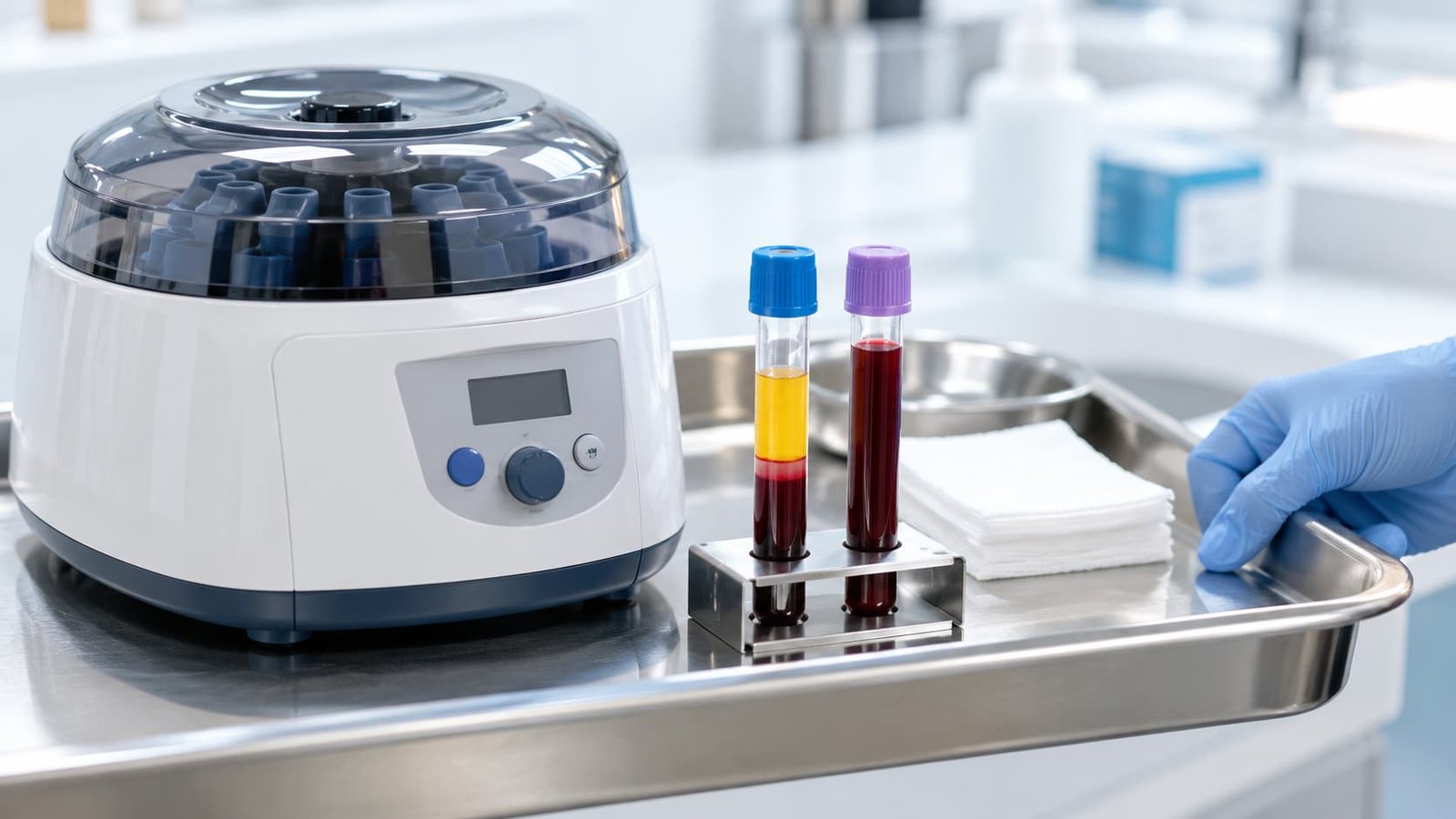
  • Priapus Shot Price vs a Shockwave Course: A Cost Comparison

    Priapus Shot Price vs a Shockwave Course: A Cost Comparison

    ✅Medically reviewed

    The Priapus shot price looks simple, but a shockwave course changes the maths. One P Shot session carries one fee. A shockwave course spreads cost across several visits. Comparing a single fee with a multi-visit total produces a misleading result.

    Men who search for P Shot cost UK figures often meet scattered numbers. Some clinics quote one session. Others quote a package. A fair comparison weighs the full cost of a treatment plan, not the price of one appointment. Consultation fees, follow-up reviews, session counts, and extras all alter the final total.

    This article sets out current London prices for the Priapus Shot and for shockwave therapy. Each section explains how many sessions a treatment may need. The article also reviews the evidence behind both options. Neither treatment guarantees a result. Costs vary between clinics and between treatment plans.

    The fees quoted below come from the current Marylebone price list. Independent clinics set separate fees, so patients should confirm every figure in writing before booking.

    Cost matters, yet cost alone cannot show value. Evidence, session numbers, clinician qualifications, and follow-up care shape what a fee really buys. The sections below separate each factor.

    Priapus Shot Price in London: What the Fee Covers

    Protocol and clinic both influence the Priapus shot price in London. The pshots clinic UK in Marylebone publishes fixed package fees under the clinical lead of Dr Syed Nadeem Abbas. Qualifications include MBBS, MRCS and MRCGP. An MSc in Aesthetic Plastic Surgery, with distinction, adds further training. Clinical posts took place in Cambridge, Oxford and the Royal London Hospital.

    The Standard P Shot costs £1,250. That fee covers a doctor consultation, dual-spin platelet-rich plasma (PRP) preparation, and topical numbing or a nerve block. It also covers the injections and follow-up reviews at six and twelve weeks.

    Enhanced P Shot with same-day shockwave

    The Enhanced package pairs the P Shot with low-intensity shockwave therapy in one visit. This option costs £1,350. The price list shows a previous price of £1,750. A Standard P Shot plus one standalone shockwave session would total £1,750 at current fees. Doctors may advise the combined route where vascular factors play a role. Evidence for the combination remains limited, so no clinic can promise added benefit.

    P Shot cost UK range

    P Shot price UK figures differ widely. Published clinic information places typical prices between about £1,000 and £2,500. Wide gaps can reflect different inclusions. Cheaper listings may omit follow-up reviews or anaesthesia. Higher fees may cover extra services. Location and clinic overheads can also influence fees. Priapus Shot London fees sit inside that wider range. A line-by-line check of each quote therefore matters for Priapus shot cost in London.

    Why the P Shot treatment price needs context

    A P Shot treatment price can include or exclude several items. These items include the consultation, the anaesthetic, the PRP preparation method, and follow-up care. Dual-spin processing, for example, takes more time than single-spin processing. Patients should ask each clinic to list inclusions in writing. A written list makes two quotes comparable.

    How Many P Shot Sessions Make Up a Full Course?

    Clinic information states that most men have one P Shot treatment. Maintenance treatment may follow after 12 to 18 months. Some conditions may need two or three treatments spaced 6 to 12 weeks apart. Examples include Peyronie’s disease, recovery after prostate surgery, and severe vascular erectile dysfunction.

    Session count turns a single fee into a plan. At the Standard fee, two sessions total £2,500. Three sessions total £3,750. These totals come from simple multiplication, not from quoted packages. The price list mentions no multi-session discount for the P Shot. Doctors set the plan after consultation. P Shot for erectile dysfunction may need fewer or more sessions than these examples.

    Independent research has not settled the best number of sessions or the ideal gap between sessions. Patients should ask the clinician to justify the planned session count in writing.

    What Does a Shockwave Therapy Course Cost?

    Low-intensity extracorporeal shockwave therapy (LI-ESWT) delivers acoustic pulses to penile tissue. Researchers propose that the pulses encourage new blood vessel growth. Shockwave therapy cost UK pricing depends on the clinic, the device, and the number of sessions.

    The Marylebone price list shows £500 per standalone session. A six-session course costs £2,500. Six separate sessions would cost £3,000. Shockwave therapy for ED cost drops by £500 when a patient books the six-session course. The shockwave therapy course price therefore averages about £417 per session.

    Course length varies between clinics. Some protocols use fewer sessions, and others use more. A shockwave therapy course price from one clinic therefore cannot stand in for another clinic’s total. Patients should compare cost per session and total sessions together.

    Evidence on how long benefit lasts after a course remains uncertain. Patients should ask whether a repeat course may follow and what that course would cost.

    P Shot vs Shockwave Therapy Cost: Side-by-Side Totals

    Infographic comparing one P Shot session with a six-session shockwave therapy course
    Total plan cost depends on session count, not on a single appointment fee.

    The table below sets each option against its total fee. Every P shot London row uses the Marylebone price list. The shockwave rows use the same list. Simple multiplication produces the two-session and three-session rows.

    OptionWhat the fee coversSessionsTotal fee
    Standard P Shot, one sessionConsultation, dual-spin PRP, anaesthesia, injections, two follow-ups1£1,250
    Standard P Shot, two sessionsSame package, repeated2£2,500
    Standard P Shot, three sessionsSame package, repeated3£3,750
    Enhanced P Shot with shockwavePRP plus same-day LI-ESWT1£1,350
    Shockwave therapy, six-session courseLI-ESWT only6£2,500
    Shockwave therapy, six single sessionsLI-ESWT only6£3,000

    A single Standard P Shot costs half as much as the six-session shockwave course. Two Standard P Shot sessions match the course price exactly. Three sessions exceed it by £1,250. The Enhanced package costs £1,350 and includes one shockwave session alongside the PRP injections.

    Why session numbers change the comparison

    P Shot vs shockwave therapy cost depends on visit count as well as fees. A P Shot appointment lasts 60 to 90 minutes and usually involves one visit. Shockwave courses involve six visits. Each visit adds travel time and may add time away from work. These indirect costs sit outside any price list. Patients who live far from central London should weigh that factor.

    What Does the Evidence Say About Value?

    Price means little without context on effectiveness. Neither treatment guarantees improvement. Each treatment also carries a different strength of evidence.

    Evidence for the P Shot

    PRP for erectile dysfunction remains an emerging field. A randomised, placebo-controlled trial by Poulios and colleagues reported improved erectile function scores after PRP injections. The Journal of Sexual Medicine published the trial in 2021. That trial enrolled a small group of men, so larger studies must confirm the findings. Clinic information also states that some men respond poorly. Long-term independent data on duration of benefit remain limited.

    The Priapus shot price does not guarantee a response. Responders and non-responders pay the same fee. Refund policies differ between clinics, so patients should ask before booking.

    PRP preparation equipment and a handheld shockwave therapy applicator on a sterile clinic tray
    Each option uses different equipment, evidence and session patterns.

    Evidence for shockwave therapy

    Shockwave therapy has more randomised trial data than the P Shot. Even so, guideline bodies urge caution. A 2019 review by Schoofs and colleagues examined the guidance. The American Urological Association classes LI-ESWT as investigational. One recent systematic review and meta-analysis of randomised trials searched databases to October 2024. It found statistically significant gains in several studies. Most studies, however, did not reach the minimally clinically important difference. The authors concluded that clinical benefit remains unclear.

    Neither fee buys a guaranteed outcome. Realistic expectations matter before any treatment plan starts. A doctor should explain likely benefits, limits, and alternatives during consultation.

    Costs Outside the Quoted Fee

    The Priapus shot price on the price list excludes several items. These items include travel, accommodation, additional sessions, imaging, blood tests, and optional adjunctive devices unless the clinic and patient agree otherwise. Each exclusion can raise the final total. Diagnostic work deserves particular attention. NHS information states that erectile dysfunction can signal heart or blood vessel disease. A GP assessment therefore usually comes first. Private blood tests or scans add cost.

    Treatment fees also ignore the cost of untreated causes. Smoking, diabetes, high blood pressure, and low activity all affect erectile function. Managing these factors may also influence results.

    Safety and Limitations That Affect Value

    Side effects add context to any cost comparison. Clinic information describes bruising, mild swelling, and tenderness at injection sites. These effects usually last 24 to 48 hours after a P Shot. Serious complications, such as infection, remain rare. Trials of shockwave therapy report mostly mild discomfort. Long-term safety data for both treatments remain limited.

    Some men should not have the P Shot. Clinic information lists active genital infection, untreated platelet or clotting disorders, and certain cancers among the reasons. A doctor must screen for these conditions before treatment. Suitability screening protects patients before treatment fees ever arise. A separate consultation fee, where a clinic charges one, therefore deserves a place in the comparison.

    Cost of ED Treatments in the UK: Wider Context

    Erectile dysfunction treatment cost UK varies widely by route. NICE Clinical Knowledge Summaries set out a primary care approach. The approach begins with lifestyle review, assessment of cardiovascular risk, and PDE5 inhibitor tablets such as sildenafil or tadalafil. NHS pathways may then extend to vacuum devices, penile injections, and surgery in selected cases.

    The NHS does not fund the P Shot for erectile dysfunction. Only private clinics offer the P Shot. Prescription charges apply to NHS tablets in England, with exemptions for some groups. Cost of ED treatments in the UK therefore ranges from recurring medication costs to one-off or course-based procedure fees.

    Medication and procedures also differ in aim. Tablets act at the time of use. The P Shot and shockwave therapy aim to influence tissue and blood vessel function over time. Total cost depends on whether any benefit lasts.

    Illustrative Cost Scenarios Over 18 Months

    Simple arithmetic shows how plans diverge over time. The scenarios below use published fees and do not predict any individual outcome.

    ScenarioAssumptionTotal fee
    P Shot onceOne Standard session, no repeat£1,250
    P Shot with one repeatSecond Standard session within 12 to 18 months£2,500
    Enhanced P Shot oncePRP plus same-day shockwave£1,350
    Shockwave course onceSix sessions at the course price£2,500
    Shockwave course with one repeatSecond six-session course£5,000

    Repeat treatment doubles any total. Published information does not state how often shockwave courses need repeating. Patients should therefore request a written estimate of the likely total. A realistic estimate includes repeat treatment where the doctor expects it. These scenarios also exclude separate tests and travel, so real totals may differ.

    Questions to Ask Any Clinic Before Paying

    Clear answers protect patients from unexpected costs. A short checklist helps.

    • Which services does the quoted fee cover?
    • How many sessions does the treatment plan assume?
    • Does the fee include follow-up reviews?
    • Which tests, scans, or devices sit outside the fee?
    • What happens if no improvement follows?
    • Does the Care Quality Commission regulate the clinic, and does the General Medical Council register the doctor?
    • Which finance terms and refund terms apply?

    Written answers allow a fair comparison across clinics. A Priapus shot price in London from one clinic then lines up against a shockwave course quote from another.

    Which Option Suits Which Situation?

    Published clinic guidance suggests different roles for each treatment. It places standalone P Shot treatment with Peyronie’s disease and reduced sensitivity. Standalone shockwave therapy fits vascular erectile dysfunction in that guidance. This guidance reflects clinic opinion, not independent trial proof. A doctor must assess each case before any plan starts.

    Frequently Asked Questions

    What is the Priapus shot price in the UK?

    Listings for P Shot UK range from about £1,000 to £2,500. The Marylebone Standard fee is £1,250, and the Enhanced package costs £1,350.

    Which is cheaper: a P Shot or a shockwave course?

    One Standard P Shot costs £1,250. A six-session shockwave course costs £2,500. Multi-session P Shot plans narrow or reverse that gap.

    Does the NHS cover either treatment?

    The NHS does not fund the P Shot for erectile dysfunction. NHS care starts with tablets and lifestyle advice. A GP can explain local options for other treatments.

    Does the fee include a consultation?

    The Marylebone Standard fee includes a doctor consultation. Other clinics may charge for consultations separately, so patients should confirm this point before comparing totals.

    How long do P Shot results last, and does that affect value?

    Clinic information states that benefit typically lasts 12 to 18 months, with some men reporting up to 24 months. Independent long-term data remain limited. Duration directly affects value, so patients should ask how the clinic measures results.

    Can finance spread the cost?

    The Marylebone price list offers 0% finance, with terms confirmed at consultation. Other clinics set separate terms.

    Does a higher fee mean better results?

    Fee alone does not show quality or outcome. Qualifications, regulation, inclusions, and honest discussion of limits deserve equal attention.

    Can a patient combine both treatments?

    Some clinics offer a same-day combined package. The Marylebone Enhanced package costs £1,350. Evidence for combined use remains limited, so a doctor should explain the rationale.

    Conclusion: Compare Plans, Not Single Fees

    Total plan cost, not headline price, gives the fairest comparison. One Standard P Shot costs £1,250. A six-session shockwave course costs £2,500. Repeat P Shot sessions can lift the P Shot total above the shockwave total.

    Neither treatment guarantees improvement. Evidence for both remains limited, and outcomes vary between men. A GP assessment, a clear written plan, and a transparent Priapus shot price support informed decisions. Patients should also confirm inclusions, session counts, and refund terms before paying.

    Costs, protocols, and evidence continue to change. Current figures should always come from the clinic directly.

    Which matters more: the lowest fee today, or a clear plan for total cost and likely benefit?

    Read more:

    Can the P Shot Be Repeated for Better Results? What to Know

    What Qualifications Should a P Shot London Clinician Have?

    Dr Syed Nadeem Abbas, MBBS, MRCSEd, MSc Aesthetic Plastic Surgery (Distinction) Medical Director, Pshot Clinic | CQC Regulated | Monday to Saturday 10:00–18:00 +44 7955 836986 

  • Sleep Apnoea and Erectile Dysfunction: Is There a Link to Consider Before a P Shot?

    Sleep Apnoea and Erectile Dysfunction: Is There a Link to Consider Before a P Shot?

    ✅Medically reviewed

    Erections depend on blood flow, nerve signals, hormones and sleep. Sleep apnoea can disturb all four. Research now connects sleep apnoea and erectile dysfunction more closely than many clinicians once expected.

    Loud snoring often looks like a harmless habit. Medical evidence shows a different picture in some men. Repeated breathing pauses lower blood oxygen, fragment sleep and strain the heart and blood vessels. The same vessels supply the penis.

    A full night in bed does not guarantee restorative sleep. Large numbers of men with sleep apnoea never receive a diagnosis. Others with erectile dysfunction never undergo a sleep assessment. The two conditions overlap far more often than chance alone would predict.

    This article addresses men who have had a vasectomy and now consider P Shot treatment for erection problems. The NHS confirms that vasectomy does not cause erectile dysfunction. Another cause therefore deserves attention. Sleep apnoea remains a frequently overlooked candidate.

    The sections below explain how sleep apnoea and erectile dysfunction relate through breathing, hormones and mood. Further sections cover sleep apnoea symptoms in men, the UK diagnosis pathway and the evidence behind PRP injections. The aim is an informed decision, not a sales pitch.

    What Is Obstructive Sleep Apnoea?

    Obstructive sleep apnoea (OSA) occurs when the upper airway narrows or closes during sleep. Throat muscles relax, and airflow drops or stops. NICE guideline NG202 uses the term obstructive sleep apnoea/hypopnoea syndrome (OSAHS) for this condition. Breathing pauses of ten seconds or more count as apnoeas. Partial reductions in airflow count as hypopnoeas.

    Clinicians grade severity with the apnoea-hypopnoea index (AHI), which counts breathing events per hour of sleep. A reading below 5 is normal. Mild OSA scores 5 to 15, moderate OSA scores 15 to 30, and severe OSA scores above 30.

    How Common Is Sleep Apnoea in the UK?

    NICE describes OSAHS as common yet frequently unrecognised. Scoping work for NG202 estimated that around 5% of UK adults live with undiagnosed disease. Men, older adults and people with obesity carry higher risk. Evening alcohol, smoking and nasal obstruction add further risk.

    Sleep Apnoea Symptoms in Men

    Sleep apnoea symptoms in men often reach attention through a bed partner. Night-time and daytime features both matter.

    Common night-time features include:

    • Loud, habitual snoring
    • Witnessed pauses in breathing
    • Choking or gasping during sleep
    • Frequent waking to pass urine

    Common daytime features include:

    • Unrefreshing sleep despite adequate hours in bed
    • Excessive daytime sleepiness
    • Morning headaches
    • Poor concentration and memory lapses
    • Low mood or irritability
    • Reduced sex drive and weaker erections

    Primary care guidance based on NICE NG202 suggests assessment when two or more of these features appear together. Snoring alone does not confirm sleep apnoea. Many men who snore have normal breathing during sleep.

    What Research Shows About Sleep Apnoea and Erectile Dysfunction

    Researchers have studied sleep apnoea and erectile dysfunction for more than two decades. Early studies relied on small samples. Recent systematic reviews pool larger datasets.

    Prevalence Figures

    A 2026 meta-analysis in the International Journal of Impotence Research examined obstructive sleep apnoea and ED. Eight studies met its criteria. Erectile dysfunction affected 59% to 69% of men with OSA across the studied populations.

    A prospective cross-sectional study of 133 men with suspected OSA reached a similar conclusion. Among 80 men with confirmed OSA, 60% reported erectile dysfunction. The authors recommended that clinicians investigate ED in all men with OSA. Healthy Male, the Andrology Australia resource, states that ED is twice as likely in men with sleep apnoea.

    Severity Matters

    Worse breathing at night tracks with worse erections. The 2026 meta-analysis pooled seven studies covering 594 patients. Analysis found a moderate inverse correlation between AHI and International Index of Erectile Function (IIEF) scores. Higher AHI therefore coincided with lower erectile scores.

    A Urologia Internationalis systematic review by NHS urology teams examined the same link. The review also assessed possible mechanisms and treatment options.

    Limits of the Evidence

    Association does not prove causation. Age, obesity, diabetes, high blood pressure, smoking and alcohol drive both conditions. The meta-analysis authors flagged age as a significant confounder. High variation between studies and between erectile-function questionnaires further limits the pooled estimates.

    Healthy Male notes that the reason for the higher ED rate remains poorly understood. Shared risk factors may explain part of the link. Direct effects of disrupted breathing may explain the rest.

    How Sleep Apnoea May Affect Erections

    Researchers propose several overlapping mechanisms. None operates alone in every man.

    Low Oxygen and Erectile Function

    Diagram comparing healthy blood vessel flow with a vessel under low oxygen stress, showing how low oxygen affects erectile function
    Repeated oxygen drops during sleep can strain the blood vessels that supply the penis.

    Each apnoea causes oxygen levels to fall, then rise sharply when breathing restarts. Doctors call this pattern intermittent hypoxia. The pattern stresses blood vessel linings.

    Healthy erections need the vessel lining to release nitric oxide. Nitric oxide relaxes smooth muscle in the corpus cavernosum, and blood then fills the penis. Intermittent hypoxia reduces nitric oxide availability and promotes inflammation. Reviews also describe increased collagen deposition, which reduces penile elasticity.

    Low oxygen and erectile function connect through the same vessels that supply the heart. Erectile dysfunction can signal early vascular disease. NHS guidance lists heart disease, high blood pressure and diabetes among common causes.

    Sleep Apnoea and Testosterone

    Testosterone release rises during sleep, and sleep fragmentation disrupts that rhythm. Luboshitzky and colleagues reported reduced pituitary-gonadal hormone secretion in men with OSA in 2002. Later studies found lower testosterone in some men with severe disease.

    Obesity complicates the picture. Excess abdominal fat lowers testosterone and raises OSA risk simultaneously. Sleep apnoea and testosterone therefore interact in both directions.

    Evidence on CPAP and testosterone remains mixed. Some trials report modest rises, while others report no change. Clinicians usually measure morning testosterone before making any diagnosis of deficiency.

    Poor Sleep and Erectile Dysfunction

    Sleep restores the systems that erections rely on. Poor sleep and erectile dysfunction also connect through stress hormones, blood pressure and mood. Fragmented sleep raises cortisol and sympathetic nervous system activity. Both changes reduce the relaxation that erections require.

    Healthy men normally have several nocturnal erections during REM sleep. Some researchers propose that these erections help oxygenate penile tissue. Budweiser and colleagues reported in 2009 that sleep apnoea independently correlated with erectile and sexual dysfunction.

    Daytime fatigue adds a further barrier. Tired men report lower desire, less energy and more anxiety around sex. Performance anxiety then compounds a physical problem.

    Snoring and Erectile Dysfunction

    Loud, habitual snoring can signal sleep apnoea. Snoring and erectile dysfunction therefore deserve joint attention when snoring comes with pauses, gasping or heavy tiredness. Simple snoring without those features carries less concern.

    Lifestyle Factors That Affect Both Conditions

    Several modifiable factors worsen sleep apnoea and erectile function together. Addressing these factors can help both conditions.

    • Excess weight narrows the airway and lowers testosterone.
    • Evening alcohol relaxes throat muscles and impairs erections.
    • Smoking damages blood vessels and irritates the airway.
    • Sedentary habits raise blood pressure and blood sugar.

    NHS advice on erectile dysfunction recommends regular exercise, a balanced diet and limited alcohol. Those steps carry low risk and support cardiovascular health generally.

    Sleep Apnoea and Sexual Dysfunction Beyond Erections

    Sleep apnoea and sexual dysfunction extend beyond erection quality. Studies report reduced desire and lower sexual satisfaction in affected men.

    Mood plays a major role. Depression and anxiety occur more often in men with untreated sleep apnoea. Several antidepressants can worsen erectile function and desire. A full medicine review therefore forms part of any sound assessment.

    Sleep Apnoea Diagnosis UK: What the Pathway Involves

    Who Should Seek Assessment

    Men should contact a GP when snoring comes with witnessed pauses, choking or marked daytime sleepiness. Excessive sleepiness also raises driving risk, and DVLA rules apply to affected drivers.

    Tests Used in the NHS

    GPs typically begin with questionnaires. The Epworth Sleepiness Scale rates daytime sleepiness, and a score of 10 or above indicates excessive sleepiness. STOP-BANG estimates OSA risk, and a score of 5 or above signals high risk.

    Specialist services then arrange home respiratory polygraphy or a full sleep study. NICE NG202 states that diagnosis rests on monitoring breathing during sleep. Private sleep clinics also offer home studies. Waiting times for NHS sleep services vary by region.

    Treatment Options

    Treatment depends on severity and symptoms. NICE recommends continuous positive airway pressure (CPAP) for moderate to severe OSAHS. Mild disease also qualifies for CPAP when symptoms affect daily life. Supporting measures include:

    • Weight loss in men with excess weight
    • Less alcohol in the evening
    • Stopping smoking
    • Positional therapy when sleep apnoea worsens on the back
    • Oral appliances for some men with mild to moderate disease or CPAP intolerance

    Does CPAP Improve Erections?

    Studies in the 2026 meta-analysis linked CPAP with reported improvements in erectile function. The size of benefit varied by questionnaire. Pooled estimates carried high variation between studies. Some men still need further ED treatment after CPAP.

    Vasectomy, Sleep Apnoea and Erectile Function

    The NHS states that vasectomy does not affect erections, sex drive or ejaculation. Surgeons cut or seal the vas deferens, which carries sperm. Nerves and blood vessels that control erections stay outside the surgical field.

    Erectile changes after vasectomy therefore usually reflect another cause. Sleep apnoea and erectile dysfunction often emerge in the same decade of life, so timing can mislead. Many men have a vasectomy in mid-life, when sleep apnoea risk, weight, blood pressure and stress often rise together.

    A new erection problem after vasectomy still needs a full medical work-up. Clinicians should check vascular risk, hormones, mental health, medicines and sleep before blaming the procedure.

    Why Sleep Apnoea Matters Before P Shot Treatment

    Doctor reviewing sleep study results with a patient during an erectile dysfunction assessment in London
    Sleep, hormone and blood tests can clarify the cause of erection problems before any treatment decision.

    Sleep apnoea and erectile dysfunction matter to P Shot candidates for a practical reason. Untreated breathing problems can blur the picture of what an injection achieves.

    What P Shot Treatment Involves

    P Shot treatment uses platelet-rich plasma (PRP) prepared from the patient’s own blood. A clinician draws blood, concentrates platelets in a centrifuge and injects the preparation into penile tissue. Clinicians also call the procedure the Priapus Shot. Private clinics offer it, and the NHS does not list PRP among standard ED treatments.

    What the Evidence Shows

    Evidence for P Shot for erectile dysfunction remains limited. Poulios and colleagues ran a 2021 randomised trial in the Journal of Sexual Medicine. Men receiving PRP reported higher erectile function scores than men receiving placebo. The trial enrolled few participants and followed up briefly.

    Systematic reviews describe small samples, short follow-up and varied protocols. European Association of Urology guidelines classify intracavernosal PRP as investigational.

    No treatment guarantees restored erections. Responses vary, and some men need repeat sessions or other therapies.

    Why Untreated Sleep Apnoea May Limit Results

    No trial has tested P Shot outcomes in men with untreated sleep apnoea. The points below rest on clinical reasoning, not direct evidence.

    • Ongoing low oxygen and vascular inflammation may keep damaging the tissue that PRP aims to support.
    • Hormonal and mood contributors to sexual dysfunction persist, and an injection leaves those factors unchanged.
    • Low testosterone, if present, needs separate assessment and treatment.
    • Untreated sleep apnoea carries cardiovascular and safety risks that outweigh any single ED treatment.

    Sequencing therefore deserves thought. Treating the breathing disorder first may clarify how much erectile dysfunction remains.

    Questions to Settle Before Booking

    • Has a doctor assessed snoring, witnessed pauses and daytime sleepiness?
    • Have blood tests checked testosterone, glucose or HbA1c, lipids and thyroid function?
    • Does blood pressure sit within target range?
    • Which medicines, alcohol habits and smoking history apply?
    • Which outcome measure, such as the IIEF-5 questionnaire, will track change?

    Specialist Assessment in London

    Men who want a doctor-led ED assessment can consult pshots clinic UK on Harley Street. Dr Syed Nadeem Abbas (MBBS, MRCS, MRCGP, MSc Aesthetic Plastic Surgery) leads the clinic. Any P shot London provider should explain evidence limits, risks and alternatives. Comparing Priapus Shot London services means asking about qualifications, indications and written consent.

    Practical Steps Before Any Procedure

    A structured approach keeps decisions sensible and evidence-based. Men can follow a simple sequence.

    • Ask a bed partner to note snoring, pauses and gasping.
    • Complete the Epworth Sleepiness Scale and the IIEF-5 questionnaire.
    • Book a GP appointment to discuss sleep, erections, medicines and blood tests.
    • Complete any sleep study and start treatment when advised.
    • Revisit erectile function after three to six months of treatment.

    Frequently Asked Questions

    Is there a link between sleep apnoea and erectile dysfunction?

    Yes. Studies consistently find a higher rate of ED in men with OSA. Shared risk factors explain part of the link, and low oxygen, hormonal change and poor sleep may explain more.

    Does sleep apnoea lower testosterone?

    Some men with severe OSA show lower testosterone. Obesity contributes to both problems. A morning blood test gives the clearest answer.

    Can snoring alone cause erectile dysfunction?

    Snoring alone does not cause ED. Loud snoring with pauses and daytime sleepiness points towards sleep apnoea, and that condition links with ED.

    Does CPAP treatment improve erections?

    Some studies report improved erectile function with CPAP. Results vary, and not every man regains full function.

    Does vasectomy cause erectile dysfunction?

    No. The NHS states that vasectomy leaves erections, sex drive and ejaculation unchanged. New ED after vasectomy needs a separate medical explanation.

    Can a P Shot work if sleep apnoea stays untreated?

    No direct evidence answers this question. Clinical reasoning suggests that untreated sleep apnoea may limit any benefit. Assessment and treatment of sleep apnoea first seems sensible.

    How does a GP diagnose sleep apnoea?

    A GP reviews symptoms and uses the Epworth Sleepiness Scale and STOP-BANG questionnaire. Referral for a home sleep study or specialist test follows when risk looks significant.

    Key Takeaways

    Sleep and erections share the same biology. The evidence links sleep apnoea and erectile dysfunction through low oxygen, vascular strain, hormonal change and fatigue. Association does not equal causation, but the overlap justifies screening.

    Men with a vasectomy and new erection problems should not assume the procedure caused the change. A structured review of sleep, hormones, blood vessels, medicines and mood comes first. P Shot treatment remains an option with limited evidence, not a proven cure.

    Informed decisions begin with accurate diagnosis. A sleep study, a blood test and an honest discussion of evidence cost little compared with an ineffective treatment. Could a night-time breathing test reveal the real cause of an erection problem before any injection begins?

    Read more:

    P Shot UK After Vasectomy: Does It Affect Results?

    Tests to Take Before a P Shot: HbA1c, Testosterone, Lipids and Blood Pressure

    Dr Syed Nadeem Abbas, MBBS, MRCSEd, MSc Aesthetic Plastic Surgery (Distinction) Medical Director, Pshot Clinic | CQC Regulated | Monday to Saturday 10:00–18:00 +44 7955 836986 
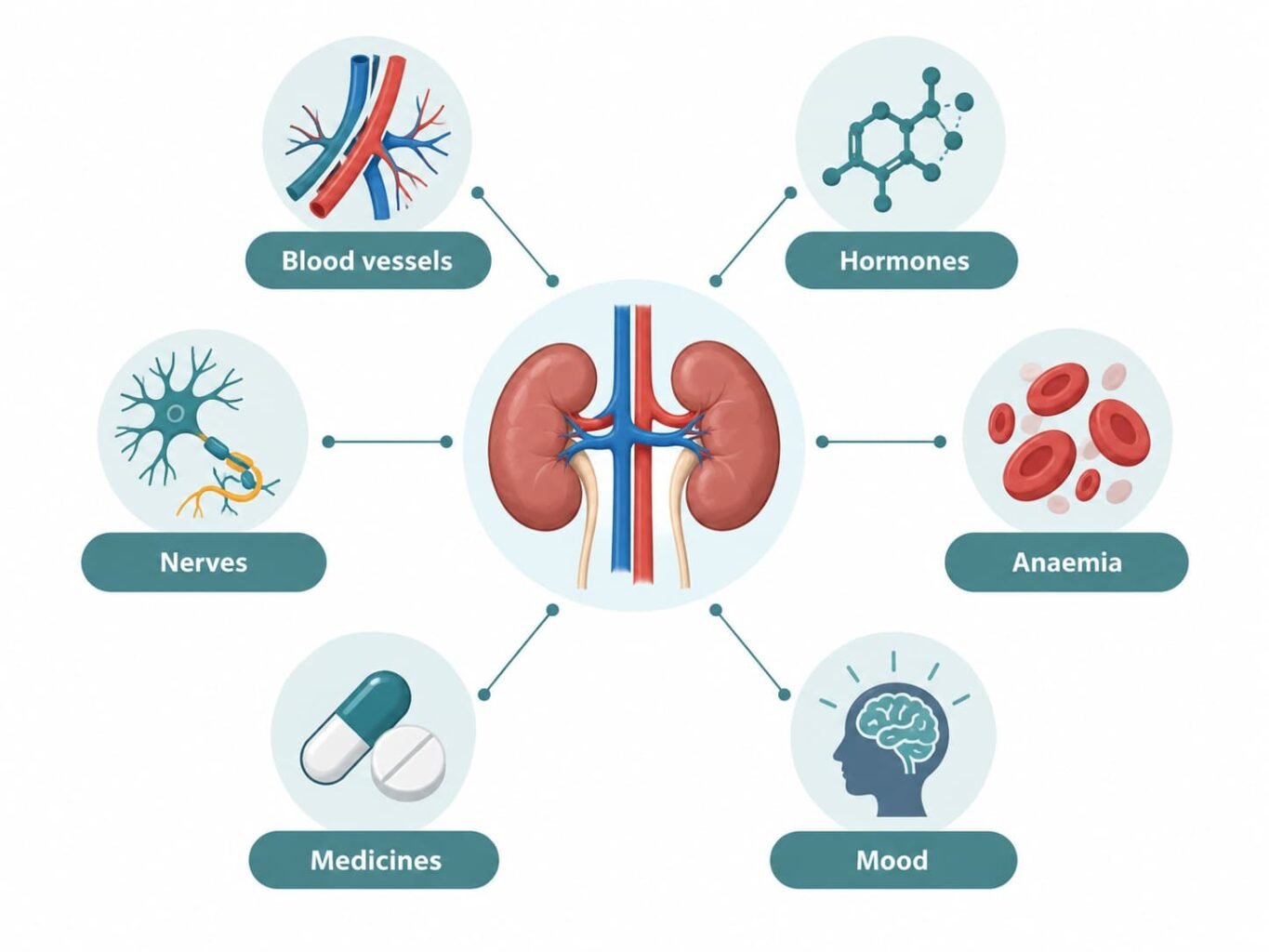
  • Vaping, Nicotine Pouches and Erectile Dysfunction: What Does the Evidence Show?

    Vaping, Nicotine Pouches and Erectile Dysfunction: What Does the Evidence Show?

    ✅Medically reviewed

    Nicotine reaches the bloodstream within seconds, yet its effect on erections receives little attention. Vapes and nicotine pouches now sit in the pockets of millions of British men. Many men switch from cigarettes to protect health. Others notice softer, shorter-lasting erections and wonder whether nicotine plays a part. The question deserves a careful, evidence-based answer.

    Vaping and erectile dysfunction have drawn growing research attention since 2021. Large surveys now report higher rates of erection problems among daily vapers. Nicotine pouches have attracted far less study. The nicotine content of pouches still raises similar questions. Clear answers require separating association from proof.

    The topic carries added weight for men who have had a vasectomy. A change in erections after the procedure often prompts a search for a single cause. Vasectomy rarely explains that change. Vascular health, nicotine exposure, stress and medicines usually matter more.

    This article reviews the current evidence in plain terms. NHS and NICE guidance and peer-reviewed research form the basis. Later sections explain the biology, the limits of the data and the options for persistent symptoms. The final sections outline what P Shot treatment can and cannot offer.

    Key Points at a Glance

    • Daily vaping links to roughly double the odds of ED in one large US survey.
    • Vaping and erectile dysfunction show association, not proof of cause.
    • Nicotine narrows blood vessels and injures the endothelium.
    • Direct research on nicotine pouches and ED remains sparse.
    • The NHS states that vasectomy does not affect erections.
    • Quitting nicotine may improve erections over time.
    • PRP injections remain an emerging option, not a first-line one.

    How Erections Work and Why Blood Vessels Matter

    The Vascular Basis of an Erection

    An erection depends on blood flow. Sexual arousal triggers nerve signals in the penis. The endothelium, the thin lining of blood vessels, releases nitric oxide. Nitric oxide relaxes smooth muscle in the penile arteries. Blood then fills the erectile tissue and the penis stiffens. Anything that damages the endothelium can weaken this sequence.

    Why Erections Can Signal Wider Vascular Problems

    The penile arteries are narrow. Small vascular changes therefore show up first in erectile function. NICE Clinical Knowledge Summaries describe ED as a possible early sign of cardiovascular disease. The NHS lists smoking among the recognised causes of erection problems. Men with persistent ED therefore need a general health check, not only a prescription.

    Who Faces Higher Risk? Factors That Compound Nicotine’s Effect

    Several factors compound the vascular effects of nicotine. Diabetes, high blood pressure, raised cholesterol, obesity and inactivity each raise ED risk independently. Heavy alcohol use and some medicines, including certain antidepressants and blood pressure tablets, also contribute. NICE guidance therefore advises a medication review. Men over 50 face a higher baseline risk. Nicotine adds to these burdens rather than acting alone.

    Vaping and Erectile Dysfunction: What the Research Shows

    Findings From a Large US Population Study

    The strongest data on vaping and erectile dysfunction come from the Population Assessment of Tobacco and Health (PATH) study. El Shahawy and colleagues analysed responses from 13,711 men aged 20 or older. The American Journal of Preventive Medicine published the results in 2022. Daily e-cigarette users showed higher odds of ED than men who never vaped. The adjusted odds ratio reached 2.24 in the full sample. Men aged 20 to 65 without cardiovascular disease showed about 2.4 times the odds. The analysis accounted for cigarette smoking history. Physical activity linked with lower odds of ED. Daily use, rather than occasional use, drove the association.

    Limits of the Evidence

    The PATH analysis used a cross-sectional design. Cross-sectional data capture a single moment and cannot prove that vaping caused ED. Men with erection problems might vape more to manage stress. Participants reported ED themselves, without clinical assessment. Alcohol, cannabis, anxiety and poor sleep may influence both habits. Long-term prospective studies remain scarce. The NHS also advises that vaping carries lower risk than smoking, and that non-smokers should not start. Honest interpretation of vaping and erectile dysfunction data describes a consistent association, not confirmed causation.

    Does Vaping Cause ED? Examining the Biological Mechanisms

    Illustration of a healthy penile artery beside one narrowed by nicotine
    Nicotine narrows blood vessels and can reduce the blood flow an erection depends on.

    The question “does vaping cause ED” lacks a simple yes-or-no answer. Biological plausibility supports a link, though. Three mechanisms may connect vaping and erectile dysfunction.

    Nicotine and Erections: Acute Vasoconstriction

    Nicotine stimulates the sympathetic nervous system. Heart rate and blood pressure rise within minutes. Blood vessels narrow, including the arteries that supply the penis. Narrowed arteries deliver less blood during arousal. Nicotine and erections therefore work against each other at the physiological level. This effect applies to every nicotine route, including vapes, pouches, gum and patches. Dose and delivery speed differ, however.

    Endothelial Dysfunction

    Endothelial dysfunction describes a failure of the vessel lining to relax normally. Reduced nitric oxide availability sits at the core. Vlachopoulos and colleagues measured arterial stiffness in young smokers after vaping. Stiffness and blood pressure rose after nicotine-containing e-cigarette use. Repeated exposure may produce lasting vessel changes. Direct proof of permanent erectile damage from vaping remains lacking.

    Dose, Frequency and Duration

    UK regulations cap nicotine in refillable vape liquid at 20 mg/ml. Pouch strengths vary by brand. Higher doses and frequent use raise total exposure. Exposure likely matters more than device type.

    Other Contributing Factors

    • Testosterone: Studies of nicotine and testosterone disagree, so the evidence remains inconclusive.
    • Dual use: Men who vape and smoke accumulate harm from both habits.
    • Psychological effects: Nicotine dependence, anxiety and poor sleep can each impair erections.
    • Additives: Laboratory work suggests some aerosol compounds provoke inflammation. Human erectile data remain absent.

    Nicotine Pouches and Erectile Dysfunction: What Is Known

    Nicotine pouches contain nicotine salts, fillers and flavourings, with no tobacco leaf. Users place a pouch between lip and gum, and the mouth lining absorbs the nicotine. No combustion or aerosol occurs. Strengths vary widely, and some products deliver high doses.

    Published research on nicotine pouches and erectile dysfunction remains sparse. Large population studies comparable to PATH appear to be lacking. Physiology therefore provides the main guide. Nicotine drives the vascular effects, and pouches deliver nicotine reliably. High-strength pouches used all day may sustain elevated exposure. Cigarette smoke adds many other toxins, so pouches likely carry lower overall risk than smoking. That does not make pouches harmless for erections. Absence of evidence does not equal evidence of safety. Men who use pouches and notice erectile changes should treat nicotine as a possible contributor.

    Erectile Dysfunction After Vasectomy: Separating Myth From Cause

    Vasectomy cuts or seals the vas deferens, the tubes that carry sperm. The procedure does not involve erectile tissue, erection nerves or penile blood supply. The NHS states that vasectomy does not affect sex drive or the ability to get an erection. The testes keep producing testosterone.

    Psychological factors sometimes follow the procedure. Worry about the decision can reduce erectile confidence. Rare chronic post-vasectomy pain may also affect sexual function. Men with new ED after vasectomy should therefore review the whole picture. Nicotine use, blood pressure, diabetes, medicines and stress all deserve attention. Vasectomy rarely explains ED on its own. Timing alone can mislead.

    Men in this group often ask whether a vasectomy limits P Shot treatment. The injection targets penile erectile tissue. The treatment has no role in vasectomy reversal and does not restore fertility.

    Can Quitting Nicotine Improve Erections?

    Smoking cessation offers the best evidence. The NHS lists stopping smoking among the lifestyle changes that may improve erections. Observational studies of men who quit cigarettes report gains in erectile function over months. Direct trials of vaping cessation and ED remain lacking. The endothelium can regain function when nicotine exposure ends. Recovery varies with age, duration of use and other conditions. Stopping nicotine altogether offers the most reliable route to vascular recovery.

    Practical Steps

    NHS stop smoking services provide behavioural support and licensed nicotine replacement. Smokers who use vapes to quit should not return to cigarettes. A planned step-down from vaping becomes the next goal. Regular exercise adds benefit, since PATH linked physical activity with lower ED odds.

    Treatment Options for Persistent Erectile Dysfunction

    Care for vaping and erectile dysfunction begins with assessment, not a procedure.

    Assessment and First-Line Care

    Blood pressure monitor, blood sample tubes, clipboard and stethoscope arranged for an erectile dysfunction health assessment
    NICE guidance advises a history, blood pressure check and blood tests before any treatment decision.

    NICE guidance advises a history, blood pressure, BMI, glucose or HbA1c and lipid checks. A morning testosterone test applies where indicated. PDE5 inhibitors form the first-line medicines. Sildenafil, tadalafil, vardenafil and avanafil all belong to this group. These drugs need sexual stimulation and carry contraindications, such as nitrate use. Psychosexual therapy helps when psychological causes dominate. Vacuum devices offer a non-drug option.

    P Shot Treatment: What the Procedure Involves

    P Shot treatment uses platelet-rich plasma (PRP). A clinician draws a small blood sample and spins it in a centrifuge. The platelet-rich fraction then goes into penile tissue after local anaesthetic. Platelets release growth factors. Researchers theorise that these factors support tissue repair and new vessel growth. Human proof of this mechanism remains incomplete. Some clinics call the procedure a Priapus Shot.

    P Shot Results and Effectiveness

    Evidence for P Shot for erectile dysfunction comes from small trials with mixed findings. A 2021 randomised trial (Journal of Sexual Medicine) reported better erectile function scores with PRP than placebo. A 2023 randomised trial of 61 men (Journal of Urology) found no significant difference from placebo. A later meta-analysis of three randomised trials reported a modest average gain. The European Association of Urology treats PRP as investigational. NICE guidance does not list PRP among recommended ED treatments.

    Realistic expectations matter. Any benefit tends to build over weeks to months. Some men notice little change. Underlying vascular disease, diabetes and continued nicotine exposure may limit results. Trial data on nicotine exposure and PRP outcomes do not exist.

    Safety and Suitability

    Common effects include bruising, soreness and temporary swelling. Infection and scarring occur rarely. Screening should cover bleeding disorders, anticoagulant use and active infection.

    Choosing a Provider for P Shot London Treatment

    Pshots clinic UK, a Harley Street practice in Marylebone, offers P shot London treatment under Dr Syed Nadeem Abbas. He holds MBBS, MRCS (RCS Edinburgh) and MRCGP qualifications. An MSc in Aesthetic Plastic Surgery with Distinction from Queen Mary University of London adds to that. He trained at Cambridge, Oxford and the Royal London Hospital. Men considering a Priapus Shot London consultation should verify GMC registration on the public register. A proper consultation reviews medical history, nicotine use and realistic outcomes. Written information on risks and evidence limits belongs before any procedure.

    When to See a GP

    See a GP when erection problems persist. Chest pain, breathlessness or leg pain on walking alongside ED needs urgent review. An erection lasting over four hours needs emergency care. NHS 111 offers guidance when the next step feels unclear.

    Frequently Asked Questions

    Does vaping cause ED?

    Current evidence shows an association, not proven causation. Daily vaping links to higher odds of ED in a large US survey. The vascular effects of nicotine offer a plausible mechanism.

    How strong is the evidence on vaping and erectile dysfunction?

    The evidence is consistent but limited in design. Cross-sectional surveys dominate the literature. Long-term studies remain necessary.

    Can vaping cause ED in younger men?

    The PATH analysis included men aged 20 to 65 without cardiovascular disease. Daily vapers still showed higher odds. Anxiety and lifestyle factors also contribute in younger men.

    Are nicotine pouches safer than vapes for erections?

    No direct comparison exists. Both deliver nicotine, which narrows blood vessels. Dose and frequency likely matter.

    Do erections recover after quitting?

    Many men report improvement over weeks to months after stopping smoking. Direct vaping data remain limited. Recovery varies between individuals.

    Can a vasectomy cause erectile dysfunction?

    The NHS states that vasectomy does not affect the ability to get an erection. Psychological worry or rare chronic pain may play a role.

    Does the P Shot work for ED linked to nicotine?

    No trial has tested this question. Evidence for P Shot results in general remains mixed. Stopping nicotine and assessing vascular health come first.

    Key Takeaways

    The evidence on vaping and erectile dysfunction now justifies caution, though proof of causation remains incomplete. Nicotine narrows blood vessels and injures the endothelium, which gives the link biological credibility. Nicotine pouches lack direct data, yet share the same active ingredient. Vasectomy does not explain erectile change by itself.

    Informed decisions start with an honest nicotine review, a GP assessment and proven first-line care. Regenerative options such as P Shot treatment still carry limited and mixed evidence. Men should weigh that evidence, the cost and realistic outcomes before proceeding.

    If nicotine quietly narrows the vessels that every erection depends on, which change could protect vascular health first?

    Read more:

    Stress and ED: How Work Stress, Poor Sleep and Alcohol Contribute to Erectile Dysfunction in Men

    Understanding the Causes of Erectile Dysfunction: Psychological vs Physical Factors

    Dr Syed Nadeem Abbas, MBBS, MRCSEd, MSc Aesthetic Plastic Surgery (Distinction) Medical Director, Pshot Clinic | CQC Regulated | Monday to Saturday 10:00–18:00 +44 7955 836986