Mark, in his late forties sits in a consultation room. He has had Peyronie’s disease for three years. The curvature started mildly. Then it worsened. Intercourse became painful. His confidence dropped. His GP referred him onward, but the waiting times stretched. He began searching online, and eventually, the words P Shot London appeared on his screen.
This article examines what the P Shot actually is, what the evidence says about its use for Peyronie’s disease, and whether it is worth considering.
What Is Peyronie’s Disease?
Peyronie’s disease is a condition in which scar tissue — called a plaque — forms inside the penis. This plaque causes the penis to curve or bend during an erection. The curve can be mild or severe. Some men experience pain. Others notice a shortening of the penis. In addition, some men develop erectile dysfunction as a secondary problem.
The NHS recognises Peyronie’s disease as a real and distressing condition. It can significantly affect a man’s quality of life and his relationships. It is also not rare. Studies estimate that it affects roughly 3 to 9 per cent of men, though under-reporting is likely common given the personal nature of the condition.
The cause is not entirely clear. However, many cases appear to follow minor or repeated trauma to the penis. The body tries to repair the injury, but instead of healing cleanly, it lays down disorganised collagen. That collagen then becomes the plaque.
What Is the P Shot?
The P Shot — also called the Priapus Shot or P-shot — is an injection-based treatment. It draws platelet-rich plasma, or PRP, from the patient’s own blood and delivers it directly into penile tissue.
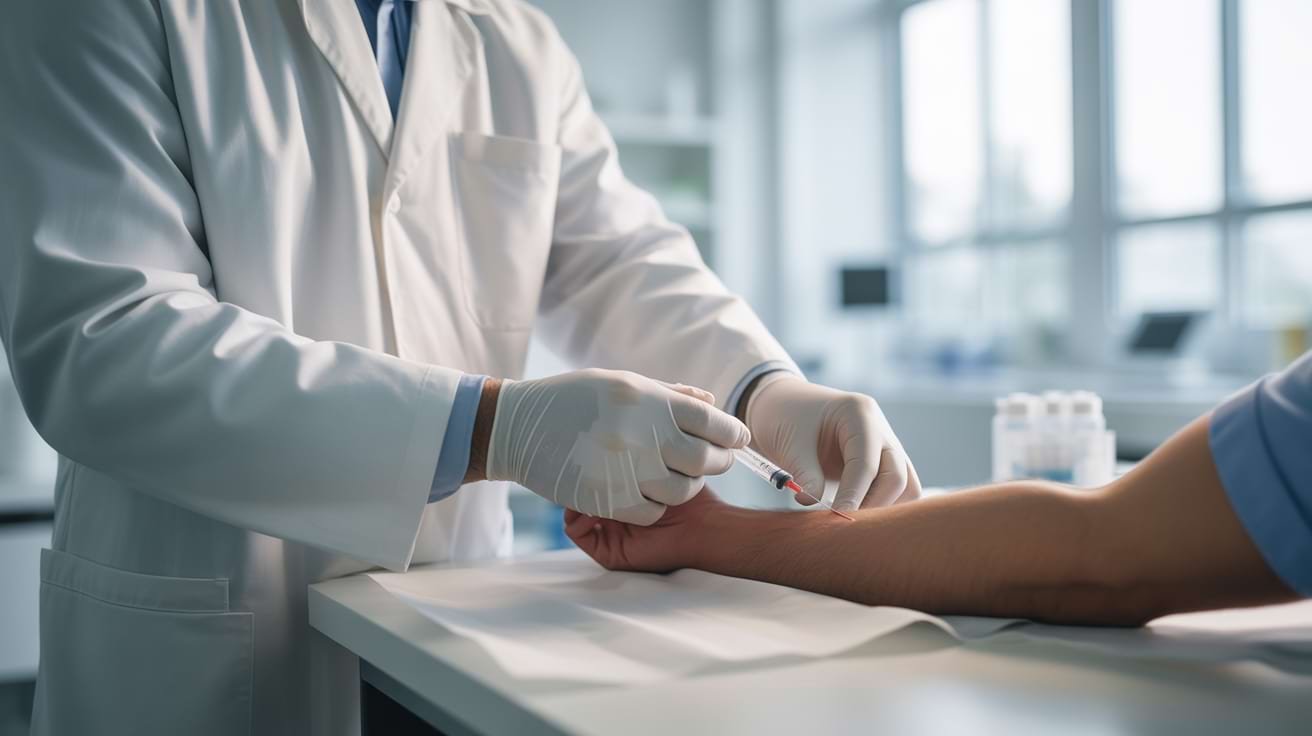
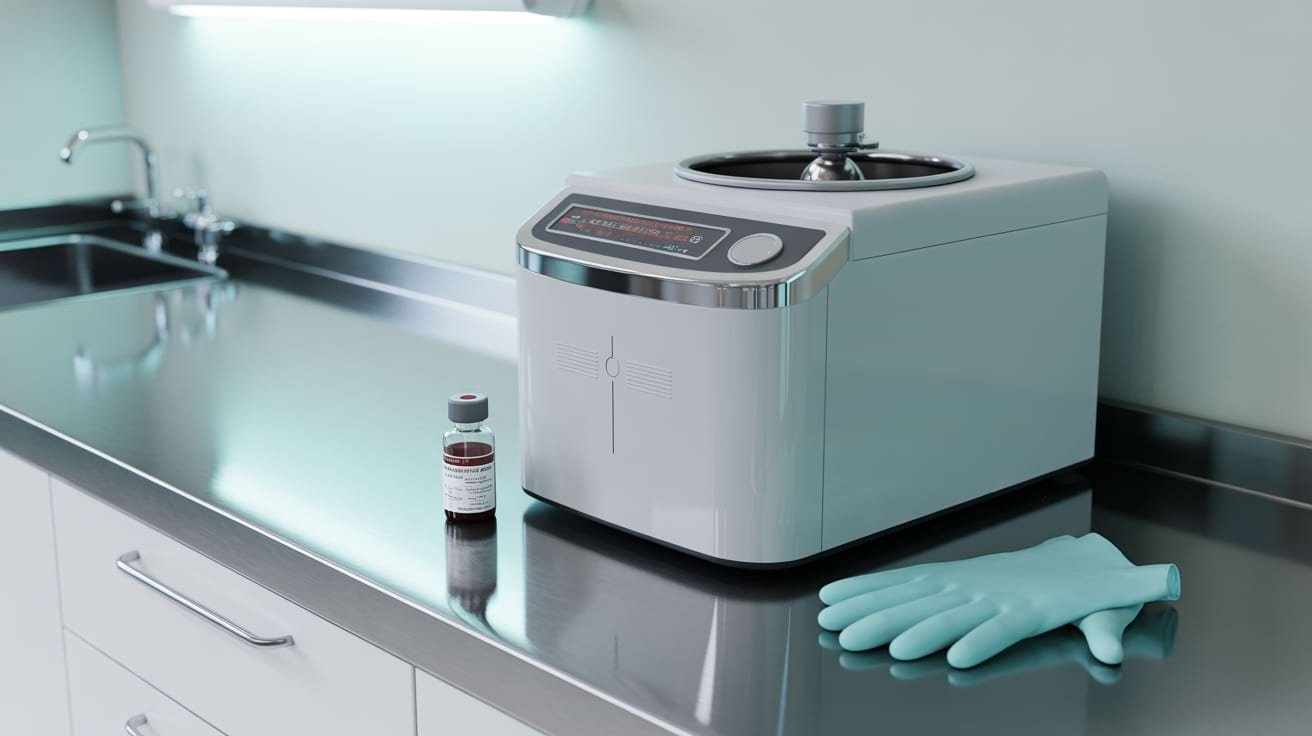
Here is how the process works. A clinician draws a small amount of blood from the arm. That blood then goes into a centrifuge. The machine spins it at high speed and separates it into its components. The clinician then extracts the portion with the highest concentration of platelets and growth factors. Finally, they inject that concentrated plasma into targeted areas of the penis.
Platelets play a well-known role in healing. They carry growth factors that stimulate tissue repair, collagen remodelling, and the formation of new blood vessels. As a result, the idea behind P shot treatment is that delivering these growth factors directly into penile tissue may help reduce the fibrous plaque of Peyronie’s disease and improve vascular function.
A clinician performs the procedure under local anaesthetic. It takes around thirty minutes. Most patients return to normal activity the same day.
How Does PRP Relate to Peyronie’s Disease?
The plaque in Peyronie’s disease consists of disorganised collagen. PRP carries growth factors — including transforming growth factor beta (TGF-β) and platelet-derived growth factor (PDGF) — that directly influence how the body handles collagen.
In theory, therefore, injecting PRP into or near the plaque may help break down that scar tissue. It may also reduce inflammation in the early stages of the condition and support the growth of healthier tissue in its place.
Importantly, this is not entirely speculative. A growing body of research has examined P shot before and after outcomes in men with Peyronie’s disease. For example, a 2015 study in the Journal of Sexual Medicine found that intralesional PRP injections reduced plaque size and pain in a significant proportion of participants. Furthermore, other smaller studies have reported improvements in penile curvature and erectile function following penile injection growth treatment with PRP.
It is also worth noting that NICE — the National Institute for Health and Care Excellence — has issued guidance on PRP use across various musculoskeletal conditions. While specific NICE guidance on PRP for Peyronie’s disease continues to develop, the broader regulatory and clinical landscape for PRP therapies across the UK is moving in a positive direction. Indeed, several academic centres in London and beyond now run active studies in this area.
What Does the Evidence Actually Show?

It is important to be honest here. The evidence for the priapus shot as a standalone treatment for Peyronie’s disease is promising but not yet definitive. Most studies remain relatively small. Consequently, researchers still need randomised controlled trials with large sample sizes.
That said, what currently exists is encouraging.
A systematic review of PRP for erectile dysfunction and Peyronie’s disease — published in Sexual Medicine Reviews — found consistent signals that PRP injections improve both conditions, often with minimal side effects. Moreover, the P shot before and after data in those studies showed measurable reductions in curvature angles across several participants. Pain scores also dropped.
PRP is furthermore not a new idea in medicine. Clinicians have used it for years in orthopaedic surgery, wound healing, and dermatology. The safety profile is strong precisely because the treatment uses the patient’s own blood. There is no risk of allergic reaction to a foreign substance. Additionally, infection risk stays low when a qualified clinician performs the procedure in a proper clinical setting.
The P injection approach for Peyronie’s disease generally works best in the early or active phase — usually within the first twelve to eighteen months — when inflammation is still present and the plaque has not yet fully hardened. In more established cases, however, results tend to vary more widely.
P Shot Versus Other Treatments for Peyronie’s Disease

Men with Peyronie’s disease have several options available. Understanding where the p-shot sits among them helps form a clearer picture.
Conservative and Medical Options
Some men try oral supplements such as vitamin E or pentoxifylline. However, the evidence for these remains modest. Collagenase clostridium histolyticum (Xiaflex or Xiapex) is an injectable enzyme treatment that regulators have approved in several countries, including the UK, for men with moderate-to-severe Peyronie’s disease. It works by breaking down collagen directly. Nevertheless, it carries a meaningful risk of side effects, including penile fracture in rare cases.
Surgical Options
Surgery offers the most definitive treatment for established Peyronie’s disease with significant curvature. Options include plication (shortening the unaffected side), incision and grafting (lengthening the affected side), and penile implants. Surgeons generally reserve these procedures for men whose condition has remained stable for at least twelve months.
Where the P Shot Fits
Priapus Shot London practitioners position PRP as a middle-ground option — less invasive than surgery, yet more targeted than oral medication. It does not carry the systemic side effects of some pharmaceuticals. It is also a day procedure. Furthermore, for men in the early phase of Peyronie’s disease, it may offer a meaningful reduction in symptoms.
Clinicians increasingly discuss it alongside other treatments rather than as a straight replacement. For instance, some combine PRP with shockwave therapy or traction devices to create a multi-modal approach.
What to Expect from the Procedure
For men considering this treatment, the process broadly follows these steps.
A consultation always comes first. The doctor takes a thorough medical history. They may also review any existing imaging, such as an ultrasound of the penile plaque. They then assess whether the patient sits in the active or stable phase of the condition, as this directly influences likely outcomes.
On the day of the procedure, the clinician draws and processes blood. They apply a topical anaesthetic cream to the treatment area. Once the area is numb, they inject the PRP. The number of injections and the exact sites depend on where the plaque sits and how extensive it is.
Most men describe the procedure as manageable. There may be mild swelling or bruising for a few days. However, there is no prolonged downtime.
Most practitioners recommend a series of sessions rather than a single treatment. Typically, they suggest three to six sessions spaced several weeks apart, followed by a clinical review.
Priapus Shot Price and Accessibility in the UK
Cost is always a practical consideration. The priapus shot price in the UK varies depending on the clinic and the practitioner’s level of expertise. Generally, individual sessions reflect the clinical setting, the seniority of the doctor, and the quality of the PRP preparation equipment. Male enlargement injections cost UK-wide also varies depending on whether the clinic combines PRP with other treatments.
As with all private medical procedures, it pays to prioritise clinical credentials over cost. PRP preparation quality differs significantly between systems. A more concentrated, purer PRP tends to produce better outcomes. Moreover, clinics that use validated centrifuge systems and maintain strict sterile technique consistently deliver stronger results.
The P shot UK market has expanded considerably over the past five years. On one hand, this has brought more options for patients. On the other hand, it has also introduced more variation in quality. Therefore, choosing a clinic that a medically qualified practitioner leads — rather than an aesthetics technician — matters greatly.
What Makes a Good Candidate?

Not every man with Peyronie’s disease makes an ideal candidate for the P Shot. However, the following factors tend to predict better outcomes.
The condition sits in its active phase — with pain, ongoing curvature change, or recent onset. The curvature is moderate rather than severe. The man has no significant clotting disorders or anticoagulant use. His general health is reasonable. Crucially, his expectations are realistic — the Pshot is not a guaranteed cure, but rather a tool that can meaningfully reduce symptoms in the right patient.
Men with very severe curvature, or those in the chronic stable phase with dense calcified plaques, may find that PRP alone offers limited benefit. In those cases, a surgical opinion is likely more appropriate.
A Note on Credentials and Clinical Setting
The P Shot is a medical procedure. It involves needles, blood processing, and injections into sensitive anatomy. Only a qualified medical practitioner working in a proper clinical environment should carry it out.
In the UK, pshots.co.uk operates under Dr Syed Nadeem Abbas, who holds postgraduate training from Cambridge, Oxford, and the Royal London Hospital, alongside an MSc in Aesthetic Plastic Surgery with Distinction from Queen Mary University London. His background spans general practice and surgical training — directly relevant credentials for a procedure that sits at the intersection of urology, sexual medicine, and regenerative aesthetics.
Not every provider offering a penis shot or p injection holds that level of training. Patients should therefore ask direct questions about qualifications, equipment, and aftercare before they proceed.
Clinical Verdict
Peyronie’s disease causes real harm to men’s lives. It affects intimacy, self-image, and mental health. It remains under-discussed, under-researched relative to its prevalence, and under-treated in many primary care settings.
P Shot London offers a reasonable, evidence-supported option for men in the earlier phases of the condition. The mechanism is biologically sound. The safety profile is strong. Early clinical data is encouraging. It is not a magic solution, and it does not replace the need for proper diagnosis and a full clinical assessment. However, it deserves serious consideration as part of a thoughtful management plan.
For men who have been told to simply “wait and see” — or who cannot access NHS specialist services quickly — PRP therapy represents a proactive step with a credible rationale behind it.
The question worth sitting with is this: if a treatment is safe, minimally invasive, and supported by growing clinical evidence, at what point does waiting become its own risk?
Read more:
Understanding the Priapus Shot in London: A Game-Changer for Men’s Sexual Health
How the Priapus Shot in London Can Improve Your Relationship and Quality of Life
Leave a Reply