Tag: P shot UK

  • Does Masturbation Cause ED? Understanding the Possible Link

    Does Masturbation Cause ED? Understanding the Possible Link

    ✅Medically reviewed | Updated September 2026

    Few sexual health questions attract as much private worry as this one. Men type it into search bars late at night. Many carry guilt. Many fear lasting damage. Rumours spread fast, while reliable answers arrive slowly.

    So, does masturbation cause ED? Current evidence says ordinary masturbation does not cause erectile dysfunction. The NHS lists physical and psychological causes of ED. Masturbation appears on neither list.

    The full picture holds more detail. Pornography use, forceful technique, shame and performance anxiety can each influence erections in some men. Persistent erection problems also signal conditions such as diabetes or heart disease. Separating myth from fact protects both sexual confidence and general health.

    This article reviews the research behind the question. It explains how erections work, which habits deserve attention and which conditions cause most cases. It also outlines evidence-based treatments, including the P shot, and states the limits of current evidence.

    Does Masturbation Cause ED? The Short Clinical Answer

    Current evidence does not link normal masturbation habits to erectile dysfunction. UK guidance supports this position. NICE Clinical Knowledge Summaries describe vascular, neurological, hormonal, medication-related and psychological causes of ED. The NHS gives a similar list. Neither source names masturbation.

    What ED Means

    Clinicians define erectile dysfunction as the persistent inability to get or keep an erection firm enough for satisfactory sex. Occasional difficulty does not qualify. Stress, tiredness, alcohol and illness all cause temporary lapses in healthy men.

    ED becomes more common with age. Population studies suggest that roughly half of men aged 40 to 70 experience some degree of ED. Age remains the strongest single predictor of erectile difficulty.

    What the Research Shows

    Researchers have tested the question directly. Rowland and colleagues studied pornography use and masturbation in men with and without ED. Masturbation frequency showed a weak association with erectile function, or none. Age, anxiety, depression, low sexual interest and low relationship satisfaction predicted ED far more consistently.

    This finding shifts attention from a harmless habit to measurable risk factors. The research answer to does masturbation cause ED therefore remains no. It also explains why clinicians rarely ask men to stop masturbating as a treatment for ED.

    Research limits deserve honest mention. Most studies rely on self-reported behaviour. Sexual habits are private, and reporting may lack accuracy. Few trials follow men over many years. Conclusions therefore stay probabilistic rather than absolute. Even so, no study has shown that ordinary masturbation damages erectile function.

    How Erections Work and Why Masturbation Does Not Wear Out Erectile Tissue
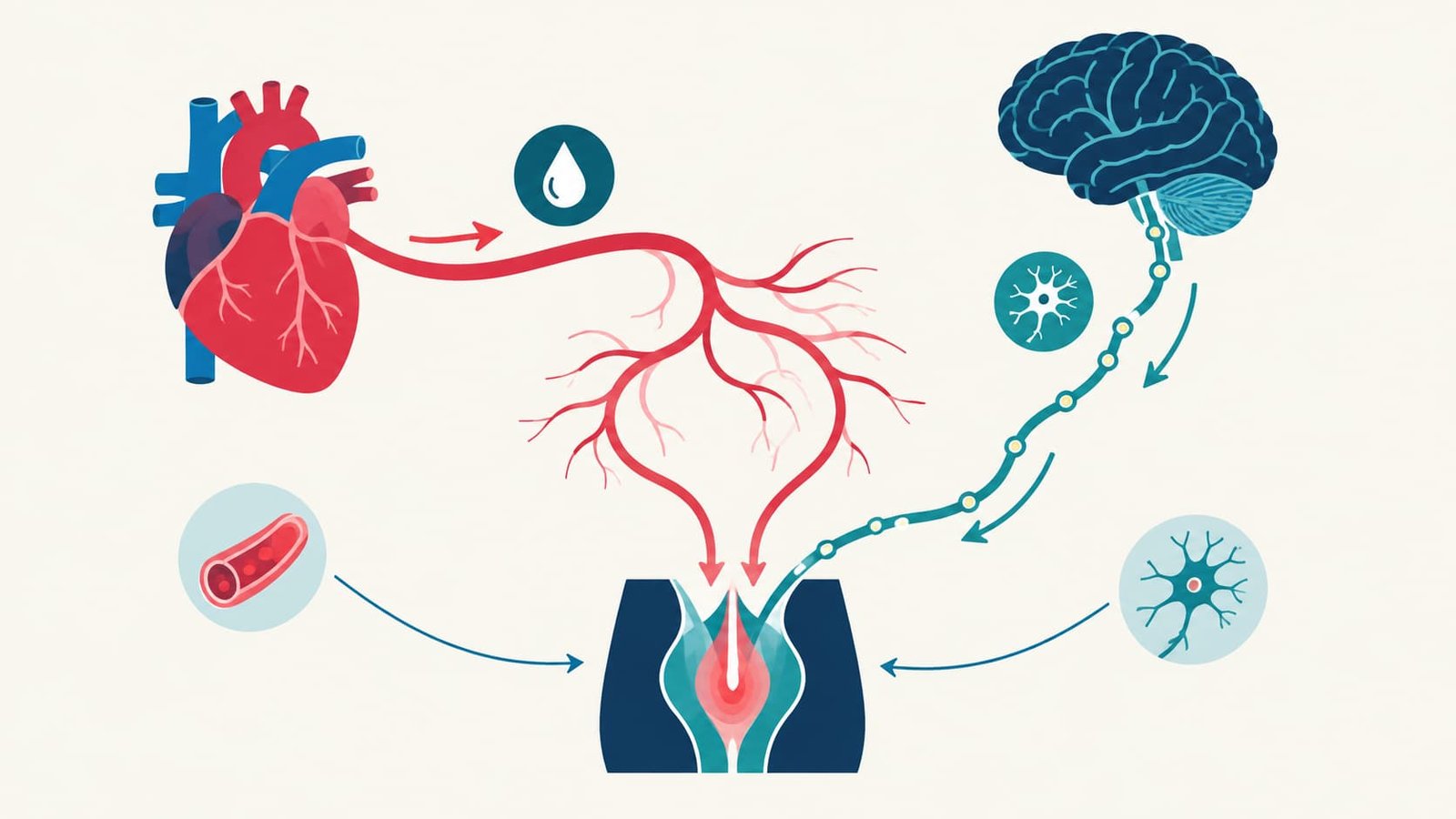
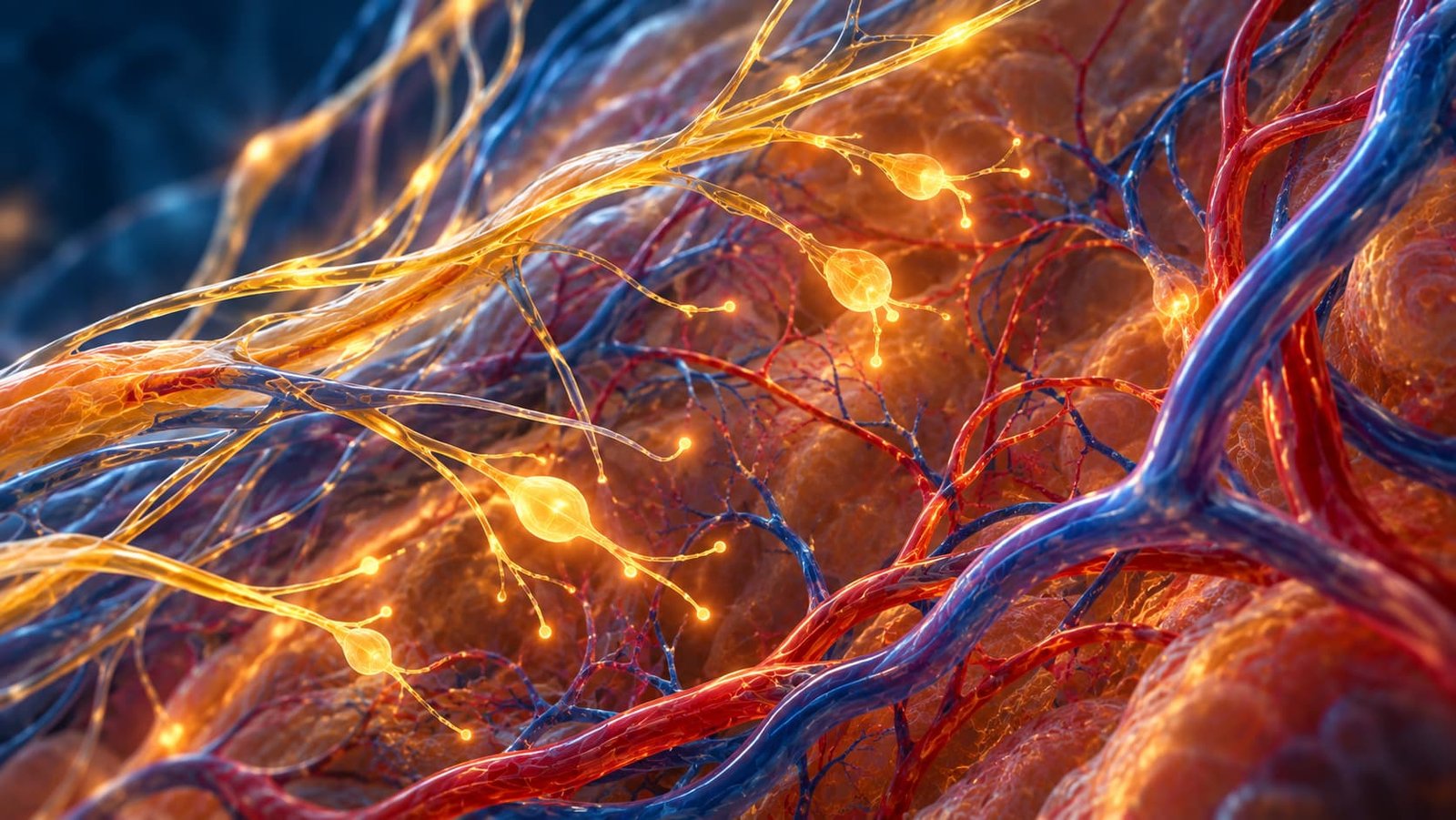
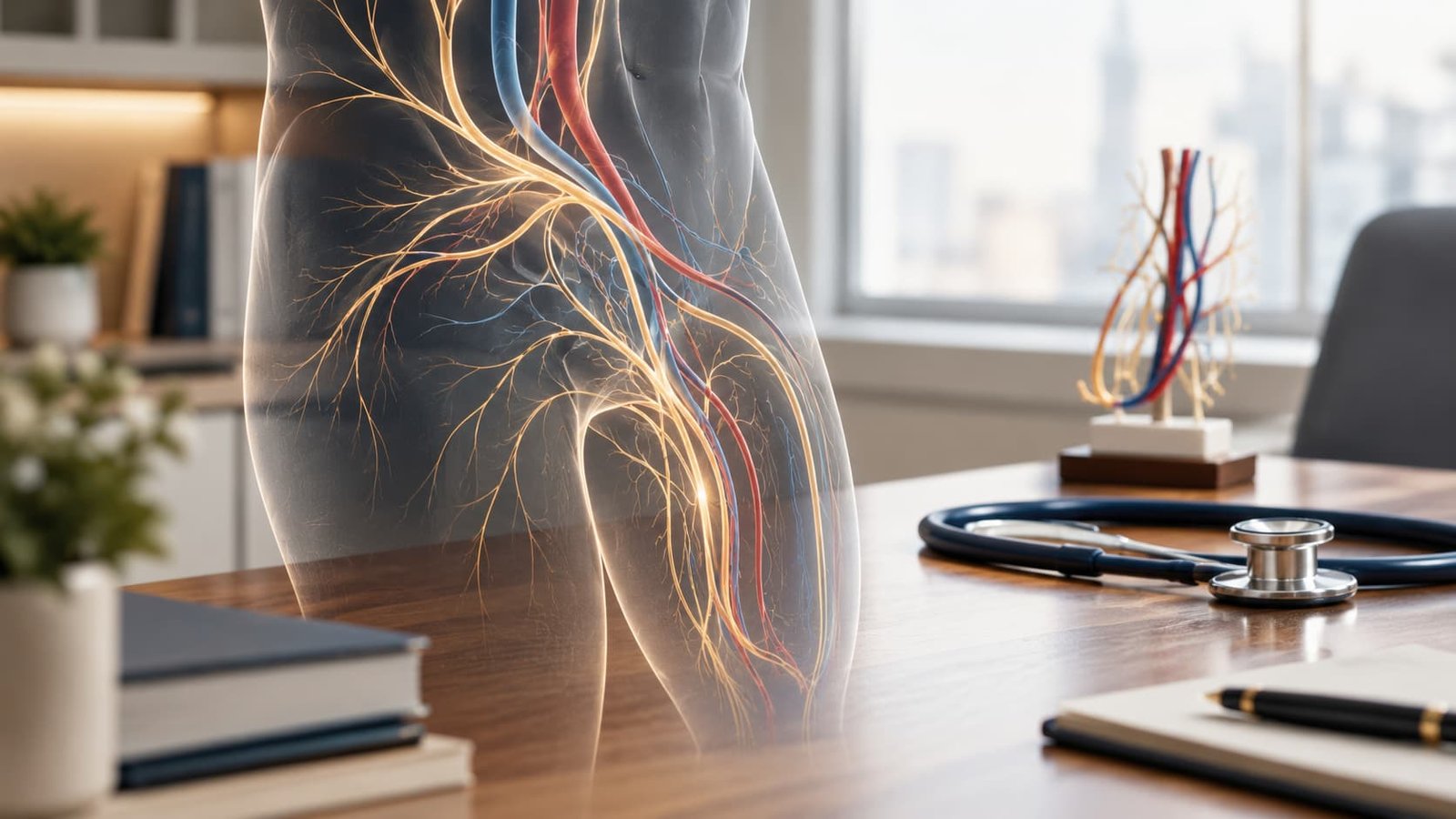
    Simple diagram showing blood vessels and nerve signals that control erections
    Erections depend on healthy blood flow and nerve signals, not on a limited supply of capacity.

    The Vascular Mechanism

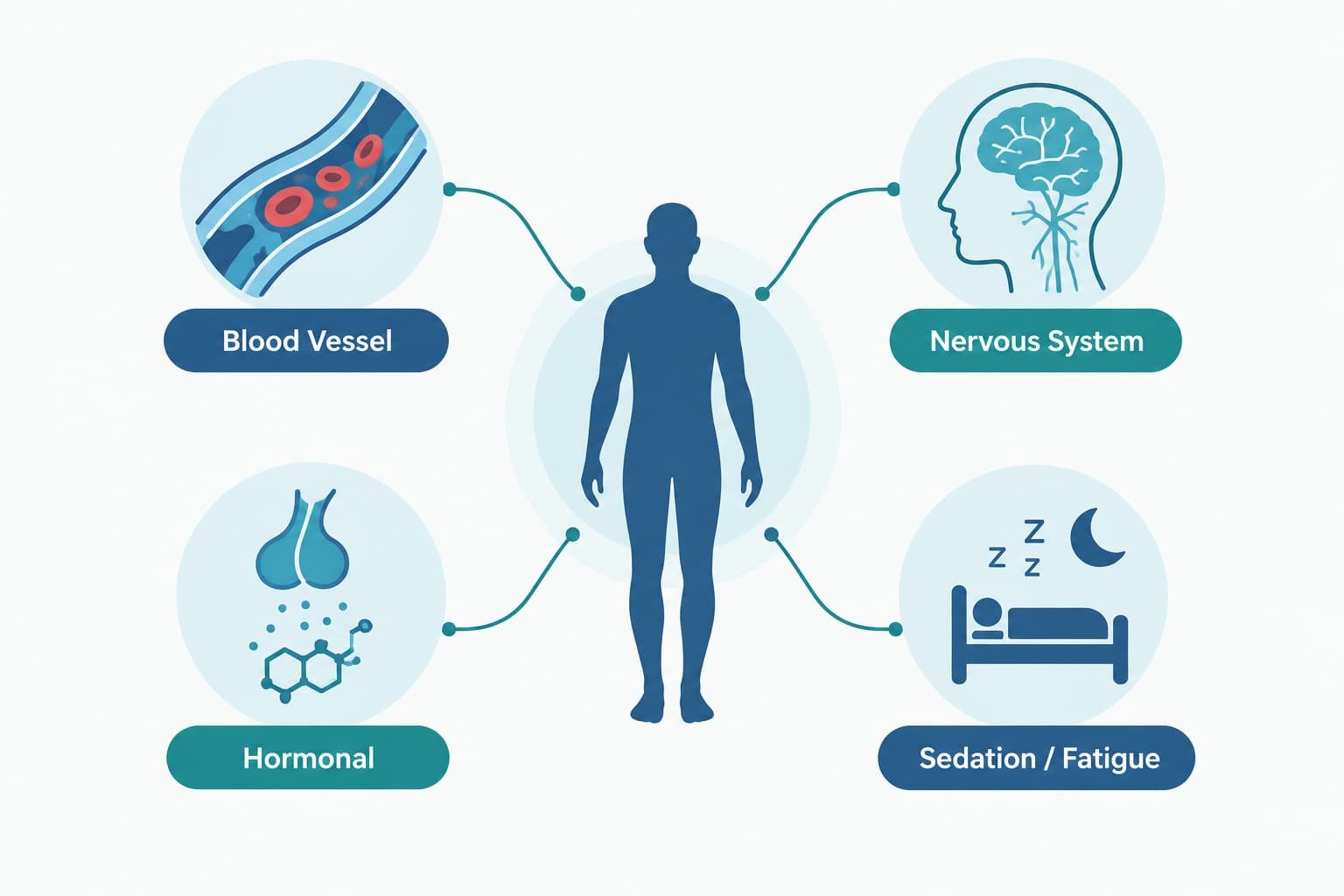
    Erections depend on blood flow. Sexual arousal triggers nerve signals. Nerve endings release nitric oxide. Nitric oxide relaxes smooth muscle in the penile arteries. Blood then fills two erectile chambers, the corpora cavernosa. The expanding tissue compresses the veins and traps blood. The penis becomes firm.

    Masturbation uses the same pathway as partnered sex. Regular use does not deplete a finite supply of erectile capacity. Erectile tissue behaves like a blood vessel network, not like a battery. Researchers have proposed that regular erections support tissue oxygenation. Evidence for this idea remains limited.

    The Refractory Period Is Not ED

    Every man enters a refractory period after ejaculation. Arousal and erection become difficult or impossible during this phase. The length varies from minutes to a day or more. It often lengthens with age.

    A man who masturbates shortly before partnered sex may struggle to reach a second erection. That response reflects normal physiology. It does not indicate ED.

    When Masturbation Habits May Contribute to Erectile Difficulty

    Masturbation itself does not cause ED. Certain patterns around it may contribute in some men. Research remains limited, and cause and effect stay unproven.

    Pornography Use and Arousal Patterns

    A 2016 review in Behavioral Sciences by Park and colleagues discussed ED in men under 40. The review examined heavy internet pornography use. The authors proposed a possible link. The authors suggested that constant novelty and intense stimulation may raise arousal thresholds.

    The review relied on clinical reports. It cannot prove causation. Internet access and ED diagnoses in younger men rose during the same period, and timing overlap alone proves nothing. The Rowland study later found weak or no association between pornography use and ED severity.

    Performance anxiety offers a more plausible route. Men who compare partnered sex with pornography may worry about erection quality. That worry can trigger ED by itself. Anxiety, rather than pornography, may drive many of these cases.

    Forceful or Atypical Technique

    A 2023 matched case-control study by Can and colleagues compared young men with and without ED. Men with ED had a 2.2-fold higher risk of at least one atypical masturbatory behaviour. Examples included rubbing in a prone position, applying firm pressure and masturbating through clothing.

    Clinicians sometimes call this an idiosyncratic masturbatory style. The proposed mechanism involves conditioning the body to respond to intense, specific pressure. Partnered sex then feels less stimulating. The study shows association only. Clinicians commonly advise lighter pressure and varied positions, although evidence for this advice remains modest.

    Guilt and Shame

    Psychological distress matters. Case literature in the Journal of Sex & Marital Therapy describes guilt about masturbation coinciding with depression and ED. Strict religious or cultural teaching often played a part.

    Anxiety raises sympathetic nervous activity. That activity opposes the smooth muscle relaxation an erection needs. Guilt can affect erections even when the habit causes no physical harm.

    Frequency

    Does masturbation cause ED when frequent? No evidence identifies a frequency that causes ED. Clinicians consider frequency a concern only when it disrupts work, relationships or wellbeing. Compulsive patterns deserve a conversation with a GP or psychosexual therapist.

    Common Myths About Masturbation and Erectile Health

    Several myths shape the question does masturbation cause ED. Evidence contradicts each one. Clear facts reduce needless guilt, and guilt itself can worsen erections.

    Myth: Masturbation Damages the Penis

    Gentle masturbation does not injure erectile tissue. Injury can follow excessive force. Clinicians treat such injuries as trauma, not as ED caused by the habit itself.

    Myth: Masturbation Drains Testosterone

    No robust evidence shows that masturbation lowers testosterone enough to cause ED. Low testosterone remains a genuine cause of ED. A blood test, not guesswork, confirms it.

    Myth: Stopping Masturbation Restores Erections

    No reliable trial supports abstinence as ED treatment. Advice to stop may even raise guilt and anxiety, which worsen erections. Treatment works best when it targets the actual cause.

    More Likely Causes of ED

    Most cases trace back to health and lifestyle factors. NICE and European Association of Urology guidance both highlight vascular disease as a leading cause.

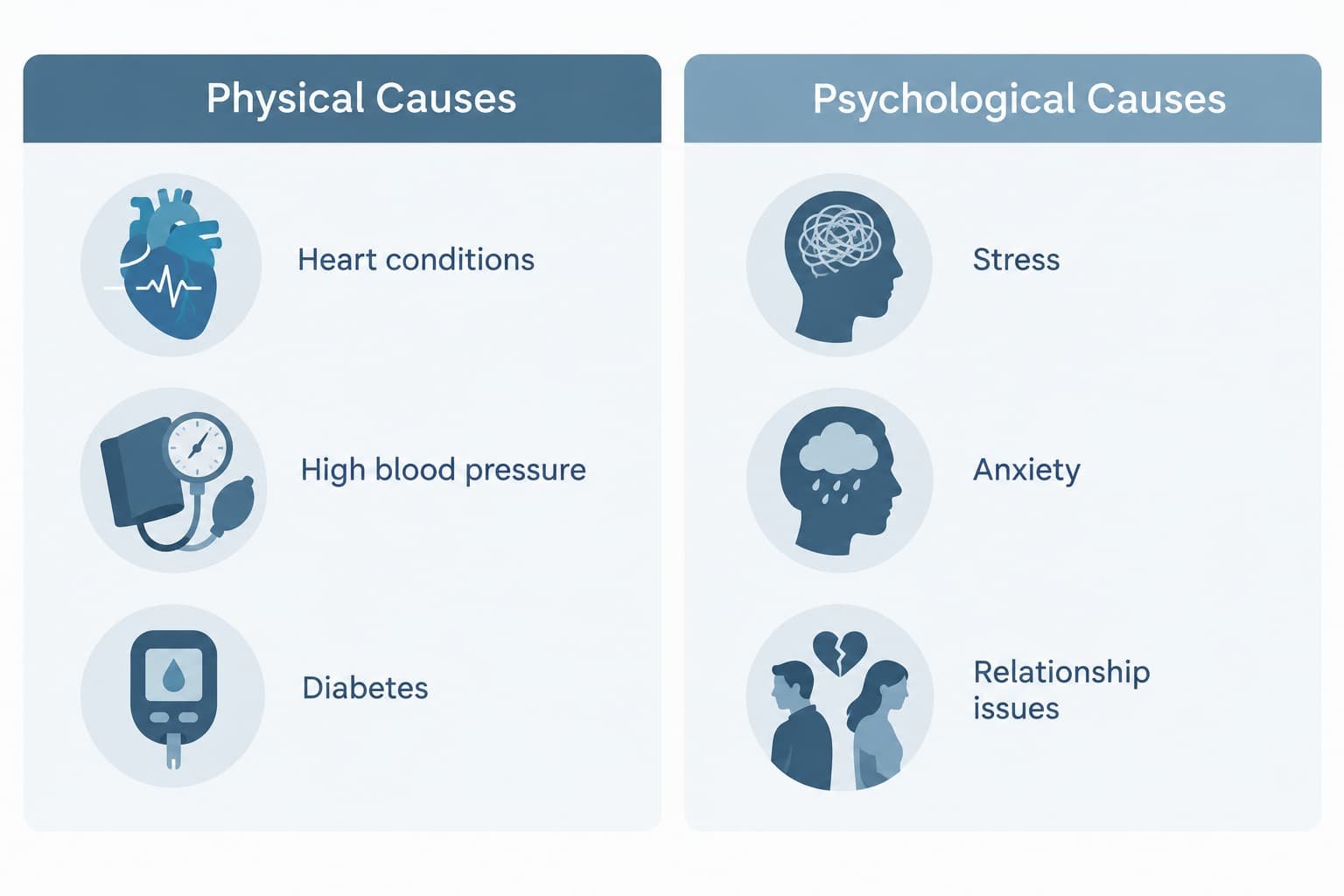
    Physical Causes

    Common physical causes include:

    • Cardiovascular disease and atherosclerosis
    • High blood pressure
    • Type 2 diabetes
    • Obesity and metabolic syndrome
    • Low testosterone
    • Chronic kidney disease
    • Multiple sclerosis, spinal injury and pelvic surgery
    • Peyronie’s disease

    ED often appears before other signs of heart disease. Urology literature describes ED as frequently the earliest manifestation of cardiovascular disease. Penile arteries are smaller than coronary arteries, so vascular damage can show there first. A GP visit for ED therefore protects long-term health.

    Psychological Causes

    Stress, anxiety, depression, relationship difficulty and low self-esteem all disrupt erections. Younger men show psychological causes more often. Across all ages, estimates place purely psychological ED at roughly 10 to 20 per cent of cases.

    ED and anxiety also feed each other. One failed erection raises worry. Worry then raises the chance of another failure. Clinicians call this the vicious circle of performance anxiety. Breaking the circle often restores erections without any physical treatment. Men with persistent low mood, loss of interest or sleep problems should also seek support. Depression and ED often coexist.

    Lifestyle and Medication Factors

    Smoking, heavy alcohol use, inactivity and recreational drug use all raise risk. Some prescribed medicines also affect erections. Examples include certain antidepressants, some blood pressure tablets, antiandrogens and some ulcer treatments. Nobody should stop a prescribed medicine without medical advice.

    Warning Signs: When to See a GP
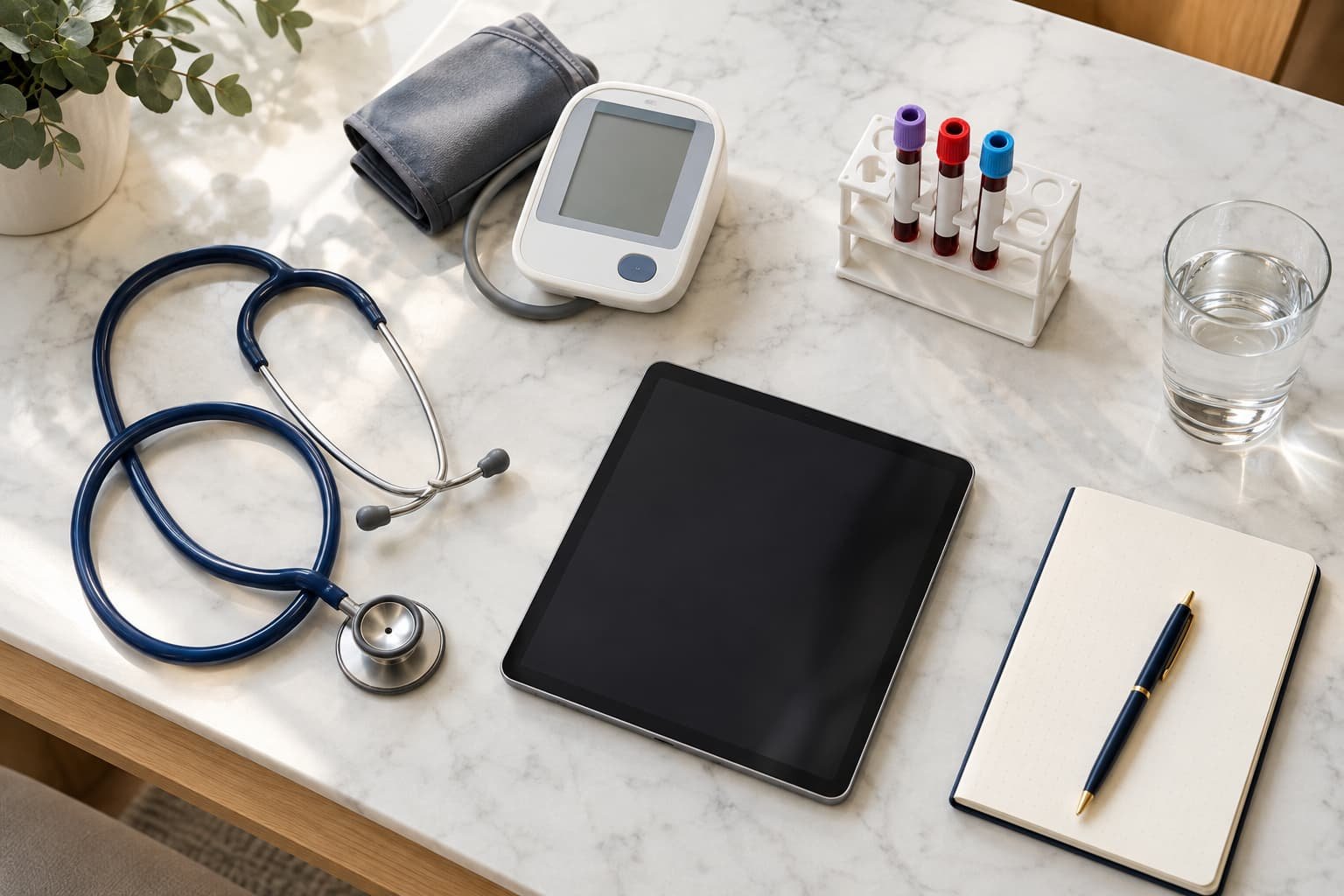
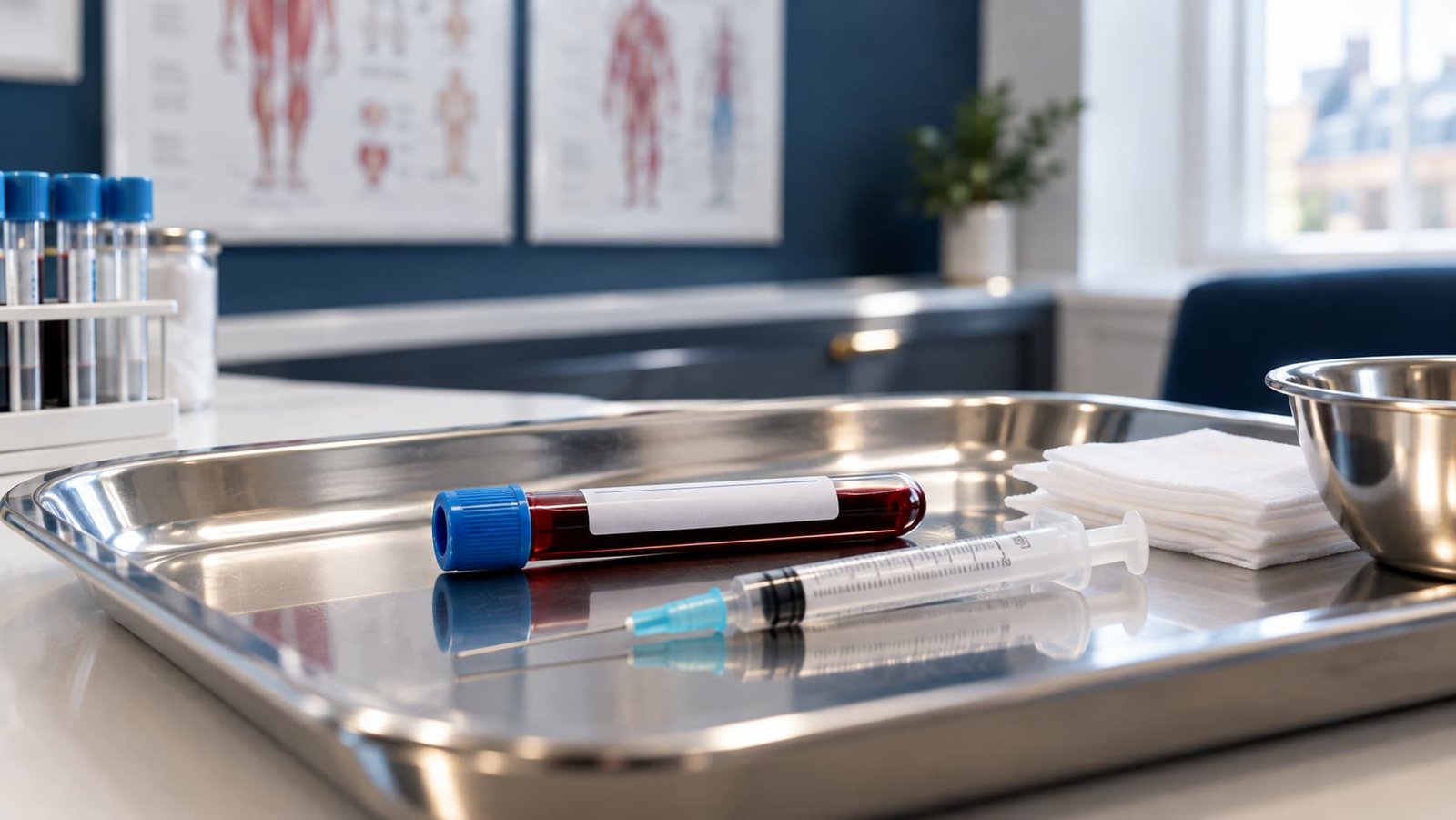
    Stethoscope, blood pressure monitor and blood test tubes on a doctor's desk during an erectile dysfunction check
    A GP assessment often includes blood pressure, blood glucose and cholesterol checks.

    The NHS advises seeing a GP when erection problems persist or cause distress. Early assessment matters because ED can reveal treatable disease.

    Erections in Different Situations

    Clinical guidance treats erections during masturbation or on waking as a useful clue. These erections suggest that blood vessels and nerves still function. Psychological factors then become more likely. A man who loses erections in every situation needs a fuller physical assessment.

    What a GP Assessment Involves

    NICE Clinical Knowledge Summaries outline a structured review. The GP takes a sexual and medical history. The GP reviews medicines, checks blood pressure and measures weight. Blood tests often include glucose or HbA1c, lipids and morning testosterone. Some clinicians also use the International Index of Erectile Function questionnaire.

    Evidence-Based Treatment Options

    NICE guidance advises treating underlying causes first. Treatment then matches the cause and the man’s preferences.

    Lifestyle Changes

    Stopping smoking, reducing alcohol, exercising and losing excess weight all improve vascular health. European and UK guidance both support lifestyle change alongside other treatment.

    Psychosexual Therapy and CBT

    Cognitive behavioural therapy helps men with performance anxiety, guilt or relationship stress. Studies show that combining sex therapy with medication can outperform medication alone.

    PDE5 Inhibitors

    Sildenafil, tadalafil, vardenafil and avanafil form the first-line drug group. These tablets enhance the nitric oxide pathway. The tablets need sexual stimulation to work. A GP or pharmacist checks suitability, especially for men who take nitrates. Men who take nitrates must avoid PDE5 inhibitors. An erection lasting longer than four hours needs urgent medical care.

    Devices, Injections and Surgery

    Vacuum devices, alprostadil (urethral or injected) and penile implants serve men who cannot use tablets. These options also suit men who find tablets ineffective. Specialist urology teams supervise these options.

    Where the P Shot Fits: Evidence and Limits

    What the P Shot Involves

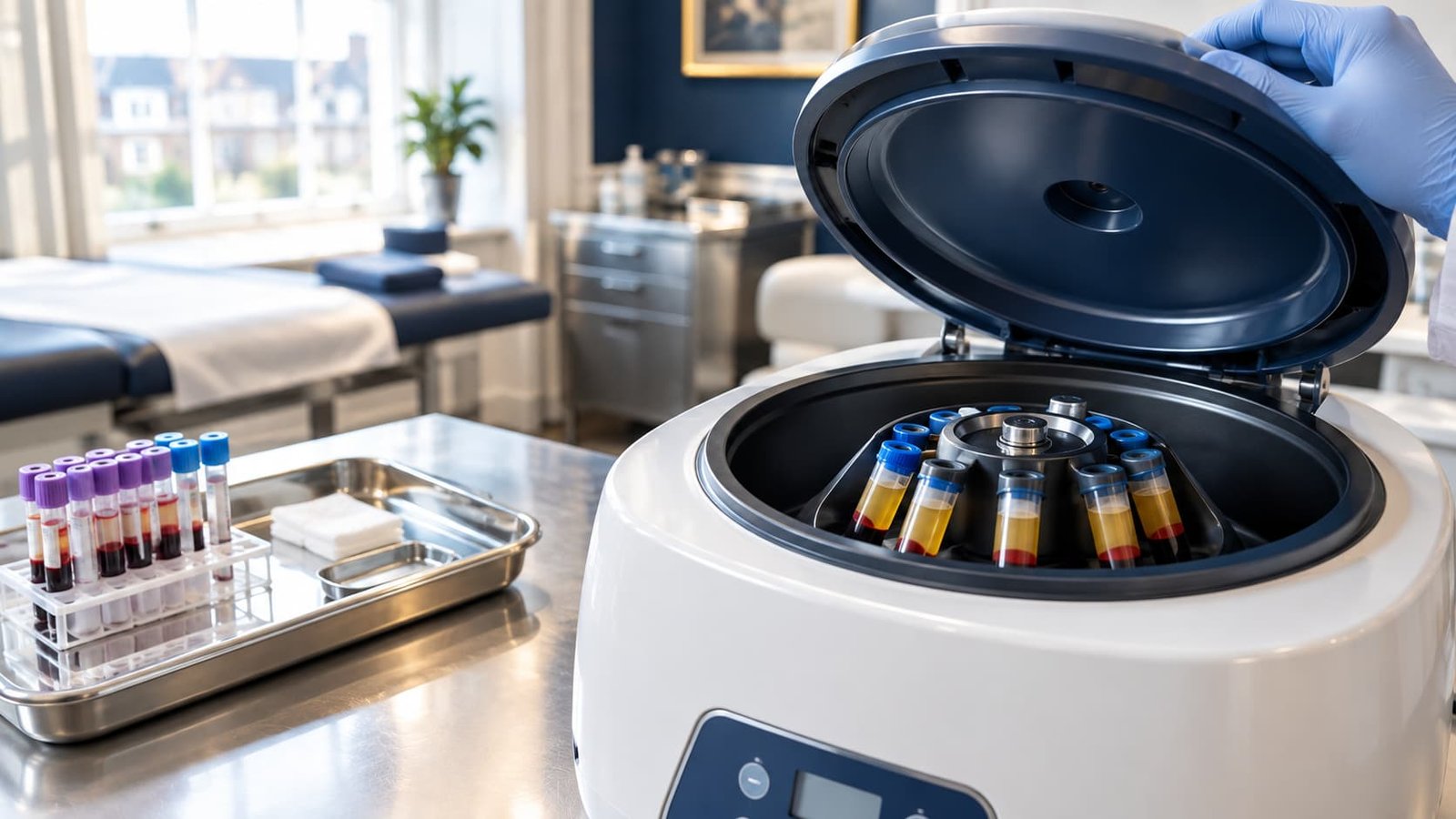
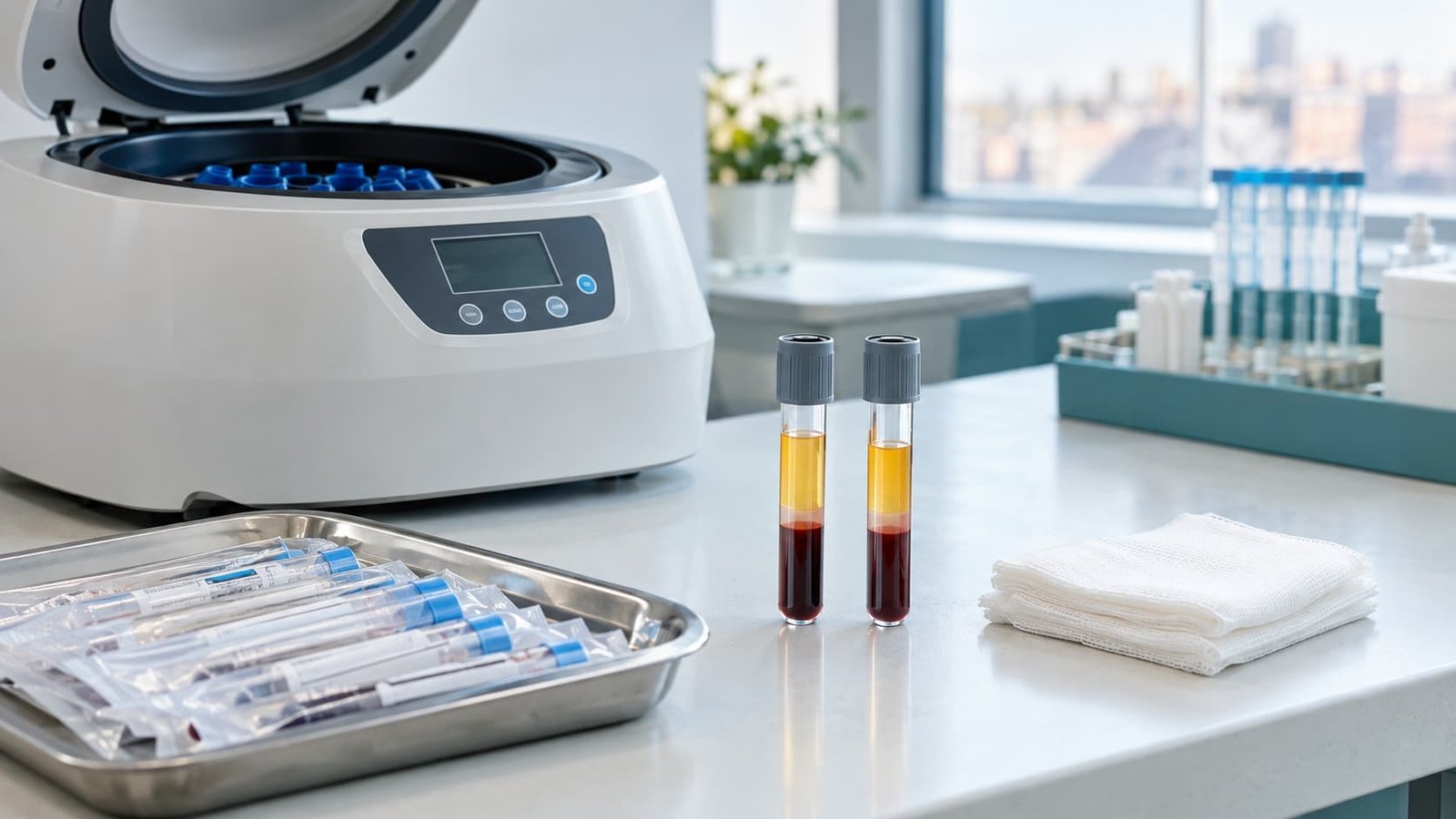
    The P shot (P-shot or Pshot in some spellings) uses platelet-rich plasma (PRP). A clinician draws a small blood sample. A centrifuge concentrates the platelets. The clinician then injects the concentrate into penile tissue after local anaesthetic. Marketing terms include priapus shot, penis shot and p injection.

    Proponents suggest that growth factors in PRP support tissue repair and new blood vessel formation. Human evidence for this mechanism remains incomplete.

    What the Evidence Shows

    A 2021 randomised trial in the Journal of Sexual Medicine reported improved erectile function after PRP compared with placebo. A 2023 randomised trial in European Urology reported mixed findings. Sample sizes remain small and follow-up remains short.

    Current UK guidance does not list PRP among first-line ED treatments. European Association of Urology guidelines describe it as investigational. P shot treatment therefore suits selected men, after assessment, rather than every man with erection concerns.

    Relevance to Masturbation-Related Concerns

    The P shot does not address masturbation habits, guilt or performance anxiety. Men with those concerns need psychosexual assessment first. PRP targets tissue and vascular causes of ED. Clinicians exclude reversible causes before discussing any injection.

    Clinicians at pshots clinic UK assess erectile concerns at a Harley Street practice in Marylebone, London. Dr Syed Nadeem Abbas (MBBS, MRCS, MRCGP, MSc Aesthetic Plastic Surgery) leads the practice.

    Cost, Results and Realistic Expectations

    Priapus shot price at UK clinics generally ranges from £900 to £1,500 per session. Clinician experience, PRP preparation and package structure affect the figure. Higher price does not guarantee better results.

    Searches for male enlargement injections cost UK often confuse the P shot with cosmetic filler. PRP has no proven power to enlarge the penis. Reports of penile injection growth lack reliable clinical support. Filler injections for girth carry separate risks, including nodules and infection.

    P shot before and after images also need cautious reading. Lighting, arousal state and timing change how photographs look. P-shot before and after galleries cannot prove treatment effect. Individual response varies, and some men notice no change.

    Risks include bruising, pain, swelling and infection. Men who search for P Shot London or P shot UK providers should verify Care Quality Commission registration. A doctor should also carry out the assessment.

    Practical Steps for Men Worried About Masturbation and ED

    Men who ask does masturbation cause ED often need practical next steps rather than reassurance alone. These steps follow common clinical advice.

    1. Track erection quality across masturbation, partnered sex and waking.
    2. Reduce forceful pressure and vary technique.
    3. Limit pornography if arousal without it becomes difficult.
    4. Address stress, sleep, alcohol and smoking.
    5. Book a GP review for persistent problems.
    6. Ask about psychosexual therapy when anxiety or guilt dominates.

    Frequently Asked Questions

    Common Questions About Masturbation and ED

    Does masturbation cause ED in young men?

    Evidence does not show that it does. Young men with ED more often have psychological triggers such as anxiety, stress or performance worry. Atypical technique may contribute in some cases.

    Can daily masturbation cause ED?

    No study identifies a harmful frequency. Daily masturbation may lengthen the refractory period, which can reduce erections before partnered sex. That effect is temporary.

    Does stopping masturbation cure ED?

    No reliable evidence supports abstinence as an ED treatment. Treating the underlying cause works better.

    Can pornography cause ED?

    Evidence remains inconclusive. Some clinical reports suggest a link. Larger studies find weak or no association. Anxiety may explain the overlap.

    Can ED linked to anxiety or guilt reverse?

    Often, yes. CBT, sex therapy and stress reduction help many men. A GP can also exclude physical causes.

    Is the P shot suitable for ED linked to masturbation habits?

    Rarely as a first step. Habit-related and anxiety-related ED respond better to behavioural approaches. Clinicians consider the P shot only after full assessment.

    Key Takeaways

    Does masturbation cause ED? Research says ordinary masturbation does not. Forceful technique, pornography-related expectations and guilt may influence erections in some men. Age, vascular disease, diabetes, medication and anxiety explain far more cases.

    Informed decisions start with accurate information and a proper clinical assessment. A GP review can reveal treatable conditions. Psychosexual therapy, lifestyle change and PDE5 inhibitors form the evidence-based core of treatment. The P shot remains an emerging option with limits, not a first-line answer.

    If a harmless habit rarely explains erection problems, what might persistent changes reveal about overall health?

    Read more:

    Common Questions About Erectile Dysfunction: What Doctors Hear Most Often

    Drugs Causing Erectile Dysfunction: Which Medications Are Most Likely?

    P Shot Treatment London

    Dr Syed Nadeem Abbas, MBBS, MRCSEd, MSc Aesthetic Plastic Surgery (Distinction) Medical Director, Pshot Clinic | CQC Regulated | Monday to Saturday 10:00–18:00 +44 7955 836986

  • P Shot and Testosterone Levels: Is There a Link?

    P Shot and Testosterone Levels: Is There a Link?

    ✅Medically reviewed | Updated September 2026

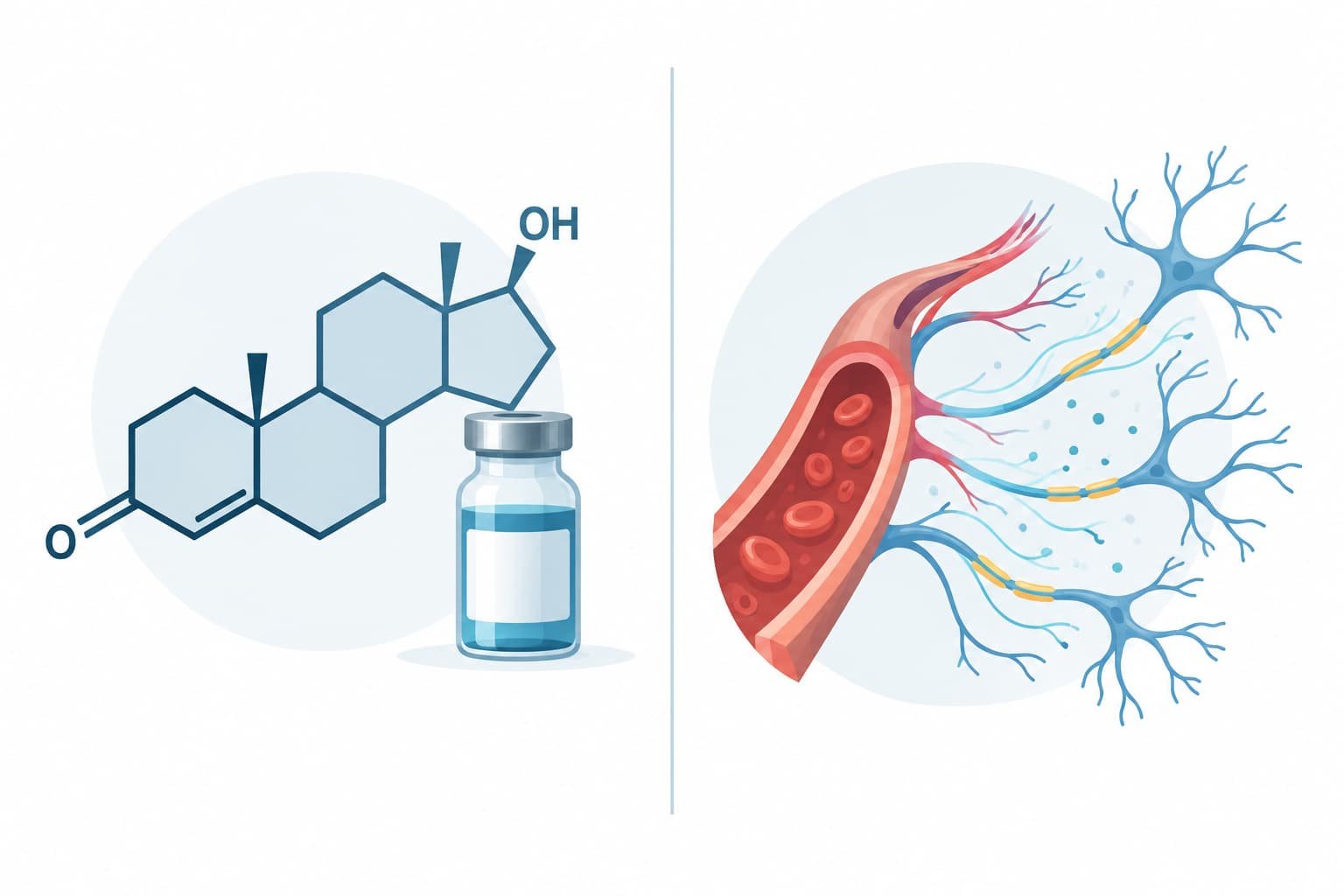
    Men researching erectile difficulty often encounter two very different treatments side by side: testosterone therapy and the P-Shot. Search results rarely explain how P Shot and Testosterone Levels actually relate to one another, leaving many men uncertain which treatment addresses the real underlying problem. Confusion between hormonal deficiency and tissue-based dysfunction leads some men toward the wrong treatment entirely, at real financial and physical cost. Understanding the distinction between P Shot and Testosterone Levels matters more than most marketing pages admit.

    This article separates evidence from assumption, using NHS, NICE and peer-reviewed research to explain where testosterone and the Priapus Shot genuinely intersect, and where the two remain entirely separate. Accurate diagnosis, not assumption, determines which pathway actually fits a given case.

    Understanding Testosterone and Its Role in Male Sexual Health

    What Testosterone Does in the Body

    Testosterone regulates libido, muscle mass, mood, bone density and red blood cell production. Levels typically peak in early adulthood and decline gradually with age. NHS guidance on the so-called “male menopause” confirms testosterone naturally decreases after the age of 30, though the drop rarely causes noticeable symptoms before the 40s or 50s. Research from the European Male Ageing Study recorded an average annual decline in free testosterone of around 1.3% in men aged 40 to 79, rising to roughly 5.1% per year among men aged 70 to 79. This decline explains why testosterone assessment becomes more relevant with age, particularly when erectile symptoms accompany low mood or persistent fatigue. The overall prevalence of symptomatic hypogonadism across the general male population remains relatively low, at around 2%, according to the same European survey data. This figure matters because it shows testosterone deficiency, while genuine and treatable, explains only a minority of erectile complaints presenting in clinical practice. Age alone does not automatically indicate a hormonal cause, even when erectile symptoms coincide with advancing years.

    Recognising the Signs of Low Testosterone

    Common features of testosterone deficiency include reduced sexual desire, fatigue, low mood, reduced muscle mass and difficulty concentrating. Erectile difficulty can also occur alongside these symptoms. Erectile dysfunction more commonly results from vascular, neurological or psychological factors rather than hormone levels alone. NICE and NHS guidance note that testosterone deficiency rarely causes erectile dysfunction as an isolated factor. A formal diagnosis requires consistent symptoms plus confirmed low testosterone on morning blood testing, ideally repeated on a separate occasion. Fatigue, low mood and reduced muscle mass without any accompanying sexual symptom rarely point toward testosterone deficiency in isolation. Clinicians typically consider the full symptom pattern alongside laboratory values rather than treating a single low reading as conclusive proof of hormonal deficiency.

    What Is the P Shot?

    The P Shot, also known as the Priapus Shot, P-Shot or Pshot, is a platelet-rich plasma (PRP) injection procedure. Clinicians draw a small blood sample, process it through a centrifuge, and inject the concentrated plasma into penile tissue. Some patients refer to the procedure informally as a penis shot, though the correct clinical term remains Priapus Shot or P-Shot. The p injection uses only the patient’s own blood components, without synthetic hormones or dermal filler. Unlike testosterone replacement, the procedure involves no ongoing medication, no daily gel application and no ongoing hormonal monitoring, since it introduces nothing foreign into the body.

    The PRP Preparation Process

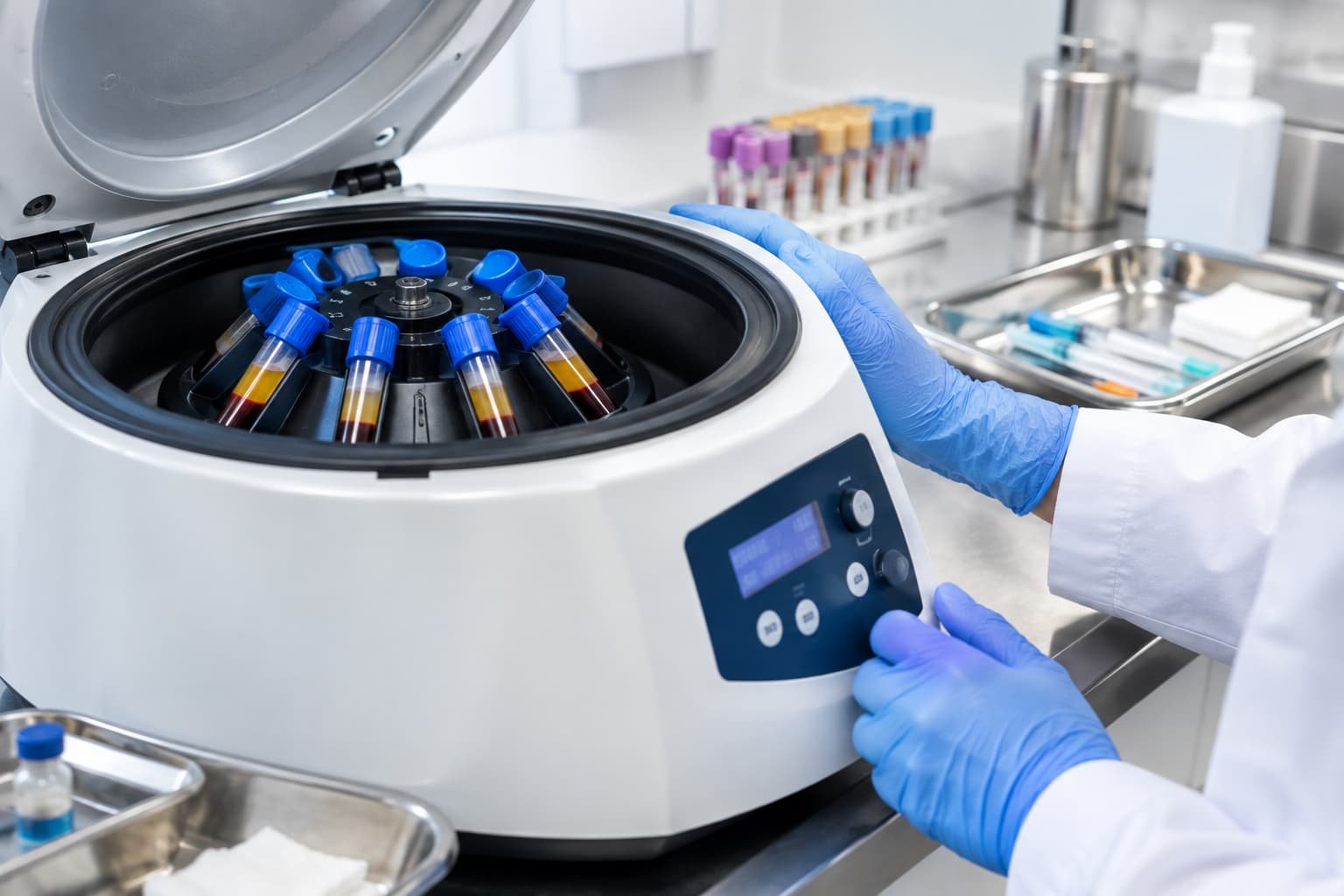
    Centrifuge separating platelet-rich plasma during P-Shot preparation
    Dual-spin processing concentrates platelets before injection.

    The centrifuge separates blood into layers, isolating platelets and growth factors from red blood cells and plasma. Clinicians draw the platelet-rich layer into a syringe for injection. A topical anaesthetic or penile nerve block typically precedes the procedure, reducing discomfort. The full appointment, including preparation and injection, generally takes between 30 and 45 minutes. Most patients resume normal daily activity the same day, though clinicians typically advise abstaining from sexual activity for four to five days afterward to allow initial tissue settling.

    How the P-Shot Works on Penile Tissue

    Growth factors released from platelets stimulate angiogenesis, or new blood vessel formation, alongside collagen production and nerve tissue repair. These effects target the physical structure of the penis rather than hormone production anywhere in the body. Some marketing material describes penile injection growth outcomes, though clinical evidence for measurable enlargement remains limited. Documented effects relate more consistently to blood flow, firmness and sensitivity than to size increase. Patients considering the Pshot for enlargement specifically, rather than function, should discuss realistic expectations with a qualified clinician beforehand, since results vary considerably between individuals.

    P Shot and Testosterone Levels: Examining the Evidence

    Despite frequent searches linking P Shot and Testosterone Levels, no peer-reviewed evidence indicates that PRP injected into penile tissue changes circulating testosterone. The P-Shot targets local tissue, not the hypothalamic-pituitary-testicular axis responsible for hormone production. Testosterone synthesis occurs in the testes; the pituitary gland and hypothalamus regulate this process through separate hormonal signals entirely unconnected to penile injection sites. Confusing local tissue treatment with systemic hormonal therapy remains one of the most common misconceptions surrounding P Shot and Testosterone Levels. Marketing language occasionally blurs this distinction, implying broader hormonal benefit that current research simply does not support.

    What the Research Actually Shows

    The Journal of Sexual Medicine published a 2021 randomised controlled trial reporting measurable improvement in erectile function scores among men receiving PRP injections compared with placebo. European Urology later published a 2023 trial that produced more mixed findings, with improvements not reaching statistical significance across every measured outcome. Neither trial measured or reported changes in serum testosterone following treatment. The existing P Shot and Testosterone Levels evidence base addresses erectile function only, not hormonal status. Because of this evidence gap, professional bodies including the European Association of Urology and NICE Clinical Knowledge Summaries do not currently list PRP therapy as a first-line or established treatment for erectile dysfunction. Both bodies classify PRP-based injections as an emerging therapy requiring further large-scale trial data before wider clinical endorsement becomes appropriate. This classification does not equate to a safety concern; it reflects an evidence gap rather than an established risk.

    P Shot and Testosterone Levels: Two Different Treatment Pathways

    Diagram comparing hormonal treatment and tissue-based P-Shot treatment pathways
    Two separate systems, two separate treatments.

    When Low Testosterone Causes Erectile Difficulty

    When blood testing confirms genuinely low testosterone alongside relevant symptoms, testosterone replacement therapy addresses the underlying hormonal cause directly. Delivery methods include gels, injections, patches and implanted pellets. Improvement in libido and energy often appears within weeks, though erectile function may take longer to respond and does not always fully resolve with hormone correction alone. A meta-analysis by Isidori and colleagues, reviewing 17 trials of testosterone therapy, found the strongest erectile function improvements occurred in men with the lowest baseline testosterone readings. Men with only borderline-low levels saw comparatively modest change, reinforcing why accurate testing before treatment carries real clinical weight.

    When the P Shot Treatment Is More Appropriate

    Men with normal testosterone levels experiencing erectile difficulty linked to reduced blood flow, nerve sensitivity changes or conditions such as Peyronie’s disease may find P shot treatment more relevant to the underlying issue. Testosterone therapy will not correct vascular or structural causes of erectile dysfunction, regardless of how low a starting hormone level might appear. Equally, the priapus shot does not correct a genuine hormone deficiency. Selecting the correct pathway depends entirely on accurate diagnosis rather than symptom overlap between the two conditions.

    Lifestyle Factors That Influence Both Conditions

    Certain lifestyle factors influence both testosterone production and erectile blood flow simultaneously, which partly explains why the two conditions so often coexist and cause confusion. Excess body weight, particularly abdominal fat, lowers circulating testosterone through increased conversion to oestrogen in fatty tissue. Poor sleep quality, chronic stress and excessive alcohol intake similarly reduce testosterone output over time. The same factors damage vascular health, restricting blood flow essential for erectile function. Addressing weight, sleep and alcohol intake often improves both hormonal status and erectile blood flow together, before any injectable treatment enters the discussion. NICE guidance consistently recommends addressing modifiable lifestyle factors as an early step in managing both testosterone deficiency and erectile dysfunction.

    Diagnosing Low Testosterone Before Considering Either Treatment

    NICE and NHS Guidance on Testing

    NICE guidance and NHS resources recommend confirming testosterone deficiency through morning blood tests, since levels fluctuate throughout the day and peak shortly after waking. A single low reading proves insufficient for diagnosis. Clinicians generally repeat testing and assess related hormones, such as luteinising hormone and sex hormone-binding globulin, where clinically indicated. The British Society for Sexual Medicine recommends weighing the whole clinical picture, not testosterone numbers in isolation. Free testosterone and sex hormone-binding globulin readings sometimes reveal deficiency even when total testosterone sits within a broadly normal range, so relying on a single figure risks missing genuine cases.

    Why Testing Matters Before Either Treatment

    Choosing a treatment without proper testing risks addressing entirely the wrong problem. A man with normal testosterone who receives hormone therapy gains no meaningful benefit and may face unnecessary side effects, including altered red blood cell count and suppressed natural hormone production. Equally, a man with genuinely low testosterone who receives only a P-Shot may see limited improvement in libido or fatigue-related symptoms, since PRP does not correct hormonal deficiency. A short consultation covering symptom history, relevant blood work and, where appropriate, referral for formal testosterone testing remains the safest starting point before either treatment proceeds.

    Priapus Shot Price and Cost Considerations Across the UK

    Priapus shot price in the UK commonly ranges from £900 to £1,500 per session, depending on clinic location, practitioner experience and package inclusions. Men researching male enlargement injections cost UK figures should note that pricing reflects consultation depth, PRP preparation method and follow-up provision, not the injection alone. The P Shot London market includes providers across Harley Street and Marylebone, with substantial variation in included aftercare. Testosterone therapy costs vary separately, depending on delivery method and treatment duration, since hormone replacement is typically an ongoing commitment rather than a single session. Men comparing P Shot UK providers should verify GMC registration and clinic regulation before booking any procedure.

    P Shot Before and After: Realistic Expectations

    Documented P Shot before and after accounts describe gradual changes over several weeks rather than immediate results. Early effects, including mild swelling, typically settle within the first fortnight. Noticeable changes in firmness and sensitivity commonly emerge by four to eight weeks, as angiogenic processes progress. Men should interpret P-Shot before and after comparisons realistically, since individual response varies according to age, circulation and baseline tissue health. Photographic comparisons circulating online do not represent guaranteed outcomes for every patient.

    Can Testosterone Therapy and the P Shot Be Combined?

    Some men present with both low testosterone and tissue-related erectile difficulty simultaneously. In these cases, a clinician may consider addressing both issues, since correcting one factor rarely resolves a problem rooted in another system entirely. Combination approaches require careful clinical oversight, given the differing monitoring requirements of hormone therapy compared with a single PRP procedure. No dedicated trial currently evaluates combined P-Shot and testosterone therapy outcomes, so recommendations rely on extrapolation from separate evidence for each treatment individually.

    Safety, Limitations and Professional Assessment

    Both treatments carry limitations worth stating plainly. Testosterone therapy requires ongoing blood monitoring, since incorrect dosing can suppress natural hormone production or raise red blood cell count beyond safe levels. Men with prostate cancer or severe untreated sleep apnoea generally should not receive testosterone therapy. The P-Shot carries risks including bruising, swelling, infection and, rarely, allergic reaction to anaesthetic. Men taking anticoagulant medication or with bleeding disorders require careful assessment beforehand. Neither treatment suits every man, and outcomes cannot be guaranteed for either approach. A qualified clinician should assess suitability before either procedure begins, including review of relevant blood tests, medical history and current medication.

    Pshots clinic UK, a Harley Street practice led by Dr Syed Nadeem Abbas, offers P-Shot treatment in London alongside broader men’s sexual health assessment.

    Frequently Asked Questions

    Does the P Shot increase testosterone levels?

    No peer-reviewed evidence supports this claim. The P-Shot targets penile tissue directly and has no established mechanism affecting hormone production in the testes.

    Can low testosterone cause erectile dysfunction?

    Low testosterone can contribute to erectile difficulty, particularly alongside reduced libido, though NICE and NHS sources note it rarely causes erectile dysfunction as an isolated factor.

    What is the average priapus shot price in the UK?

    Priapus shot price typically ranges from £900 to £1,500 per session, varying by clinic and included follow-up care.

    How soon do P Shot before and after changes appear?

    Initial changes often appear within two to four weeks, with more noticeable improvement reported between eight and twelve weeks post-treatment.

    Does testosterone therapy improve erectile function on its own?

    Testosterone therapy improves libido and energy reliably, though erectile function does not always fully resolve without addressing other contributing factors.

    Is the P Shot suitable for men with normal testosterone?

    Yes. The P-Shot does not depend on testosterone status and may suit men with normal hormone levels experiencing tissue-related erectile symptoms.

    Can penile injection growth be expected from the P Shot?

    Clinical evidence for measurable size increase remains limited. Documented effects relate more consistently to blood flow, firmness and sensitivity.

    Should testosterone be tested before booking a P Shot?

    Testing is not mandatory before the P-Shot, though it helps rule out an underlying hormonal cause that PRP alone will not address.

    Can lifestyle changes improve both conditions without treatment?

    Weight management, better sleep and reduced alcohol intake can improve testosterone levels and vascular health, though severe cases still require formal treatment.

    Key Takeaways

    P Shot and Testosterone Levels remain two separate clinical questions, not interchangeable explanations for the same symptom. Testosterone therapy corrects confirmed hormonal deficiency. The P-Shot addresses localised tissue, blood vessel and nerve factors within the penis itself. Neither treatment substitutes for the other, and neither deserves selection without proper diagnostic testing beforehand. Men experiencing erectile difficulty benefit most from accurate assessment rather than assumption. Blood testing, symptom review and an honest clinical conversation resolve far more uncertainty than searching for reassurance online ever will. Given how different these two treatments actually are beneath the surface, does treating a symptom ever make sense without first identifying its true cause?

    Read more:

    Drugs Causing Erectile Dysfunction: Which Medications Are Most Likely?

    P-Shot for Sensitivity vs ED: Does It Work Differently?

    P Shot Treatment London

    Dr Syed Nadeem Abbas, MBBS, MRCSEd, MSc Aesthetic Plastic Surgery (Distinction) Medical Director, Pshot Clinic | CQC Regulated | Monday to Saturday 10:00–18:00 +44 7955 836986 
  • P-Shot for Peyronie’s Disease: Does PRP Therapy Help Penile Curvature?

    P-Shot for Peyronie’s Disease: Does PRP Therapy Help Penile Curvature?

    ✅Medically reviewed | Updated September 2026

    A penis that bends during erection can reshape intimacy, confidence and long-term health decisions. Peyronie’s disease affects roughly 1 in 16 men, and urologists suspect under-reporting. Meanwhile, private clinics increasingly promote platelet-rich plasma (PRP) injections as a regenerative solution. The P-Shot for Peyronie’s disease draws interest because it uses the patient’s own blood and avoids surgery. However, online summaries often promise more than the data deliver.

    This article examines what the research actually shows. In addition, it reviews trial data from Morocco, Italy, France and the United States. It also compares NHS and NICE material with European Association of Urology (EAU) and American Urological Association (AUA) guidance. Overall, each section separates established facts from early findings.

    PRP may reduce curvature modestly in some men, but no guideline recommends it as standard care. Readers will find realistic figures, safety data, study limitations and a comparison with other penile curvature treatment options.

    What Is Peyronie’s Disease?

    Peyronie’s disease develops when fibrous scar tissue, called plaque, forms in the tunica albuginea. This fibrous layer surrounds the erectile chambers of the penis. The plaque lacks elasticity. As a result, the penis bends, narrows or shortens during erection.

    The NHS states that the condition mainly affects men over 40, although younger men can develop it. Mild cases may need no treatment. However, pain, depression or difficulty with sex often justify medical help. A pronounced curve or a painful erection warrants a GP appointment.

    Prevalence and Causes

    NHS Hertfordshire and West Essex Integrated Care Board (ICB) policy estimates that about 6% of men have the condition. The same policy notes that the true figure may reach 10%. The cause remains unknown. Researchers favour a model of repeated micro-injury followed by an exaggerated fibrotic response. Inherited predisposition may also contribute.

    Acute and Chronic Phases

    Clinicians divide the disease into two phases. According to NHS Lothian, the acute phase lasts three to six months. ICB policy allows up to 12 months. Inflammation, pain and changing curvature characterise this stage. The chronic phase begins when pain settles and curvature stops changing. NHS Lothian reports that curvature stabilises in about 70% of men. It worsens again in 20% and improves in about 10%.

    For this reason, phase matters for treatment choice. NHS Lothian guidance recommends referral to secondary care once the chronic phase begins. Surgical options come into consideration only after that point.

    How the P-Shot Works

    The P-Shot, also called the Priapus Shot, is a branded term for PRP injection into penile tissue. First, a clinician draws a small blood sample from the arm. A centrifuge then spins the sample and concentrates the platelets. Finally, after local anaesthetic, the clinician injects the concentrate.

    Technique differs between conditions. Standard P-Shot protocols for erectile function target the erectile chambers. In contrast, Peyronie’s studies inject PRP directly into or around the plaque. Therefore, the P-Shot for Peyronie’s disease uses a different injection strategy from the P-Shot for erectile dysfunction.

    PRP Tissue Repair: The Biological Rationale

    Illustration of PRP tissue repair with platelets near collagen fibres in scar tissue
    Platelets release growth factors, but their net effect on Peyronie’s plaque remains unproven.

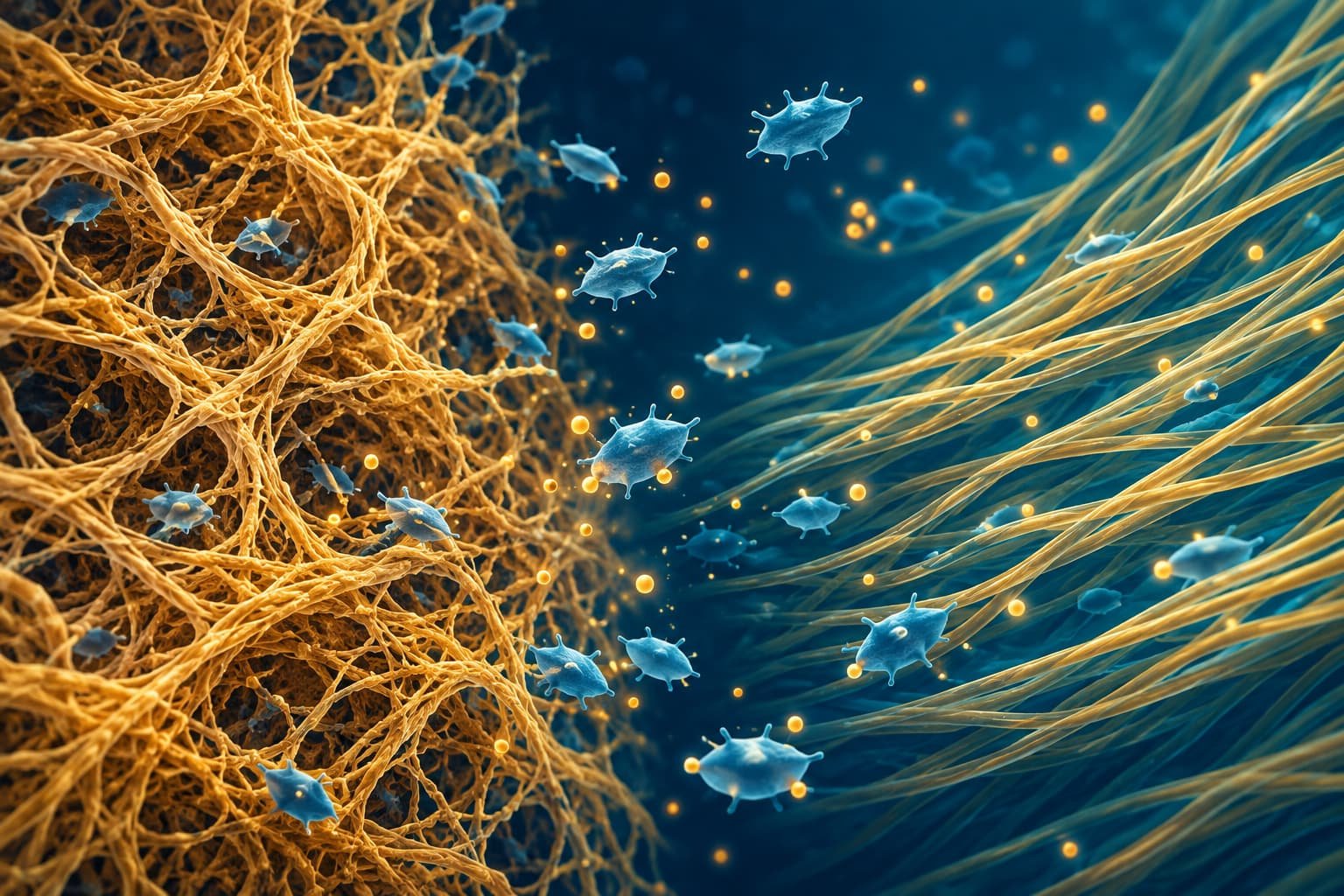
    Platelets store growth factors, including platelet-derived growth factor and vascular endothelial growth factor. These factors support PRP tissue repair by stimulating cell growth, new blood vessels and collagen remodelling. Furthermore, PRP already features in orthopaedic, wound-healing and dermatological practice.

    However, Peyronie’s plaque reflects dysregulated fibroblast activity and excess collagen. Transforming growth factor beta drives part of that process, and PRP also contains it. Consequently, the net effect of PRP on plaque biology remains unproven. A plausible mechanism does not prove a clinical benefit.

    What Does the Evidence Say About the P-Shot for Peyronie’s Disease?

    Research on PRP for Peyronie’s has expanded in recent years, yet most studies remain small. Randomised data are only now emerging.

    Early Cohort Studies

    A Moroccan prospective study enrolled 65 men with curvature between 25° and 45°. Participants received an average of 6.1 PRP injections. Curvature improved by about 17° in both severity groups. The share of men with painful intercourse fell from 70.7% to 34.25%. However, the study had no control group. Therefore, placebo effects and natural improvement could explain part of the change.

    An Italian cohort of 72 men received three injections two weeks apart. Median curvature fell from 50° to 40°. Similarly, median plaque size fell from 11.1 mm to 8.2 mm. A French pilot study of 17 men reported significant improvement in Peyronie’s Disease Questionnaire scores at three months. In addition, that study recorded no side effects.

    Findings in Chronic Peyronie’s Disease

    A 2026 Italian retrospective study offers a more cautious picture. Researchers treated 36 men with stable disease using three weekly injections. Mean curvature fell from 30.5° to 24.2°, a change of 6.3°. Only 25% of men achieved a reduction of 10° or more, a threshold often regarded as clinically relevant. Furthermore, erectile function scores rose by 1.1 points, which did not reach statistical significance. The authors concluded that PRP should stay investigational until randomised trials report.

    Randomised Trial Data

    The most rigorous data reviewed here come from a University of Miami trial. Researchers randomised 41 men to PRP or saline injections and crossed the groups after three months. An interim analysis of 28 men found no adverse events. At six months, the group that received PRP first reached a median curvature of 25° (p = 0.047). In contrast, the group that received saline first showed no significant change (p = 0.490). The authors described a delayed effect and warned that the small sample limits conclusions. The published report covers interim data only.

    Systematic Review Findings

    A 2024 World Journal of Urology systematic review searched for PRP studies in erectile dysfunction and Peyronie’s disease. It included 17 studies. Four used randomised designs. Together, the studies covered 1,099 patients. Most showed small to moderate benefits. Side effects stayed mild and transient, and no major adverse events emerged. Across the literature, benefits look small to moderate, and large randomised confirmation is still missing.

    Guideline Position: NHS, NICE, EAU and AUA

    No UK guideline recommends the P-Shot for Peyronie’s disease as a penile curvature treatment. ICB policy states that good evidence and UK guidance on conservative management remain lacking. The policy points clinicians to EAU guidance instead. The same policy declines to fund shockwave therapy because of inadequate evidence.

    NICE holds interventional procedures guidance on shockwave therapy for Peyronie’s disease, dating from 2003. That guidance also describes treatments as relieving symptoms rather than curing the disease. However, the NICE material reviewed for this article contains no recommendation on PRP.

    Specialist societies take a firmer line. A 2024 narrative review reports that the AUA and EAU classify PRP and stem cell therapy as experimental. This applies to Peyronie’s disease. Similarly, a 2025 Korean consensus statement reaches the same conclusion. The AUA also treats PRP as experimental for erectile dysfunction. In guideline terms, PRP remains an experimental penile curvature treatment.

    Who Might Consider PRP for Peyronie’s?

    Published studies mostly enrolled men with moderate curvature. For example, the Moroccan cohort included angles of 25° to 45°. The Italian cohorts reported baseline averages between about 30° and 50°. Data for severe curvature appear sparse. The three larger cohorts described above also enrolled men with stable disease. Therefore, evidence for the acute phase remains limited.

    Erectile dysfunction often coexists with Peyronie’s disease. Separate assessment matters because erectile difficulty can block intercourse independently of curvature. Sound practice includes the following steps before any injection:

    • A confirmed diagnosis, based on examination and, where indicated, ultrasound.
    • Objective curvature measurement, ideally by goniometer or standardised photographs.
    • Separate assessment of coexisting erectile dysfunction.
    • Screening for bleeding disorders and anticoagulant use.
    • A frank discussion of experimental status and realistic outcomes.

    Men with severe curvature that prevents intercourse should seek a urology opinion about surgical options. NHS Lothian lists inability to achieve penetrative intercourse as a referral indication.

    Realistic Outcomes and Study Limitations

    Cohort data show average curvature reductions between about 6° and 17°. Individual response varies widely. Measurement methods also differ. One reviewed study relied on patient-taken photographs and lacked validated questionnaires. In the Italian retrospective study, only one in four men reached a 10° reduction. ICB policy states that treatment cannot completely reverse the changes. Complete straightening is not a realistic expectation.

    Why Current Studies Need Caution

    Several limitations weaken the current evidence:

    • Most studies lack a control group, so placebo effects and natural fluctuation remain possible.
    • Sample sizes stay small, often below 100 men.
    • Injection numbers and intervals differ, from three injections to about six.
    • Follow-up periods range from four weeks to six months.
    • PRP preparation systems vary in platelet concentration.

    Because of these gaps, no study proves lasting benefit. Larger randomised trials with standard protocols and longer follow-up remain essential.

    Comparing Penile Curvature Treatment Options

    The P-Shot for Peyronie’s disease forms one of several penile curvature treatment routes. Each route suits a different stage and severity.

    Observation and Conservative Care

    The NHS advises that mild symptoms may need no treatment. However, ICB policy notes that good evidence for conservative measures remains lacking. Therefore, expectations should stay modest for oral and device-based approaches.

    Collagenase Injections

    Collagenase (Xiapex) once served as the main injectable option. ICB policy confirms that the manufacturer withdrew it from the European market. Consequently, the UK no longer has supply. French researchers link rising interest in PRP partly to that withdrawal.

    Shockwave Therapy

    NICE published guidance on shockwave therapy in 2003. According to a 2024 review, the AUA and EAU support shockwave therapy for pain control only. Local NHS policy does not fund it. Hence, shockwave therapy offers limited help for curvature.

    Surgery

    Surgery suits men with stable curvature that blocks intercourse. Surgery cannot usually restore the penis to its original shape, according to the NHS. Options include plication, grafting and prosthesis implantation. Surgery currently remains the most established route for severe, stable curvature.

    Safety, Side Effects and Costs

    Reported Safety Profile

    PRP uses the patient’s own blood, so allergic reaction is unlikely. Overall, reported adverse events remain mild. Safety data for the P-Shot for Peyronie’s disease come mainly from small cohorts and one interim randomised report. The Italian retrospective study recorded pain in 5.6% and haematoma in 2.8% of men. The Miami interim analysis and the French pilot study reported no adverse events. Rare risks include infection and bleeding, as with any injection. However, long-term safety data beyond six months remain scarce.

    Costs and Access

    Prices for a P shot London session typically range from £900 to £1,500, depending on the clinic. Study protocols used three to six injections. Therefore, a full course can cost several thousand pounds. Finally, men should request a written total cost before treatment.

    Choosing a Qualified Provider

    Peyronie’s disease needs accurate diagnosis before any injection. First, men should verify practitioner registration on the General Medical Council (GMC) register. In addition, clinics in England should hold Care Quality Commission (CQC) registration. Clinics that advertise a P shot London service differ in training, equipment and protocols. Written information should state clearly that PRP for Peyronie’s remains experimental.

    Questions to Raise at Consultation

    Consultation desk with notes and a tablet chart for penile curvature treatment review
    A written treatment plan should state the protocol, the evidence behind it and the total cost.

    Men can raise the following questions before agreeing to treatment:

    • Which protocol applies, and which published study supports it?
    • How will the clinic measure curvature before and after treatment?
    • What is the total cost, including follow-up?
    • What happens if curvature does not change?

    Clinic and Practitioner Background

    Pshots clinic UK operates a Harley Street practice in Marylebone under Dr Syed Nadeem Abbas (MBBS, MRCSEd, MRCGP). The lead clinician also holds an MSc in Aesthetic Plastic Surgery with Distinction from Queen Mary University of London. Postgraduate training took place at Cambridge, Oxford and the Royal London Hospital. Overall, the same checks apply to every provider.

    Frequently Asked Questions

    Treatment and Evidence

    Does the P-Shot for Peyronie’s disease straighten the penis?

    No study shows complete straightening. Cohort studies report average curvature reductions of roughly 6° to 17°. Individual results vary, and randomised evidence remains limited.

    Can PRP dissolve Peyronie’s plaque?

    Some studies report small reductions in plaque size, consistent with limited PRP tissue repair effects. One Italian cohort recorded a fall from 11.1 mm to 8.2 mm. However, the studies reviewed here did not show complete plaque resolution.

    Does PRP improve erectile function in Peyronie’s disease?

    Findings vary. In the Italian retrospective study, a 1.1-point erectile function score gain lacked statistical significance. In the Moroccan cohort, 55.5% of men reported easier intercourse.

    Does PRP work better than traction or surgery?

    The studies reviewed here contain no head-to-head comparisons. Surgery remains the most established route for stable, severe curvature. PRP remains experimental.

    Does PRP suit acute or chronic Peyronie’s disease?

    The three larger cohorts enrolled men with stable disease. Evidence for the acute phase remains limited. A urologist can stage the disease using history, examination and ultrasound.

    Safety and Practical Questions

    How many PRP sessions do studies use?

    Protocols ranged from three injections, one to two weeks apart, to 6.1 injections on average in the Moroccan cohort.

    What side effects follow PRP injection?

    Studies report mild, transient pain and occasional haematoma. Some trials recorded no adverse events.

    Should a GP appointment come first?

    Yes. The NHS advises seeking help for a pronounced curve or painful erections. A GP can examine the penis, arrange an ultrasound and discuss referral.

    Key Takeaways

    PRP for Peyronie’s holds an uncertain place in penile curvature care. Early studies report modest gains in curvature, plaque size and pain, alongside a mild safety profile. However, most studies lack control groups, and major guidelines classify PRP as experimental. Informed consent therefore means understanding both the promise and the gaps.

    Men considering the P-Shot for Peyronie’s disease should first secure a confirmed diagnosis, disease staging and objective curvature measurement. In addition, a urology opinion helps compare surgery, traction and other options. Written protocols, session numbers and realistic outcomes deserve discussion before any injection. This article informs and does not replace individual medical advice.

    If evidence for a treatment stays modest, how much uncertainty is acceptable when the decision affects intimacy and confidence?

    Read more:

    P-Shot for Sensitivity vs ED: Does It Work Differently?

    P-Shot Near Me: How to Find a Qualified Clinic in the UK

    P Shot Treatment London

    Dr Syed Nadeem Abbas, MBBS, MRCSEd, MSc Aesthetic Plastic Surgery (Distinction) Medical Director, Pshot Clinic | CQC Regulated | Monday to Saturday 10:00–18:00 +44 7955 836986 
  • Peyronie’s Disease Treatment Options in London: A Complete Comparison

    Peyronie’s Disease Treatment Options in London: A Complete Comparison

    ✅Medically reviewed | Updated September 2026

    Peyronie’s disease affects a meaningful share of UK men, yet confusion often delays treatment. Medication, traction devices, injections, shockwave therapy and surgery each promise results. Each option suits a different stage of the condition, though. This guide compares every recognised Peyronie’s disease treatment available in London. The comparison weighs evidence, cost and realistic outcomes side by side. Private clinics across Harley Street now offer a full spectrum of care. Options range from conservative management in early disease to reconstructive surgery once curvature stabilises. Men researching treatment need clarity, not promotional claims. The following sections set out what current medical literature actually supports. NHS guidance, NICE recommendations and peer-reviewed research form the basis for every claim made here.

    Understanding Peyronie’s Disease

    Peyronie’s disease develops when fibrous scar tissue, called plaque, forms inside the tunica albuginea. NHS data show the condition mostly affects men over the age of 40. Younger men can develop it too, though less commonly. The plaque restricts normal tissue expansion during erection. This restriction produces curvature, indentation or shortening of the shaft. Pain often accompanies the early, acute phase of the disease. Erectile dysfunction can also develop as the condition progresses. Confidence and intimacy both suffer when curvature goes unaddressed for long periods.

    How the Underlying Fibrosis Develops

    Micro-injury during intercourse likely triggers much of the underlying process. Damaged tissue releases growth factors, including transforming growth factor beta. These growth factors drive fibroblast activity within the tunica albuginea. Excess collagen then accumulates, forming the rigid plaque itself. Genetic predisposition, including family history of Dupuytren’s contracture, may increase risk. Diabetes and smoking also appear to raise overall risk levels. Research into these pathways continues, though gaps in understanding remain.

    Symptoms and Diagnosis

    Common signs include a palpable lump, curvature during erection and pain. Some men notice a visible narrowing or hourglass-shaped deformity. NHS guidance confirms many men experience little or no pain at all. Diagnosis usually starts with a straightforward physical examination. Many private clinics also use penile duplex ultrasound scanning. This scan measures plaque size and blood flow accurately. Clinicians record the degree of curvature before recommending treatment. This measurement guides every later decision in the pathway.

    Acute Phase Versus Chronic Phase

    The acute phase lasts roughly six to twelve months. Active inflammation, evolving curvature and pain mark this stage. The chronic phase follows once curvature stabilises and pain settles. Correct staging determines which Peyronie’s disease treatment offers the best chance of success. Non-surgical options generally work best during the acute phase. Surgery becomes the primary route once the disease reaches the stable phase.

    Non-Surgical Peyronie’s Disease Treatment Options in London

    Most private clinics in London begin conservative management for the condition first. Surgery only becomes necessary once these measures fail or curvature stabilises. Non-surgical approaches suit men in the acute phase especially well. These approaches also suit men wishing to avoid an operation altogether.

    Oral and Topical Medication

    Vitamin E, pentoxifylline and potassium para-aminobenzoate rank among common oral agents. A 2023 network meta-analysis reviewed twenty-four randomised trials on these therapies. The trials included 1,643 participants across multiple countries. Frequentist analysis found several agents reduced curvature and plaque size significantly. Pentoxifylline, coenzyme Q10 and vitamin E all showed measurable benefit. Bayesian analysis, however, found no agent clearly beat placebo overall. This finding highlights genuine uncertainty still surrounding oral therapy. No single tablet cures Peyronie’s disease, and expectations should stay realistic.

    Penile Traction Therapy

    Traction devices apply gentle, sustained tension along the shaft. Clinical evidence suggests this approach can add length and reduce curvature. Few other conservative options achieve this combined effect. Typical protocols involve wearing a CE-marked device for several hours daily. Treatment usually continues across three to six months. Consistent daily use matters more than any specific device brand.

    Intralesional Injections

    Collagenase clostridium histolyticum, sold as Xiapex, breaks down plaque collagen directly. Two injections delivered forty-eight hours apart form one treatment cycle. Manual modelling of the penis follows each injection cycle in clinic. Multiple cycles produce measurable curvature reduction in many patients. Trial evidence supporting collagenase remains stronger than most oral therapies. Verapamil and hyaluronic acid injections offer gentler alternatives where needed. Supporting evidence for these alternatives remains more limited, though.

    Low-Intensity Shockwave Therapy

    Icons representing non-surgical Peyronie's disease treatment options in London
    Non-surgical routes range from oral medication to shockwave therapy and injections.

    Shockwave therapy delivers acoustic pulses to the affected tissue. Sessions typically run weekly across a structured treatment course. Research reviewed by the World Journal of Men’s Health noted mixed results. Combination protocols produced significant improvement in erectile function scores. Curvature change from shockwave alone remained comparatively modest, though. Most London clinics now position shockwave as an adjunct therapy. Pain relief typically exceeds structural correction with this approach.

    Platelet-Rich Plasma and the P Shot Approach

    Platelet-rich plasma injections have gained interest as a regenerative option. This sits within the wider field of non-surgical treatment for erectile dysfunction in London. The P Shot treatment, sometimes called the Priapus Shot, uses concentrated platelets. Clinicians draw these platelets from the patient’s own blood sample. The concentrate then goes back into targeted penile tissue. Clinics offering P Shot London treatment position it mainly as functional support. The procedure supports erectile tissue quality rather than curing existing plaque. Interest in P shot UK provision continues rising steadily. Demand for broader penile injection growth procedures has grown alongside this trend. Men researching P shot before and after results should stay realistic. Published evidence for PRP in Peyronie’s disease specifically remains preliminary. Collagenase and traction therapy currently carry stronger supporting evidence. Priapus shot price in London reflects consultation, preparation and technique used. Pricing varies noticeably between individual providers and clinics. The Priapus shot London market has grown alongside broader p injection interest. Patients should discuss expected outcomes candidly before booking any P shot treatment. Cost alone should never guide this decision; evidence and suitability matter more.

    Non-Surgical Treatment for Erectile Dysfunction in London

    Erectile dysfunction frequently accompanies Peyronie’s disease, particularly with reduced blood flow. Phosphodiesterase-5 inhibitors, such as tadalafil, remain first-line therapy for most men. Daily low-dose use may modestly limit further scarring over time. Vacuum erection devices provide a useful mechanical alternative for many patients. Clinicians often combine these devices with traction therapy for dual benefit. Effective non-surgical treatment for erectile dysfunction in London usually combines several approaches. NICE guidance supports stepped management starting with the least invasive suitable option. This approach fits the individual health profile and personal circumstances involved. Combination therapy often works better than any single option alone. Regular review allows clinicians to adjust the plan as symptoms change.

    Surgical Peyronie’s Disease Treatment Options

    Surgery becomes the recommended route once curvature stabilises for six months. Significant interference with intercourse also supports moving toward surgical correction. Three main techniques currently dominate UK surgical practice.

    Plication Surgery

    Plication, including the Nesbit procedure, shortens the longer, unaffected tunica side. This shortened side then matches the scarred, shorter side. The operation typically takes under one hour to complete. Surgeons often perform plication as straightforward day surgery. Success rates for achieving a straight erection sit between 85 and 90 percent. Some overall shortening of length should be expected as a direct trade-off.

    Plaque Incision and Grafting

    This technique incises the plaque directly and covers the defect with a graft. Length preservation makes this option attractive compared with plication alone. Surgeons generally reserve grafting for severe curvature exceeding 60 to 70 degrees. Complex hourglass deformities also often call for this approach. Temporary or permanent erectile weakness develops in a meaningful minority of cases. Pre-operative erectile function assessment therefore matters considerably beforehand.

    Penile Prosthesis Implantation

    Icons comparing plication, grafting and prosthesis as surgical Peyronie's disease treatment options
    Surgical correction becomes an option once curvature stabilises and non-surgical routes have been exhausted.

    Some men experience both curvature and persistent erectile dysfunction together. An inflatable or malleable prosthesis can restore both function and shape at once. Recovery involves a short hospital stay and device training afterward. Most men resume sexual activity within several weeks of the procedure. This option carries the highest cost among current surgical routes. It also delivers the most predictable combined outcome for severe disease.

    Treatment Options at a Glance

    A structured comparison helps clarify which option suits which stage of disease.

    OptionBest Suited ForTypical London CostEvidence Level
    Oral medicationEarly acute-phase disease£10–£150/monthMixed
    Penile traction therapyLength preservation, acute/chronic£150–£400Moderate
    Collagenase injectionsCurvature under ~60°£6,000–£8,000Strong
    PRP / P Shot treatmentErectile function support£900-£1500Preliminary
    Shockwave therapy Pain relief, adjunct useCourse £900–£2,500Limited for curvature
    Plication surgeryStable curvature under 60°£5,000–£8,000Strong
    Plaque incision & graftingSevere curvature, length preserved£7,000–£10,000Strong
    Penile prosthesisCombined ED and curvature£10,000–£15,000+Strong

    Comparing Costs and Realistic Outcomes

    London private clinics price care for Peyronie’s disease according to complexity. Consultant seniority and hospital overheads also affect final pricing. The following breakdown gives a general guide to current London pricing.

    • Initial consultation: £200–£400
    • Traction device or vacuum pump: £150–£400
    • Collagenase injection course: £6,000–£8,000
    • PRP injections: £900–£1500 per session
    • Plication surgery: £5,000–£8,000
    • Plaque incision and grafting: £7,000–£10,000
    • Penile prosthesis implantation: £10,000–£15,000+

    No treatment guarantees complete resolution, and realistic goal-setting should shape every consultation. Spontaneous partial improvement occurs in a small minority of men only. Most men still require some form of active management for meaningful change.

    Preparing for Peyronie’s Disease Treatment: What to Expect at Consultation

    Preparation helps every consultation run efficiently and productively. Men should bring a current list of medications and known allergies. Details of any previous penile trauma also help clinicians assess risk. Clear photographs of the erect penis, taken in good lighting, assist assessment. Many clinics also request a brief symptom and pain history beforehand. Duplex ultrasound scanning typically follows the initial physical examination. Hormone panels and cardiovascular screening sometimes accompany this initial workup. Follow-up reviews then track progress at regular intervals afterward. Non-surgical therapies generally require no significant time away from work. Surgical routes involve short recovery periods and staged follow-up visits.

    Living with Peyronie’s Disease During Treatment

    A diagnosis need not end sexual intimacy altogether. Simple pain management often helps couples remain active during treatment. Over-the-counter analgesia before intercourse can ease initial discomfort. Generous lubrication and side-lying positions also reduce strain on the area. Open communication between partners typically improves outcomes and reduces anxiety. Anxiety and low mood are common reactions to this diagnosis. UK support services, including Relate counselling, offer confidential guidance for couples. The Men’s Health Forum also provides a helpline for men seeking support. Quitting smoking and managing blood sugar levels may aid tissue recovery. Avoiding vigorous activity during the acute phase limits further micro-injury. Partner involvement in appointments often improves shared understanding of the condition. Patience matters, since most non-surgical therapies take several months to show measurable change.

    Choosing a Qualified Peyronie’s Disease Treatment Provider in London

    Credentials matter enormously given this field’s sensitive, technical nature. Men should seek consultants holding recognised urological or andrological qualifications. A transparent account of case volume and outcomes also helps. Pshots clinic, led by Dr Syed Nadeem Abbas, sits within London’s wider Harley Street network. This network offers assessment and management pathways for men’s sexual health concerns. These concerns include Peyronie’s disease and related erectile dysfunction. Membership of bodies such as BAUS Andrology adds a further reassurance marker. Published outcome audits and case volume figures indicate genuine sub-specialist experience. NHS pathways remain available at no cost throughout the UK. Waiting times for specialist input or surgery can extend considerably longer, though.

    Questions Worth Raising at the First Appointment

    Case volume for this specific condition deserves a direct question early on. Revision rates after previous surgical procedures also merit discussion beforehand. Clarifying which non-surgical tools a clinic actually offers helps set expectations. A second opinion remains a reasonable step before committing to surgery. Comparing NHS and private pathways side by side often clarifies genuine priorities. Private care generally offers faster scheduling and greater choice of surgeon. NHS care remains free at the point of use, though waiting lists vary.

    Frequently Asked Questions

    What is the most effective Peyronie’s disease treatment currently available?

    No universally superior option currently exists for every patient. Early acute-phase disease often responds well to traction therapy or oral agents. Collagenase injections also suit many men during this early stage. Stable, severe curvature usually requires surgical correction instead.

    Does the P Shot treat Peyronie’s disease directly?

    Current evidence positions PRP-based procedures mainly as functional support. These procedures support erectile tissue quality rather than curing existing plaque or curvature.

    How much does Peyronie’s disease treatment cost in London?

    Costs range from a few hundred pounds for consultations and devices. Complex surgical reconstruction can reach fifteen thousand pounds or more. Final cost depends heavily on severity and technique chosen.

    Can Peyronie’s disease resolve without any treatment?

    Spontaneous improvement occurs in a small minority of cases only. Most men require some form of active management for meaningful change.

    When should surgery replace non-surgical management?

    Surgery generally becomes appropriate once curvature stays stable for six months. Significant interference with intercourse also supports this decision.

    Does private insurance cover care for Peyronie’s disease in London?

    Some insurers cover diagnostics and surgical fees under certain policies. Traction devices, injections and pumps often fall outside standard coverage. Checking pre-authorisation requirements beforehand avoids unexpected costs later.

    Can lifestyle changes support recovery alongside medical care?

    Smoking cessation and good blood sugar control both support tissue healing. Avoiding vigorous activity during the acute phase may limit further injury.

    Is Peyronie’s disease common among UK men?

    NHS estimates suggest the condition affects a notable minority of adult men. Prevalence increases with age, particularly from the fifth decade onward.

    Key Takeaways

    Peyronie’s disease presents a genuinely varied treatment landscape today. Options range from oral medication and traction therapy through to reconstructive surgery. Selecting the right Peyronie’s disease treatment depends on accurate staging and realistic expectations. An honest discussion of evidence with a qualified specialist matters most. London’s private and NHS pathways together offer a full spectrum of care. Outcomes still vary between individuals, techniques and disease severity, though. Given how much staging and timing influence success, what deserves closer attention first?

    Read more:

    Penile Numbness vs Erectile Dysfunction: What’s the Difference?

    P-Shot Near Me: How to Find a Qualified Clinic in the UK

    P Shot Treatment London

    Dr Syed Nadeem Abbas, MBBS, MRCSEd, MSc Aesthetic Plastic Surgery (Distinction) Medical Director, Pshot Clinic | CQC Regulated | Monday to Saturday 10:00–18:00 +44 7955 836986 
  • Early Signs of Lichen Sclerosus in Men: Symptoms Not to Ignore

    Early Signs of Lichen Sclerosus in Men: Symptoms Not to Ignore

    ✅Medically reviewed | Updated September 2026

    Lichen sclerosus is a chronic inflammatory skin condition affecting genital skin in men, often developing slowly and escaping notice until scarring has already begun. Recognising the early signs of lichen sclerosus allows men to seek treatment before the condition narrows the foreskin, tightens the tip of the penis, or restricts normal urination. Many men mistake the first symptoms for irritation, a minor infection, or simple dryness, and delay a medical review. This article sets out the early signs of lichen sclerosus clinicians look for, explains how the condition develops, and outlines evidence-based treatment pathways drawn from NHS and British Association of Dermatologists guidance. It also considers the wider effect of long-term scarring on erectile function and reviews non-surgical options available across London clinics for related sexual health concerns.

    What Is Lichen Sclerosus?

    Lichen sclerosus is a long-term inflammatory skin disorder. NHS guidance describes the condition as causing itchy white patches, most often on genital skin. The exact cause remains unclear, though clinicians link the condition to an overactive immune response affecting skin cells. Lichen sclerosus is not an infection and cannot pass between sexual partners. In men, the British Association of Dermatologists refers to genital lichen sclerosus by a second name: balanitis xerotica obliterans. The condition typically develops on the foreskin and glans, the tip of the penis, though patches occasionally appear elsewhere on the body.

    Why Early Signs of Lichen Sclerosus Deserve Attention

    Delayed diagnosis allows inflammation to progress unchecked. Untreated lichen sclerosus can scar the foreskin, narrow the urinary opening, and distort the shape of the glans. Identifying early signs supports long-term skin structure, sexual function, and urinary health. Peer-reviewed dermatology literature links delayed or inadequate treatment with a higher risk of secondary complications, including chronic discomfort and reduced tissue elasticity.

    How Common Is Lichen Sclerosus in Men?

    Lichen sclerosus occurs more often in women, particularly after menopause, though men and boys develop the condition too. Exact UK prevalence in men remains difficult to establish, since many cases go unreported or misdiagnosed as balanitis or a fungal infection. Clinical literature notes a strong association between lichen sclerosus and an intact, uncircumcised foreskin; the condition rarely develops in men circumcised in infancy. Men of any age can develop lichen sclerosus, including boys before puberty and men in later adulthood.

    Early Signs of Lichen Sclerosus in Men

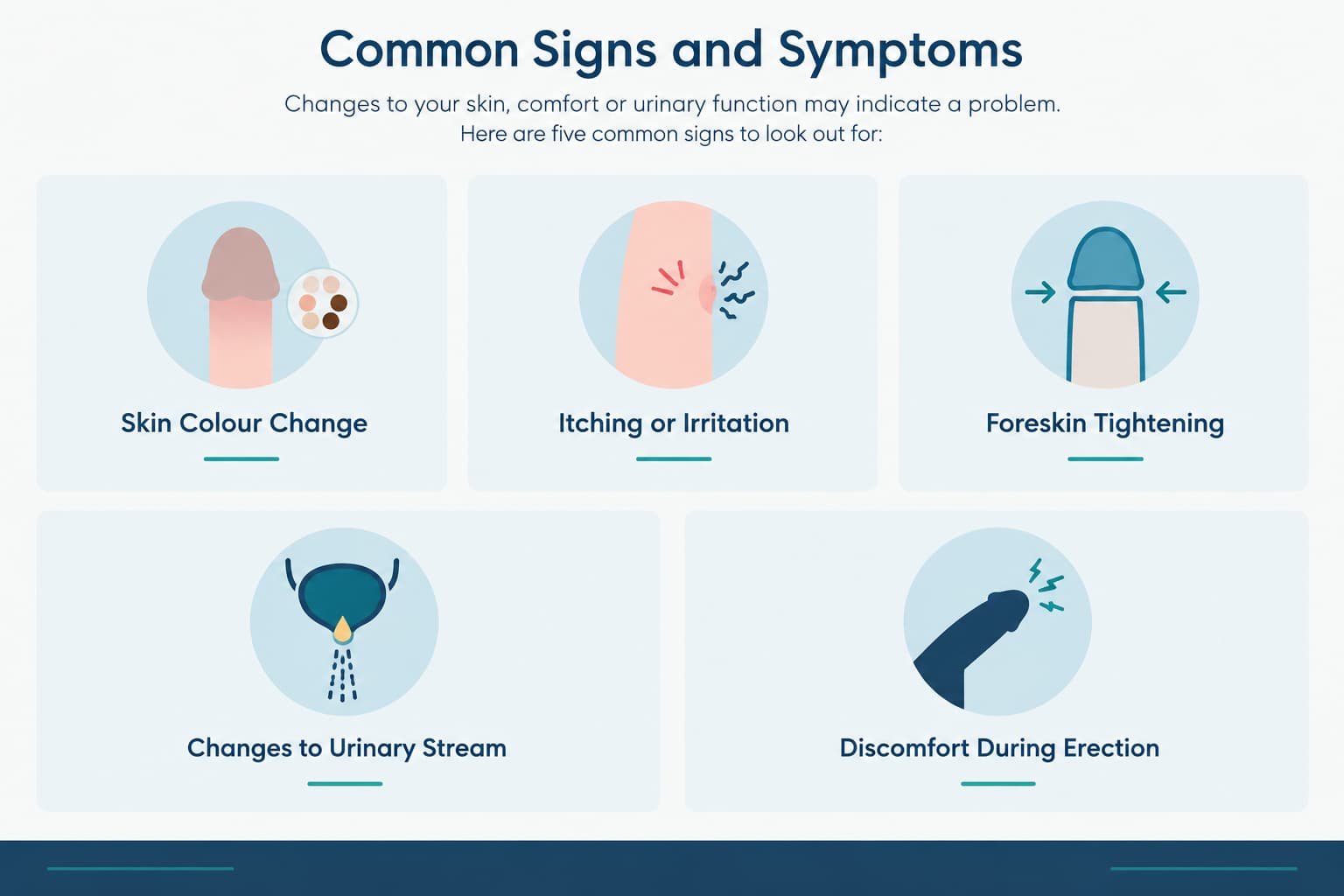
    Infographic of five early lichen sclerosus symptoms in men
    Five key symptoms to watch for in the early stages of lichen sclerosus.

    Recognising the early signs of lichen sclerosus supports timely referral and treatment. Presentation varies between individuals, and some men notice mild changes only after several months.

    Changes in Skin Colour and Texture

    The foreskin and glans often develop pale, whitish patches. Affected skin may appear thickened, shiny, or crinkled compared with surrounding tissue. Some men notice a firm, waxy texture at the tip of the penis. These skin changes represent one of the clearest early signs of lichen sclerosus and often appear before pain or functional symptoms begin.

    Itching, Soreness and Irritation

    Persistent itching affects many men with early-stage disease. The skin may feel sore, tender, or easily irritated by clothing or contact. Some men describe a burning sensation after urination. Itching that does not resolve with standard hygiene changes warrants clinical review.

    Difficulty Retracting the Foreskin

    Progressive tightening of the foreskin, known clinically as phimosis, ranks among the most commonly reported symptoms. Men may notice the foreskin no longer retracts as easily as before, or that retraction causes small tears or bleeding. This symptom often prompts the first GP consultation.

    Urinary Symptoms

    Scarring near the urethral opening can narrow the urinary stream. A thin, split, or slow urine stream can signal early structural change caused by lichen sclerosus. Some men experience a sensation of incomplete bladder emptying or mild spraying during urination.

    Discomfort During Erections

    Tightened or scarred skin restricts normal stretching during an erection. Pain, tightness, or visible cracking of the skin during arousal can indicate progressing disease. Left unaddressed, this symptom often worsens over subsequent months.

    What Causes Lichen Sclerosus?

    The precise cause of lichen sclerosus remains unknown. Current dermatological understanding points toward an immune-mediated process, in which the immune system targets healthy skin tissue. Genetic predisposition, chronic irritation, and hormonal factors may all contribute, though no single trigger explains every case. Clinical evidence consistently shows very low incidence among men circumcised early in life, suggesting prolonged exposure of the glans to trapped moisture and friction plays a contributing role.

    Distinguishing Lichen Sclerosus From Similar Conditions

    Several genital skin conditions produce overlapping symptoms, which occasionally delays accurate diagnosis. Balanitis, a general term for inflammation of the glans, can cause redness, soreness, and discharge without the characteristic whitening seen in lichen sclerosus. Fungal infections such as candidal balanitis typically respond to antifungal treatment within days, whereas lichen sclerosus does not improve without steroid therapy. Psoriasis affecting genital skin tends to appear as well-defined red patches rather than pale, thickened tissue. Lichen planus, another inflammatory skin condition, can affect genital skin but usually produces purplish, flat-topped lesions rather than white plaques. Because these conditions require different management approaches, an accurate clinical diagnosis matters. Men unsure whether symptoms match the early signs of lichen sclerosus described above should avoid self-treating with over-the-counter antifungal creams and should arrange a GP review instead.

    Diagnosing Lichen Sclerosus in Men

    Clinical Examination

    A GP or dermatologist typically diagnoses lichen sclerosus through visual examination and a review of reported symptoms. Distinctive whitish, thickened skin, combined with the pattern of early signs described above, often allows a confident diagnosis without further testing.

    When a Biopsy Becomes Necessary

    A skin biopsy may confirm the diagnosis when presentation appears atypical or when a clinician needs to rule out other skin conditions. Biopsy also helps exclude precancerous change in longstanding or treatment-resistant cases. NICE guidance and dermatology literature support biopsy where a lesion shows irregular pigmentation, non-healing ulceration, or fails to respond to standard steroid treatment.

    Why These Early Signs Should Not Be Ignored

    Risk of Scarring and Phimosis

    Ongoing inflammation gradually replaces healthy elastic tissue with fibrous scar tissue. This scarring process can permanently narrow the foreskin opening, sometimes requiring surgical correction where topical treatment alone cannot restore normal retraction.

    Urethral Narrowing

    Long-standing lichen sclerosus occasionally extends into the urethral opening, producing a condition called meatal stenosis. Severe narrowing can restrict urinary flow and, in advanced cases, require surgical widening of the urethral opening.

    Association With Penile Cancer

    Peer-reviewed research, including studies indexed on PMC, associates a proportion of penile cancer cases with longstanding, poorly controlled lichen sclerosus. Overall risk remains low, and most men treated promptly never develop malignant change. Regular follow-up nonetheless forms an important part of long-term management, particularly for men with persistent or recurrent symptoms.

    Treatment Options for Lichen Sclerosus

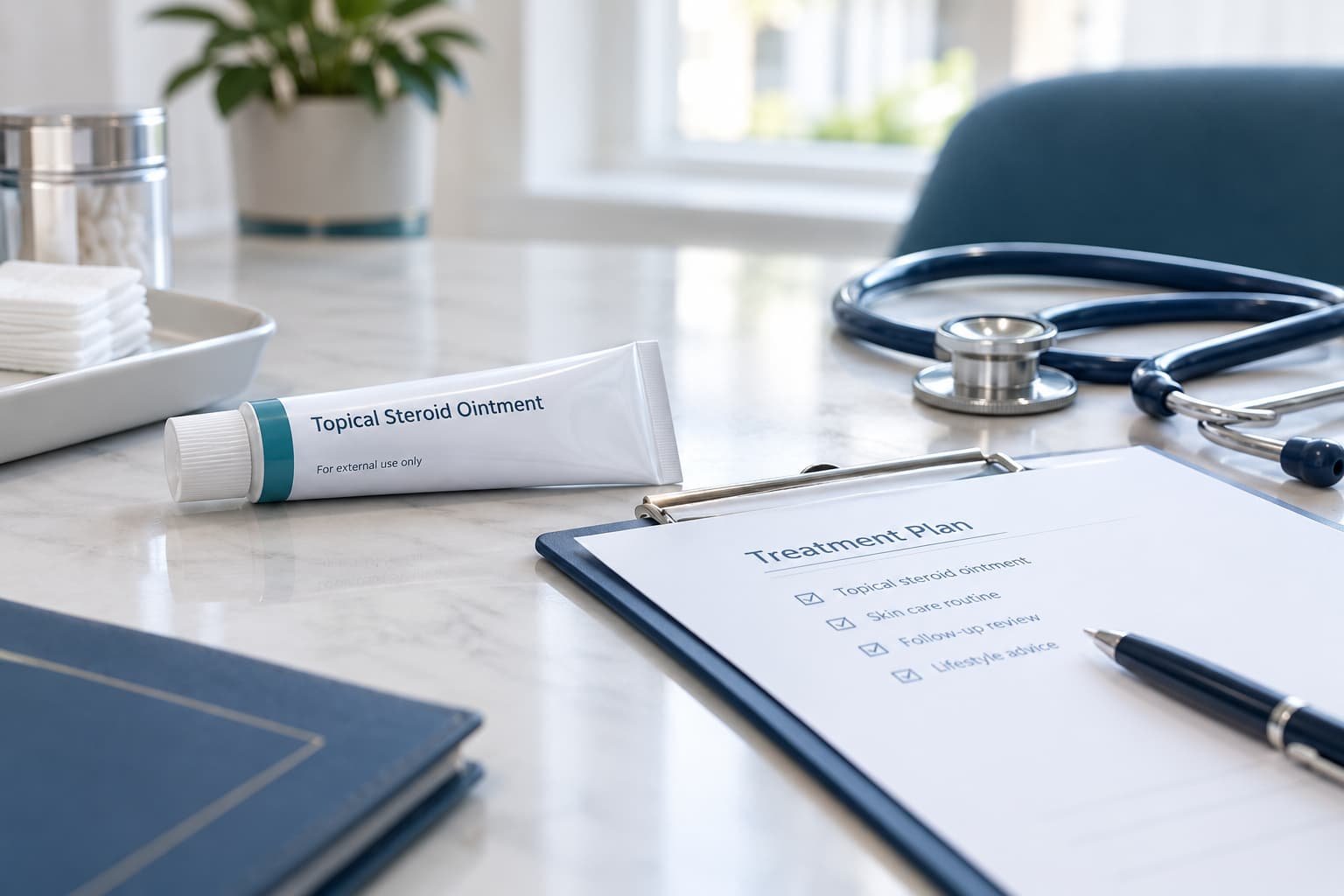
    Topical steroid treatment used for managing lichen sclerosus
    Topical corticosteroids remain the first-line treatment for lichen sclerosus, per British Association of Dermatologists guidance.

    Topical Corticosteroids

    High-potency topical steroid ointment forms the first-line treatment recommended by the British Association of Dermatologists. Regular application over several months typically reduces inflammation, restores more normal skin texture, and controls itching. Lower-strength maintenance therapy often continues long term to prevent flare-ups.

    Circumcision

    Circumcision offers a definitive surgical option for men with persistent phimosis or repeated symptom flares despite steroid treatment. Removing affected foreskin tissue often resolves retraction difficulty and reduces the risk of further scarring, though lichen sclerosus can occasionally recur on remaining glans skin.

    Emollients and Second-Line Options

    Regular use of a plain, fragrance-free emollient supports the skin barrier alongside steroid treatment and during maintenance phases. Where topical steroids prove insufficient or produce side effects, dermatologists sometimes consider second-line options such as topical calcineurin inhibitors, though evidence for these remains less extensive than for corticosteroids. Referral to a specialist dermatology or urology clinic becomes appropriate when standard treatment fails to control symptoms within the expected timeframe.

    Ongoing Monitoring

    Because lichen sclerosus carries a small long-term cancer risk, clinicians typically recommend periodic skin review, even once symptoms settle. Long-term monitoring remains an essential part of managing lichen sclerosus safely. Men with a history of poorly controlled disease, or with previous atypical biopsy results, may need more frequent review than those with well-controlled, mild disease.

    Psychological Impact of Lichen Sclerosus

    A chronic genital skin condition can affect confidence and wellbeing, even when physical symptoms remain mild. Discomfort during intimacy, visible skin changes, and uncertainty about long-term outlook contribute to anxiety for some men. Clear information about diagnosis, treatment, and expected outcomes helps reduce this uncertainty. Support from a GP, dermatologist, or counsellor remains available for men finding the condition difficult to manage emotionally, and open discussion with a healthcare professional forms a normal part of ongoing care.

    Lichen Sclerosus, Erections and Sexual Health

    Long-standing scarring from lichen sclerosus can restrict normal tissue stretch, sometimes contributing to painful or reduced-quality erections. Erectile difficulty in this context stems from structural skin changes rather than vascular or hormonal causes, and dermatological treatment of the underlying condition remains the clinical priority.

    Separately, men experiencing erectile dysfunction from other, unrelated causes sometimes explore non-surgical treatment for erectile dysfunction in London, including PRP-based injectable treatment, marketed under the name P shot treatment or Priapus shot. A P shot treatment, sometimes called a p injection, uses platelet-rich plasma prepared from a patient’s own blood and injected into penile tissue. Clinics offering the Priapus shot London providers describe, including services researched under the term P shot London, position the treatment as a non-surgical treatment for erectile dysfunction in London, distinct from dermatological management of skin conditions such as lichen sclerosus. Some London clinics, including pshots clinic uk under the clinical direction of Dr Syed Nadeem Abbas, list P shot treatment among a wider range of men’s sexual health services.

    Priapus shot price in the UK commonly ranges between roughly £900 and £1,500 per session, and P shot UK providers generally recommend a full consultation before treatment. Marketing material describing penile injection growth and P shot before and after results should be interpreted cautiously; clinical evidence for the P shot remains limited, and outcomes vary between individuals. A P shot treatment does not treat lichen sclerosus and does not replace dermatological or urological care for scarring-related symptoms. Men with erectile difficulty linked to lichen sclerosus scarring should address the underlying skin condition with a dermatologist or urologist before considering a p injection or any elective treatment for sexual function.

    Choosing a Clinic for Related Sexual Health Concerns

    Men researching options for erectile difficulty linked to scarring, or considering an elective treatment such as the P shot, benefit from checking a provider’s clinical credentials before booking a consultation. A registered medical practitioner should lead any P shot London consultation, with a documented assessment of suitability and a clear explanation of realistic, evidence-based outcomes. Reputable Priapus shot London clinics provide a thorough medical history review and screen for conditions, including active lichen sclerosus, that may affect suitability for injectable treatment. Transparent pricing, a documented consent process, and realistic discussion of limitations distinguish a responsible provider from purely promotional marketing.

    Living With Lichen Sclerosus: Practical Management

    Simple daily measures support medical treatment. Avoiding soap, shower gel, and other irritant products on affected skin reduces flare frequency. A plain emollient can replace soap as a gentler cleansing alternative. Loose-fitting underwear reduces friction against sensitive skin. Attending scheduled follow-up appointments allows a clinician to adjust treatment and monitor for complications.

    When to See a Doctor

    Any man noticing persistent white patches, itching, tightening of the foreskin, or a change in urinary stream should arrange a GP appointment. Prompt review of these early signs reduces the risk of long-term scarring and supports better treatment outcomes. Sudden pain, bleeding, ulceration, or a rapidly changing lesion warrants urgent assessment.

    Frequently Asked Questions

    Is lichen sclerosus in men contagious?

    No. Lichen sclerosus is not an infection and cannot pass between sexual partners.

    Can lichen sclerosus be cured?

    No permanent cure currently exists. Topical steroid treatment controls symptoms effectively for most men, and long-term maintenance therapy helps prevent flare-ups.

    Does lichen sclerosus always require circumcision?

    No. Many men manage symptoms successfully with topical steroids alone. Circumcision becomes an option when phimosis persists or recurs despite medical treatment.

    Can lichen sclerosus affect fertility?

    Lichen sclerosus primarily affects skin structure rather than reproductive organs directly, though severe scarring can occasionally complicate intercourse. Specific fertility concerns should be discussed with a urologist.

    Is a P shot treatment a cure for lichen sclerosus?

    No. A P shot treatment addresses erectile dysfunction through PRP injection and does not treat the underlying skin inflammation or scarring caused by lichen sclerosus.

    How often should follow-up appointments happen?

    Follow-up frequency depends on symptom severity and treatment response. Many clinicians recommend annual review once symptoms stabilise, in line with general dermatology monitoring guidance.

    Can lichen sclerosus come back after circumcision?

    Recurrence on remaining glans skin is possible, though circumcision generally reduces the frequency and severity of symptoms for most men.

    Should erectile difficulty from lichen sclerosus scarring be treated with a P shot?

    Scarring-related erectile difficulty should first be assessed by a dermatologist or urologist. A P shot treatment addresses erectile function through PRP injection and does not resolve the underlying skin scarring.

    Outlook for Men Diagnosed With Lichen Sclerosus

    Most men diagnosed early and treated consistently achieve good long-term control of symptoms. Regular steroid application, avoidance of irritants, and scheduled monitoring together reduce the likelihood of significant scarring. Men who delay diagnosis, or who apply treatment inconsistently, face a higher chance of progressive tightening, urinary symptoms, and the need for surgical correction. Outcomes therefore depend heavily on how quickly the early signs of lichen sclerosus receive medical attention and how consistently treatment continues once prescribed. A realistic, well-informed approach to diagnosis and ongoing care supports the best achievable long-term result for most men.

    Key Takeaways

    Lichen sclerosus in men remains a manageable condition when identified and treated early. Recognising the early signs of lichen sclerosus protects skin structure, urinary function, and long-term sexual health. NHS and British Association of Dermatologists guidance both support prompt GP assessment and consistent long-term monitoring. Delayed diagnosis increases the risk of scarring, urethral narrowing, and, in rare cases, malignant change. Genital skin changes deserve attention rather than dismissal as minor irritation. What would change if more men recognised these signs before scarring became permanent?

    Read more:

    What Are the First Signs of Erectile Dysfunction?

    P-Shot Near Me: How to Find a Qualified Clinic in the UK

    P Shot Treatment London

    Dr Syed Nadeem Abbas, MBBS, MRCSEd, MSc Aesthetic Plastic Surgery (Distinction) Medical Director, Pshot Clinic | CQC Regulated | Monday to Saturday 10:00–18:00 +44 7955 836986 

  • Penile Sensitivity After Circumcision: What Does the Evidence Say?

    Penile Sensitivity After Circumcision: What Does the Evidence Say?

    ✅Medically reviewed | Updated September 2026

    Circumcision remains one of the most debated procedures in men’s health. Parents weigh it for newborn sons. Adult men consider it for medical or personal reasons. At the centre of the debate sits one persistent question: does circumcision change penile sensitivity, and if so, by how much? Claims travel quickly online, ranging from dramatic warnings of permanent numbness to confident reassurances that nothing changes at all. Neither extreme reflects the actual evidence. This article sets out what peer-reviewed research actually shows about penile sensitivity after circumcision, why studies disagree, and what men can realistically expect.

    Circumcision removes the foreskin, a mobile fold of skin covering the glans. The foreskin carries specialised nerve endings. Removing it inevitably changes the penis physically. Whether that physical change translates into a meaningful loss of pleasure or function is a separate, more complicated question. Research on penile sensitivity after circumcision spans more than two decades, several countries, and thousands of participants. The findings are mixed, sometimes contradictory, and often shaped by how each study measured sensitivity in the first place.

    Understanding Penile Sensitivity and the Role of the Foreskin

    Nerve Supply of the Foreskin and Glans

    The foreskin contains a dense concentration of nerve endings, including specialised receptors that detect light touch and fine texture. The glans, by contrast, contains fewer of these fine-touch receptors and relies more on pressure and temperature sensation. This anatomical difference forms the basis of the argument that circumcision reduces penile sensitivity, because it removes tissue with a distinct nerve profile rather than simply exposing more of the glans.

    Keratinisation of the Glans After Circumcision

    After circumcision, the glans is no longer covered and protected by the foreskin. Continuous exposure to clothing and friction causes the outer skin layer to thicken slightly, a process called keratinisation. Some researchers argue this thickening blunts fine sensation over time. Others argue the change is minor and does not meaningfully affect sexual pleasure. This disagreement runs through much of the published literature on penile sensitivity after circumcision.

    What the Evidence Shows About Penile Sensitivity After Circumcision

    Diagram comparing research methods used to study reduced penile sensitivity
    Studies use different methods to measure sensitivity, which helps explain why findings vary.

    Studies Reporting Reduced Sensitivity

    A widely cited 2013 study published in BJU International by Bronselaer and colleagues surveyed a large cohort of men and asked them to rate sensitivity across different penile regions. The study concluded that the foreskin is more sensitive than the exposed glans in circumcised men, and it framed this finding as evidence of reduced penile sensitivity after circumcision. The authors argued that men considering circumcision without a medical indication should be informed of the foreskin’s role in sexual sensation before proceeding.

    This study attracted significant criticism. Reviewers pointed to its reliance on self-reported, retrospective recall rather than objective sensory testing. Men circumcised in infancy have no memory of an uncircumcised state to compare against, which limits the reliability of their self-assessment.

    Studies Finding No Significant Change

    A large systematic review by Morris and Krieger, published in 2013, analysed 36 studies covering more than 40,000 men. The review concluded that circumcision showed no overall adverse effect on penile sensitivity, sexual arousal, erectile function, or sexual satisfaction. This remains one of the most frequently referenced reviews on penile sensitivity after circumcision because of its scale and its inclusion of both circumcised and uncircumcised comparison groups.

    A separate 2016 study by Bossio and colleagues, published in the Journal of Urology, used quantitative sensory testing rather than self-report. Researchers applied calibrated touch and warmth stimuli to specific penile sites in circumcised and intact men. The results showed no significant differences in sensory thresholds between the two groups at most sites tested. This study is considered methodologically stronger than survey-based research because it removes recall bias from the equation.

    Randomised Controlled Trial Data

    Large randomised controlled trials conducted in Kenya and Uganda, originally designed to study HIV prevention, also gathered data on sexual function. Follow-up data from the Kenyan trial found that most circumcised men reported unchanged or increased penile sensitivity at 24 months, with only a small minority reporting reduced sensitivity. These trials carry particular weight because participants were randomised rather than self-selected, reducing bias linked to why a man chooses circumcision in the first place.

    A British probability survey, Natsal-3, examined circumcision status against a validated measure of sexual function in a nationally representative sample. The survey found no significant association between circumcision and sexual dysfunction among British men. This is one of the few large-scale UK-specific data sources addressing the topic directly.

    How Researchers Measure Sensitivity

    Self-Report Questionnaires

    Most early research relied on questionnaires asking men to rate sensation, pleasure, or satisfaction on a numerical scale. This approach is simple to administer and allows large sample sizes. It also carries clear weaknesses. Memory of pre-circumcision sensation fades over time, particularly for men circumcised decades earlier. Cultural attitudes toward circumcision can also shape how a man rates his own experience, independent of any actual physical change.

    Quantitative Sensory Testing

    Quantitative sensory testing (QST) applies calibrated stimuli, such as light touch, vibration, or warmth, to specific points on the penis and records the threshold at which a man detects each stimulus. This method removes much of the subjectivity found in questionnaire-based research. QST studies generally find smaller differences between circumcised and intact men than survey-based studies suggest, which has led some researchers to argue that self-report data overstates the true sensory impact of circumcision.

    Why Methodology Matters for the Debate

    The gap between questionnaire findings and QST findings explains much of the ongoing disagreement in this field. A study built on retrospective recall and one built on calibrated physical testing can reach different conclusions about the same underlying anatomy. Readers assessing claims about reduced penile sensitivity should note which method a given study used before drawing firm conclusions from it.

    Penile Numbness After Circumcision: Temporary or Permanent?

    Post-Surgical Healing and Nerve Adaptation

    Some degree of penile numbness after circumcision is common in the early weeks following surgery. Surgical trauma, swelling, and the healing of cut nerve fibres at the incision site all contribute to temporary altered sensation. NHS post-operative guidance for adult circumcision confirms that the glans typically feels highly sensitive immediately after surgery, then gradually settles as tissue heals and keratinisation stabilises.

    When Numbness Persists

    For most men, altered sensation resolves within weeks to a few months. Persistent numbness beyond this window is less common and warrants clinical assessment. Possible contributing factors include surgical technique, scar tissue formation, or nerve injury during the procedure. Men experiencing ongoing numbness should seek a formal urological review rather than assuming the change is permanent or untreatable.

    Factors That Influence Sensitivity Outcomes

    Age at Circumcision

    Evidence suggests men circumcised in adulthood report different outcomes compared with those circumcised in infancy. Adult men have a pre-circumcision baseline to compare against, which shapes how they interpret any change. Some adult cohort studies report modest decreases in reported sensitivity alongside improved satisfaction and hygiene, illustrating that sensitivity and satisfaction do not always move in the same direction.

    Surgical Technique

    The amount of tissue removed, the surgical method used, and the skill of the surgeon all influence healing and long-term sensation. A carefully performed procedure with appropriate tissue preservation is associated with better functional outcomes than a rushed or poorly executed one.

    Individual Nerve Distribution

    Nerve density varies between individuals. This natural variation means two men undergoing an identical procedure can report different sensory experiences afterwards. This variability partly explains why studies on reduced penile sensitivity produce inconsistent results across different populations.

    Underlying Medical Indication

    Men circumcised for a medical condition, such as phimosis, recurrent infection, or lichen sclerosus, often experienced pain or restricted function before surgery. For this group, any post-operative change in sensation sits alongside a broader improvement in comfort and hygiene, which can shift how satisfaction is reported regardless of sensory testing results.

    UK Clinical Guidance and Context

    NHS guidance typically reserves circumcision for specific medical indications in the UK, including phimosis unresponsive to conservative treatment, recurrent balanitis, and certain congenital conditions. NHS resources on post-operative recovery note that heightened glans sensitivity commonly follows surgery and settles with time. Neither NHS nor NICE guidance frames penile sensitivity after circumcision as a guaranteed or predictable outcome, reflecting the same uncertainty found in the wider academic literature. UK clinicians should counsel patients using balanced, evidence-based information rather than definitive promises about sensory outcomes.

    Sexual Function and Satisfaction After Circumcision

    Erectile Function

    Most large reviews find no consistent link between circumcision and erectile dysfunction. A small number of adult circumcision cohort studies report a statistically modest change in erectile function scores, though findings vary and are not replicated consistently across the wider literature.

    Ejaculatory Latency

    Several studies report that circumcision is associated with longer time to ejaculation in some men. Researchers have proposed this may relate to reduced fine-touch sensitivity at the glans, though the evidence for this mechanism remains preliminary.

    Partner-Reported Outcomes

    Some studies include partner-reported satisfaction alongside male self-report. These generally show no significant difference in partner-rated sexual satisfaction between circumcised and uncircumcised men, adding further weight to the argument that any sensory change does not necessarily translate into reduced sexual satisfaction for either partner.

    Psychological and Contextual Factors

    Sexual satisfaction depends on more than nerve signalling alone. Confidence, hygiene, relationship context, and expectations all shape how a man experiences intimacy after surgery. Some cohort studies report improved satisfaction following circumcision performed for medical reasons, driven largely by resolution of pain, infection, or restricted retraction rather than any change in raw sensory threshold. Separating the psychological contribution from the physical one remains a persistent challenge for researchers in this field, and it is one reason single-measure studies rarely tell the full story.

    Limitations of Current Research

    Research into penile sensitivity after circumcision faces several consistent limitations. Most studies rely on self-reported outcomes rather than objective, standardised sensory measurement. Recall bias affects men circumcised in infancy, who have no personal baseline for comparison. Study populations vary widely by age, circumcision indication, and cultural context, which limits how well findings generalise across different groups. Few studies use consistent, validated sensory testing tools, making direct comparison between studies difficult. These limitations mean the current evidence base, while extensive, does not provide a single definitive answer applicable to every man.

    Publication bias adds a further complication. Studies reporting a significant change, in either direction, are more likely to attract attention and citation than studies reporting no difference. This can create a misleading impression of how strong or consistent the evidence actually is when individual papers are read in isolation rather than as part of a wider systematic review.

    Practical Considerations for Men Weighing Circumcision

    Clinician discussing penile numbness after circumcision with a patient during consultation
    Individual assessment helps men understand realistic outcomes before or after circumcision.

    Men considering circumcision, whether for medical indications or personal reasons, benefit from a balanced view of the evidence rather than anecdote alone. Discussing individual risk factors, surgical technique, and realistic expectations with a qualified clinician supports informed decision-making. Pshots Clinic UK, a private clinic on Harley Street in London led by Dr Syed Nadeem Abbas, is one example of a setting where men can access individualised clinical assessment before undergoing urological or sexual health procedures. This mention is factual and not an endorsement of any specific outcome.

    Outcomes depend on individual anatomy, surgical technique, and the reason for the procedure. No clinician can guarantee a specific sensory result, and men should treat any such guarantee with caution.

    Frequently Asked Questions

    Does circumcision permanently reduce penile sensitivity?

    Evidence is mixed. Some studies report reduced sensitivity at the glans after circumcision. Larger systematic reviews and controlled trials generally report no significant long-term difference in sexual function or satisfaction.

    What causes penile numbness after circumcision?

    Early numbness usually results from surgical trauma, swelling, and nerve healing. It typically improves within weeks to months as tissue recovers and keratinisation of the glans stabilises.

    Can reduced penile sensitivity improve over time?

    Yes, in most cases. Initial heightened or reduced sensitivity tends to settle as healing completes. Some cohort data even show increased reported sensitivity at 24-month follow-up.

    Does circumcision affect erectile function?

    Most large reviews find no consistent link between circumcision and erectile dysfunction. Findings from smaller adult cohort studies vary and are not uniformly replicated.

    Is there an objective way to measure penile sensitivity?

    Quantitative sensory testing, using calibrated touch and temperature stimuli, offers a more objective measure than self-report. Studies using this method generally find fewer differences between circumcised and intact men than survey-based research suggests.

    Should penile sensitivity concerns influence the decision to have circumcision?

    For men without a medical indication, sensitivity outcomes are one factor among several worth discussing with a clinician, alongside hygiene, personal preference, and any underlying condition prompting consideration of the procedure.

    Do all men experience the same change in sensitivity?

    No. Individual nerve distribution, surgical technique, age at circumcision, and the underlying reason for surgery all shape outcomes. This variation is a key reason population-level studies produce averages that do not predict any single man’s individual result.

    How soon after circumcision does sensation typically stabilise?

    Most men notice sensation settling within six to twelve weeks as swelling resolves and the glans adjusts to being uncovered. Full stabilisation of surface keratinisation can take several months longer in some cases.

    Key Takeaways

    The evidence on penile sensitivity after circumcision does not point to one simple conclusion. Some studies report reduced sensation at the glans. Larger reviews and controlled trials generally report no significant long-term impact on sexual function or satisfaction. Both patterns appear across a genuinely mixed and evolving body of research. What stands out is the importance of objective measurement over anecdote, and of individualised clinical assessment over generalised online claims. Men weighing circumcision, or seeking to understand changes after having already undergone it, benefit most from evidence-based information rather than fear or reassurance alone. Given how much individual anatomy and technique shape outcomes, what would a genuinely personalised, evidence-based conversation about circumcision and its sensory effects look like for each man, rather than a one-size-fits-all answer?

    Read more:

    P Shot London for Reduced Sensitivity – Restoring What Age Takes Away

    Can the P Shot London Treat Premature Ejaculation?

    P Shot Treatment London

    Dr Syed Nadeem Abbas, MBBS, MRCSEd, MSc Aesthetic Plastic Surgery (Distinction) Medical Director, Pshot Clinic | CQC Regulated | Monday to Saturday 10:00–18:00 +44 7955 836986 
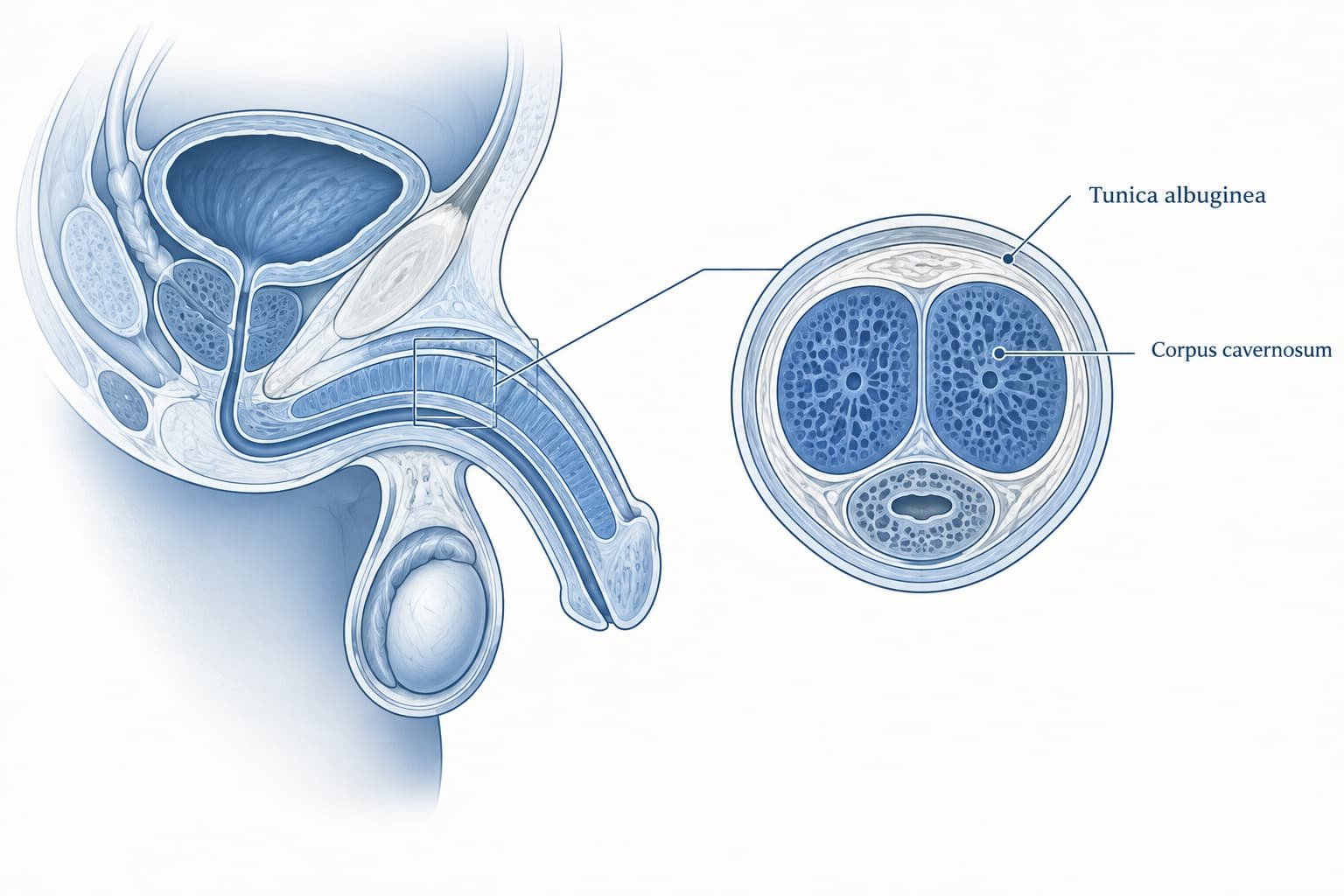
  • P-Shot for Sensitivity vs ED: Does It Work Differently?

    P-Shot for Sensitivity vs ED: Does It Work Differently?

    ✅Medically reviewed | Updated September 2026

    Erectile dysfunction and reduced penile sensitivity often get grouped together in online marketing. Yet the two conditions involve different tissue, different nerves, and different repair processes. Clinics frequently promote the P-Shot as a single solution for both problems. Few explain how platelet-rich plasma actually behaves once injected. This blurring of two distinct clinical pictures leaves many men confused about realistic outcomes. The Priapus Shot, commonly shortened to P-Shot, uses concentrated growth factors drawn from a patient’s own blood. These growth factors encourage tissue repair once injected into targeted areas. Whether that repair mainly targets blood vessels or nerve tissue changes what result a patient should expect.

    This article separates P-Shot for sensitivity from P-Shot for erectile dysfunction. It examines the underlying physiology, the current evidence base, and the practical differences men should understand before booking treatment. Rather than treating both goals as interchangeable marketing terms, the sections below explain where science supports each application. The sections also flag where genuine uncertainty remains. Men researching P shot treatment deserve a clear, evidence-based comparison rather than a single blanket claim.

    Erectile Dysfunction and Reduced Sensitivity Are Separate Conditions

    Erectile dysfunction involves difficulty achieving or maintaining an erection firm enough for intercourse. NHS guidance describes ED as a common condition linked to vascular, hormonal, neurological, and psychological causes. Reduced penile sensitivity describes diminished tactile perception during arousal or intercourse. This can occur independent of erectile rigidity. A man can achieve a full erection while experiencing noticeably reduced sensation. This proves the two represent separate physiological events. Ageing, diabetes, pelvic surgery, prolonged cycling, and certain medications can all reduce sensitivity. None of these need cause ED at the same time. NICE Clinical Knowledge Summaries classify ED largely around vascular and hormonal risk factors. Sensitivity loss more often relates to peripheral nerve function instead. Distinguishing between the two conditions matters. P-Shot for sensitivity targets nerve-rich tissue, while P-Shot treatment for erectile dysfunction targets vascular structures within the corpus cavernosum. Confusing the two goals during consultation risks setting the wrong expectations from the outset.

    Why the Distinction Gets Lost in Marketing

    Many clinic websites list sensitivity and erectile improvement together as generic P-Shot benefits. Few separate the underlying mechanism from the expected outcome. This approach simplifies marketing copy. It leaves patients unable to judge which specific problem the treatment addresses in each individual case.

    What the P-Shot Involves and How It Differs From Filler

    Centrifuge separating platelet-rich plasma during P-Shot preparation
    A centrifuge concentrates growth factors before injection.

    Clinicians prepare the P-Shot by drawing a small blood sample and spinning it in a centrifuge. This process separates platelet-rich plasma from red blood cells. It concentrates growth factors several times above baseline levels. A trained practitioner then delivers the concentrated PRP as a targeted p injection. The injection targets specific zones of the penile shaft and glans. Clinicians and patients should never confuse the P-Shot with cosmetic penile filler. Filler adds volume using hyaluronic acid rather than stimulating biological repair. PRP contains proteins such as platelet-derived growth factor and vascular endothelial growth factor. Both proteins play a role in tissue regeneration and blood vessel formation. Injection placement, and which tissue layer receives it, influences the likely outcome. Treatment can lean toward improving sensitivity, erectile function, or both together.

    P-Shot for Sensitivity: How the Mechanism Differs

    Sensitivity-focused treatment targets nerve-rich tissue.

    P-Shot for sensitivity relies on a different biological pathway compared with P-Shot treatment for erectile dysfunction. Both use identical PRP preparation, yet the target tissue differs. Practitioners aiming to improve sensitivity typically inject PRP into the glans and surrounding dorsal nerve territory. This area carries a dense network of sensory nerve endings. Growth factors released from platelets appear to support peripheral nerve tissue. Evidence supporting this specific application remains limited compared with vascular research. Some patients report heightened tactile sensation and improved arousal response weeks after treatment. Practitioners attribute this to nerve-tissue support rather than improved blood flow alone. This sensitivity-focused approach lacks dedicated, large-scale UK clinical trials. Most supporting evidence comes from small case series or extrapolation from PRP’s effects elsewhere. Peripheral nerve injury research published in orthopaedic and plastic surgery literature offers some of that supporting context. This evidence gap sets the sensitivity-focused approach apart from the larger trial base surrounding PRP and erectile function. Patients should understand this distinction clearly before setting expectations.

    Nerve Tissue and Growth Factor Activity

    Platelet-derived growth factor and nerve growth factor both appear in PRP. Both play documented roles in peripheral nerve repair within general regenerative medicine literature. Applying this mechanism specifically to penile sensory nerves remains an area of clinical interest. It has not yet reached settled scientific consensus.

    Nerve tissue depends heavily on a steady blood supply and intact signalling pathways. Platelet-derived proteins may influence both factors over time. Practitioners monitor tactile response during follow-up review rather than relying on visual inspection alone. Sensation changes are subjective and vary from one patient to the next. Some clinics extend the treatment course to two sessions spaced several months apart. This happens when initial sensitivity changes prove modest. No formal protocol currently governs this practice across UK providers.

    How the P-Shot Works for Erectile Dysfunction

    Vascular illustration representing P-Shot treatment for erectile dysfunction
    Vascular repair, not enlargement, drives improved erectile function.

    P-Shot treatment for erectile dysfunction targets the corpus cavernosum, the paired erectile chambers responsible for penile rigidity. Growth factors from PRP appear to encourage angiogenesis, the formation of new blood vessels. This process also supports repair of existing vascular tissue. Improved blood vessel density inside the erectile chambers may support firmer, longer-lasting erections. Results vary between individuals, and no clinic can guarantee outcomes. Ageing, cardiovascular disease, diabetes, and smoking all damage the microvascular network supplying erectile tissue. PRP aims to address that underlying vascular damage. Oral PDE5 inhibitors instead work by temporarily increasing blood flow.

    The evidence base for PRP and erectile dysfunction remains larger than the evidence base for the sensitivity-focused approach. A randomised controlled trial published in the Journal of Sexual Medicine in 2021 reported improved erectile function scores among men receiving PRP compared with placebo. A separate 2023 trial published in European Urology reported more modest, statistically inconclusive results. This inconsistency means clinicians should present PRP for ED as promising but not definitively proven. Professional bodies classify PRP-based regenerative therapies as emerging rather than established treatments.

    Comparing P-Shot for Sensitivity and P-Shot Treatment for ED

    Injection Site and Technique

    Sensitivity-focused treatment concentrates PRP around the glans and dorsal nerve pathways. ED-focused treatment concentrates PRP within the corpus cavernosum and surrounding vascular tissue. The injection map, not the PRP formulation itself, determines which outcome a patient is more likely to notice.

    Expected Timeline

    Sensitivity changes, when present, tend to emerge gradually over four to eight weeks. Nerve tissue needs this time to respond to growth factor exposure. Erectile function changes may appear within two to three weeks. Fuller results tend to develop over two to three months, as new blood vessels mature and stabilise.

    Strength of Supporting Evidence

    Trial evidence for PRP and erectile function, while mixed, exceeds the evidence available for the sensitivity-focused approach specifically. Sensitivity-related claims rely more heavily on clinical observation and patient-reported outcomes. Controlled trial data for this specific application remains scarce at present.

    Who Might Consider Each Approach

    Candidates for P-Shot for Sensitivity

    Men experiencing reduced tactile sensation after pelvic surgery, prolonged cycling, or ageing-related nerve changes may raise this treatment goal during consultation. Mild peripheral neuropathy is another common trigger for enquiry. Suitability depends on ruling out reversible causes first. Certain medications, alcohol-related nerve effects, and undiagnosed diabetes all need checking beforehand.

    Candidates for P-Shot Treatment for ED

    Men with erectile dysfunction linked to vascular changes sometimes explore this route. Many have tried, or wish to avoid, daily oral medication. Some look for a non-surgical treatment for erectile dysfunction in London instead. Clinicians typically review cardiovascular health, hormone levels, and psychological factors before recommending this option.

    Priapus Shot Price and Typical Treatment Costs

    Priapus shot price in the UK generally ranges between £900 and £1,500 per session. Cost depends on clinic location, practitioner experience, and whether consultation or blood testing sits within the quoted fee. P shot treatment is rarely covered by NHS funding. Both sensitivity-focused and ED-focused PRP applications sit outside routine NHS commissioning. Men researching P shot UK providers should confirm exactly what the quoted priapus shot price includes. Follow-up review appointments, numbing cream, and repeat sessions can all affect the final figure.

    P Shot Before and After: Setting Realistic Expectations

    P shot before and after comparisons circulate widely online. Photographs alone cannot demonstrate changes in sensitivity or erectile rigidity. Photographic evidence captures visible tissue appearance, but says nothing about nerve response or blood flow improvement, the two functional outcomes that matter most. Clinicians recommend judging results through functional assessment and honest patient-reported outcomes. Comparison images sourced online may not represent verified UK cases or match individual anatomy.

    Penile Injection Growth: Addressing a Common Misconception

    Some searches for penile injection growth assume the P-Shot functions primarily as an enlargement procedure. Current evidence does not support this assumption. PRP encourages tissue repair and improved function rather than guaranteed size increase. Responsible clinics present the treatment as a functional therapy, not a growth procedure. Any modest changes in girth some patients report likely relate to improved tissue health rather than genuine enlargement. Clinicians should make this distinction clear during consultation, well before agreeing any p injection.

    Safety Considerations and Treatment Limitations

    PRP-based treatment carries a generally favourable safety profile. Practitioners use the patient’s own blood, which lowers allergic reaction risk considerably. Reported side effects include temporary swelling, bruising, and mild discomfort at the injection site. Men with bleeding disorders, active infection, or certain cancers may not suit this treatment. A thorough medical history remains essential before any session proceeds. Clinicians should never present P-Shot for sensitivity or P-Shot treatment for erectile dysfunction as a guaranteed cure. Individual response varies considerably between patients. NICE guidance on erectile dysfunction management continues to prioritise established first-line treatments. Lifestyle modification and PDE5 inhibitors still come first. Regenerative injectable therapies remain reserved for cases where conventional options prove insufficient or unsuitable.

    What NHS and NICE Guidance Say About Regenerative Injections

    NHS advice on erectile dysfunction directs men toward changes, medication review, and PDE5 inhibitors as first-line management. NICE Clinical Knowledge Summaries do not currently list platelet-rich plasma injections among recommended first-line ED treatments. This reflects the still-developing evidence base. Professional bodies representing sexual medicine specialists publish restorative therapy position statements on this topic. These bodies classify PRP-based approaches as an emerging category rather than a proven standard of care. This classification applies equally to sensitivity-focused applications. Published guidance for that specific goal remains even sparser than for erectile dysfunction. Patients should treat any clinic claim that positions PRP as a guaranteed remedy with appropriate caution. A responsible provider should reference these guideline limitations openly during consultation, rather than glossing over such gaps.

    The Consultation Process Before Treatment

    A thorough consultation should precede any P-Shot session. This applies whether the treatment goal involves sensitivity, erectile function, or both. Clinicians typically review general medical history, current medication, and relevant blood tests first. Screening for diabetes, cardiovascular risk factors, and hormone imbalances helps identify reversible causes. Some of these causes respond better to targeted medical management than to injectable therapy. Men presenting primarily with reduced sensitivity may benefit from nerve conduction assessment. Referral may follow where symptoms suggest a broader neurological cause. This assessment stage protects patients from pursuing PRP treatment unnecessarily. An underlying condition, once properly diagnosed, might resolve symptoms without any injection at all.

    Choosing a Provider for P Shot London Treatment

    Private London consultation room for P shot London treatment
    Provider experience matters more than marketing claims.

    Selecting an experienced provider matters more than marketing claims when considering p shot London options. Reputable clinics conduct thorough medical assessment and explain PRP preparation transparently. Setting realistic expectations for both sensitivity and erectile outcomes matters before treatment begins. Pshots clinic uk, a Harley Street clinic, is one example of a UK provider offering P-Shot treatment within a regulated private medical setting. The clinic operates under Dr Syed Nadeem Abbas. Men comparing priapus shot London clinics should verify practitioner qualifications first. Asking directly about PRP preparation methods helps clarify what a session actually involves. Clarity on which specific outcome, sensitivity or erectile function, the proposed treatment plan targets matters most of all.

    Frequently Asked Questions

    Does P-Shot for sensitivity work the same way as P-Shot for erectile dysfunction?

    No. Both use identical PRP preparation, but injection sites and targeted tissue differ. This produces different physiological effects and different expected timelines.

    How long does the sensitivity-focused approach take to show results?

    Reported changes typically emerge within four to eight weeks. Evidence supporting this specific timeline remains limited and largely observational.

    Is P-Shot treatment available on the NHS?

    No. P-Shot treatment, including sensitivity-focused applications, remains available only through private clinics across the UK.

    What is the average priapus shot price in London?

    Prices generally range between £900 and £1,500 per session. Practitioner experience and included aftercare both affect the final cost.

    Can P-Shot treatment cause penile enlargement?

    No robust evidence supports penile injection growth as a primary outcome. Any size changes reported are typically modest and secondary to tissue repair.

    Can both sensitivity and erectile function be treated in the same session?

    Some practitioners combine injection sites within a single session. This approach still requires individual discussion based on assessment findings.

    Key Takeaways

    P-Shot for sensitivity and P-Shot treatment for erectile dysfunction share a common origin in platelet-rich plasma. The two approaches diverge sharply in technique, evidence strength, and expected outcome. Understanding this distinction allows men to approach consultation with realistic, informed questions. No single injection addresses every concern equally. Sensitivity-focused and ED-focused treatment plans require different injection sites and different timelines. Each also carries a different level of supporting evidence. Clinicians should never promise a single outcome in advance. Given current evidence gaps, particularly around sensitivity-specific outcomes, thorough clinical assessment remains essential before any patient proceeds. As PRP research continues to develop, will larger UK-based trials eventually clarify how much of the P-Shot’s reported benefit comes from nerve repair versus vascular repair?

    Read more:P Shot London for Reduced Sensitivity – Restoring What Age Takes Away

    Breaking the Silence: How the P Shot in London Can Help Men Overcome Erectile Dysfunction

    P Shot Treatment London

    Dr Syed Nadeem Abbas, MBBS, MRCSEd, MSc Aesthetic Plastic Surgery (Distinction) Medical Director, Pshot Clinic | CQC Regulated | Monday to Saturday 10:00–18:00 +44 7955 836986
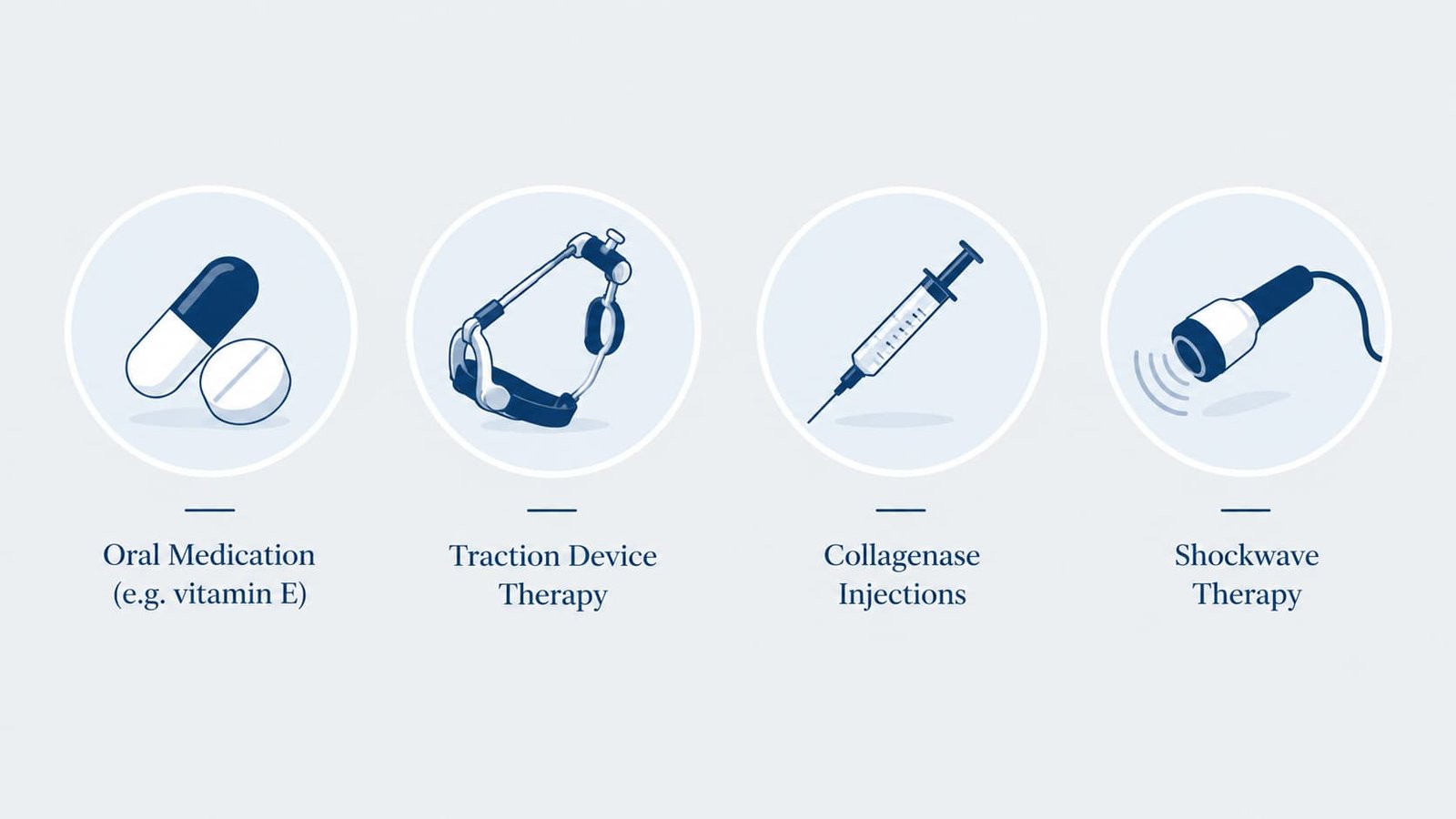
  • Penile Numbness vs Erectile Dysfunction: What’s the Difference?

    Penile Numbness vs Erectile Dysfunction: What’s the Difference?

    ✅Medically reviewed | Updated September 2026

    Penile numbness and erectile dysfunction often arrive together in conversation, yet the two conditions are not the same thing. One concerns feeling. The other concerns function. A man can lose sensation while erections remain firm, or he can maintain full sensation while erections fail entirely. Confusing the two delays proper diagnosis and can push men towards the wrong treatment entirely.

    Sensation and erectile function rely on separate biological systems within the same organ. One depends on nerve signalling. The other depends largely on blood flow. Overlap between the two systems exists, which explains why many men experience both symptoms at once, but overlap does not make the two conditions identical. Treating a nerve-related symptom as though it were a circulatory one, or the reverse, wastes time and delays proper care.

    This article separates reduced sensation from erectile dysfunction, explains the shared and distinct causes behind each, and outlines the evidence-based options available to men in the United Kingdom today. Sources include the NHS, NICE guidance, and peer-reviewed medical literature, so the information reflects current clinical understanding rather than marketing claims. Diagnosis, not assumption, should always guide the next step.

    What Is Penile Numbness?

    The term describes a reduced or absent sense of touch in the penis. Sensation depends on the dorsal nerve, a branch of the pudendal nerve that runs along the shaft. Nerve signals, not blood flow, control this sensation. When those signals weaken or stop reaching the brain, the penis can feel muted, tingly, or completely numb during touch or intercourse.

    Reduced sensation varies in severity. Some men notice muted feeling only during sex. Others report a loss of sensitivity that persists throughout the day, including during ordinary activities such as sitting or walking. Onset can be sudden, following an injury or a long cycling session, or gradual, developing slowly over months or years alongside ageing or an underlying health condition.

    Severity also varies in pattern. Some men describe a patchy loss of feeling across part of the shaft. Others describe a uniform dulling that affects the entire organ equally. A clinician uses this pattern, alongside the speed of onset, to narrow down the likely underlying cause before ordering further tests.

    What Is Erectile Dysfunction?

    The NHS defines erectile dysfunction as a persistent inability to get or keep an erection firm enough for satisfactory sex. Occasional difficulty rarely counts as a medical problem. NICE guidance notes that erectile dysfunction becomes clinically significant when it happens consistently over a period of several weeks or longer.

    Erection quality depends primarily on blood flow into the corpus cavernosum, two cylindrical chambers that run along the length of the penis. Nerve signals still play a role by triggering the vascular response, but the erection itself remains a circulatory event. Erectile dysfunction is fundamentally a blood flow problem, even when nerves are involved.

    Severity ranges widely between patients. Some men experience occasional difficulty maintaining firmness. Others report a complete inability to achieve any erection at all, regardless of stimulation. NICE guidance recommends grading severity during assessment, since mild and severe presentations often respond differently to the same treatment.

    Penile Numbness vs Erectile Dysfunction: The Key Differences

    Sensation vs Function

    Reduced feeling affects what a man notices. Erectile dysfunction affects what the penis physically does. A numb penis can still achieve a full erection through adequate blood flow, and an erection can fail even when sensation remains completely normal. Separating sensation from function is the single most useful distinction a man can make before seeking treatment.

    Different Underlying Mechanisms

    Loss of feeling usually points towards a neurological cause. Nerve compression, nerve damage, or reduced nerve density typically sit behind the symptom. Erectile dysfunction more often points towards a vascular, hormonal, or psychological cause, though neurological damage can contribute to both conditions simultaneously.

    Speed of Onset as a Clue

    Sudden loss of sensation, particularly after an injury, surgery, or cycling session, points strongly towards a mechanical nerve cause. Gradual erectile difficulty developing over months, without any obvious trigger, points more strongly towards vascular narrowing or a hormonal shift. Reviewing timeline alongside symptom type helps a clinician form an early working diagnosis before any tests take place.

    Overlap Between the Two Conditions

    The two symptoms frequently coexist, particularly in older men and men with diabetes. Nerve damage from diabetes can reduce sensation and interfere with the nerve signals that trigger an erection. Ageing reduces nerve density and blood vessel elasticity at the same time, which explains why many men experience both symptoms together rather than in isolation. Recognising this overlap matters, because a single underlying condition, such as diabetes, may require just one course of treatment rather than two separate ones.

    Common Causes of Penile Numbness

    Nerve Compression and Pudendal Neuropathy

    Prolonged pressure on the pudendal nerve reduces sensation over time. Cycling for extended periods on a narrow saddle represents a well-documented cause. Symptoms typically ease once the pressure stops, though persistent cases may require specialist nerve assessment.

    Diabetes and Peripheral Neuropathy

    Diabetes damages small nerve fibres throughout the body, including those supplying the penis. The NHS lists peripheral neuropathy as a recognised diabetes complication. Poor long-term blood sugar control increases the risk of this nerve-related symptom.

    Medication Side Effects

    Certain antidepressants, blood pressure medications, and other prescription drugs list reduced penile sensation as a documented side effect. A GP review of current medication forms a standard first step when numbness develops after starting a new drug. Switching or adjusting a dose sometimes resolves the symptom without any further intervention.

    Ageing and Reduced Nerve Density

    Peripheral nerves lose density and responsiveness with age. This natural decline reduces sensitivity gradually rather than suddenly, and it frequently accompanies other age-related changes in erectile function.

    Psychological Factors

    Chronic stress and anxiety can dampen perceived sensation without any physical nerve damage present. A clinician typically rules out physical causes before considering a psychological explanation for reduced feeling.

    Peyronie’s Disease and Structural Changes

    Peyronie’s disease causes scar tissue to form within the penile shaft, leading to curvature and, in some men, patchy numbness over the affected area. Structural change of this kind requires a specific diagnostic pathway separate from generalised nerve decline, since treatment targets the plaque itself rather than the nerve alone.

    Common Causes of Erectile Dysfunction

    Vascular Causes

    Atherosclerosis narrows the arteries supplying the penis and restricts blood flow during arousal. High blood pressure, high cholesterol, smoking, and obesity all raise the risk of vascular erectile dysfunction. The NHS notes that erectile dysfunction can act as an early warning sign of wider cardiovascular disease.

    Hormonal Causes

    Low testosterone reduces libido and can weaken erectile response. Thyroid dysfunction and other hormonal imbalances contribute less commonly but still warrant blood testing during assessment.

    Psychological Causes

    Performance anxiety, depression, and relationship stress commonly trigger erectile dysfunction in younger men without vascular disease. Psychological erectile dysfunction often develops suddenly and varies depending on the situation or partner.

    Neurological Causes

    Nerve damage from surgery, spinal injury, multiple sclerosis, or diabetes interferes with the signals that trigger the vascular response behind an erection. This category creates the clearest overlap with numbness, since damaged nerves affect both sensation and erectile signalling.

    Lifestyle Risk Factors

    Smoking, excessive alcohol intake, poor sleep, and low physical activity all raise the risk of erectile dysfunction over time. These factors act mainly through vascular damage, though poor sleep quality also disrupts testosterone production. Addressing lifestyle factors early often reduces the severity of later symptoms.

    When Numbness and Erectile Dysfunction Occur Together

    Men reporting both reduced feeling and diminished erectile function require a broader clinical assessment than either symptom alone. A clinician typically checks blood glucose, testosterone levels, blood pressure, and cardiovascular risk factors. Nerve conduction studies may follow if initial results appear normal. Treating one symptom without investigating the other risks missing a shared underlying cause, such as undiagnosed diabetes.

    Diabetic men illustrate this overlap clearly. Elevated blood sugar over several years damages small nerve fibres throughout the body, including those supplying the penis, while simultaneously damaging the blood vessels responsible for erectile blood flow. A man presenting with both symptoms therefore benefits from diabetes screening as a routine part of assessment, even without a prior diagnosis.

    Diagnosing Penile Numbness and Erectile Dysfunction

    Clinical consultation setting for diagnosing penile numbness and erectile dysfunction
    A structured diagnostic pathway distinguishes neurological causes from vascular ones.

    Clinical History and Physical Examination

    A thorough history covers onset, duration, medication use, lifestyle factors, and any recent injury or surgery. Physical examination checks for structural abnormalities, including Peyronie’s disease, which can cause both curvature and reduced sensation.

    Blood Tests and Hormonal Assessment

    Standard blood tests measure testosterone, blood glucose, and cholesterol. These results help distinguish hormonal or vascular causes from purely neurological ones.

    Vascular and Nerve Function Tests

    Doppler ultrasound assesses blood flow into the penis during arousal. Nerve conduction studies measure how efficiently signals travel along the pudendal nerve. NICE guidance recommends a structured diagnostic pathway before starting any treatment for either condition.

    Referral to a Specialist

    A GP typically manages initial assessment and straightforward cases. Complex presentations, including persistent numbness after surgery or erectile dysfunction unresponsive to first-line medication, usually warrant referral to a urologist or a specialist men’s health clinic. Specialist review often includes more detailed vascular imaging and, where appropriate, nerve conduction testing unavailable in general practice.

    Treatment Options for Penile Numbness and Erectile Dysfunction

    Treatment depends entirely on the underlying cause identified during assessment. No single option suits every man, and a proper diagnosis always precedes any procedure.

    Non-Surgical Treatment for Erectile Dysfunction in London

    Private clinics across London offer a range of non-surgical treatment for erectile dysfunction in London, including oral medication, vacuum devices, shockwave therapy, and platelet-rich plasma injections. Each option carries different evidence levels, costs, and suitability criteria, and a qualified clinician should guide the choice.

    The P Shot Treatment Explained

    Private clinic treatment room used for PRP-based P shot procedures in London
    PRP processing takes place in a medical-grade centrifuge before injection.

    The P shot, also known as the Priapus shot, is a PRP-based p injection that some clinicians use for reduced penile sensitivity and mild-to-moderate erectile dysfunction. The procedure draws a small blood sample, concentrates the platelets through centrifugation, and delivers the plasma back into penile tissue through several small injections.

    Growth factors within the plasma may support tissue repair, new blood vessel formation, and, in some cases, nerve regeneration. Penile injection growth from PRP tends to be modest rather than dramatic, and current evidence remains limited to small studies and case series rather than large randomised trials.

    Private clinics such as pshots clinic uk, a Marylebone-based clinic led by Dr Syed Nadeem Abbas, offer P shot treatment alongside other men’s health procedures. Priapus shot price in the UK typically starts from around £1,250 per session, depending on the clinic and whether shockwave therapy accompanies the injection. P shot before and after comparisons circulating online vary considerably in quality, and verified, consented clinical images offer far more reliable evidence than casual social media posts.

    Men researching P shot London or Priapus shot London providers should confirm that any clinic holds appropriate CQC regulation and that a GMC-registered doctor performs the assessment and procedure. P shot UK availability has expanded in recent years, though regulation and quality still vary between providers.

    The Evidence Base for PRP in Sexual Medicine

    A 2019 study published in the Journal of Sexual Medicine found that intracavernosal PRP injections showed promise for men with mild-to-moderate erectile dysfunction. A 2021 systematic review in Sexual Medicine Reviews reached a similarly cautious conclusion, noting encouraging early results alongside a clear need for larger randomised controlled trials. NICE has not yet issued a specific technology appraisal covering PRP for sexual dysfunction, and current guidance treats the approach as an emerging option rather than an established first-line treatment. Patients considering p injection procedures should weigh this evolving evidence base against more established options before deciding.

    Lifestyle and Medical Management

    Improving cardiovascular health through exercise, smoking cessation, and better blood sugar control benefits both erectile function and long-term nerve health. Reviewing medication with a GP can resolve numbness or dysfunction linked to specific drugs without further intervention.

    Realistic Expectations and Limitations

    No treatment for reduced sensation or erectile dysfunction guarantees a specific outcome. PRP-based p injection procedures, including the P shot, show encouraging results in early research, particularly for men with mild-to-moderate symptoms. Severe vascular disease, advanced nerve damage, or untreated diabetes reduce the likelihood of significant improvement from any single intervention. A candid discussion of limitations should precede every treatment decision, and no reputable clinician should promise a cure without a full clinical assessment first.

    When to See a Doctor

    Sudden loss of sensation following an injury, persistent numbness lasting several weeks, or numbness combined with urinary symptoms all warrant prompt medical review. Erectile dysfunction lasting more than a few weeks also justifies a GP appointment, particularly given its established link to cardiovascular disease. Early assessment identifies treatable causes before symptoms become harder to reverse.

    Frequently Asked Questions

    Can penile numbness happen without erectile dysfunction?

    Yes. Sensation and erectile function rely on different mechanisms, so numbness can occur while erections remain completely normal.

    Does erectile dysfunction always involve numbness?

    No. Most cases of erectile dysfunction involve no change in sensation at all, particularly when the cause is vascular or psychological rather than neurological.

    What is the most common cause of reduced penile sensation?

    Nerve compression from prolonged pressure, ageing-related nerve decline, and diabetes rank among the most frequently reported causes.

    Is the P shot suitable for reduced sensation alone?

    Some clinicians offer P shot treatment for reduced sensitivity without accompanying erectile dysfunction, though evidence remains limited and a consultation should confirm suitability first.

    How much does a P shot cost in the UK?

    Priapus shot price varies by clinic and protocol, typically starting from approximately £1,250 per session in private London clinics.

    Should loss of sensation ever be ignored?

    No. Persistent or worsening numbness should always prompt a GP or specialist review, since it can signal an underlying condition requiring separate treatment.

    Key Takeaways

    Penile numbness and erectile dysfunction describe two distinct clinical problems that frequently intersect but never automatically imply one another. Recognising the difference between lost sensation and lost function supports faster, more accurate diagnosis and steers men towards appropriate care rather than guesswork. Evidence-based assessment, not assumption, should guide every treatment decision involving either symptom. Given how closely nerve health and vascular health interact within the same organ, how confident can any man truly be that his numbness or his dysfunction has only one cause?

    Read more:

    P Shot London for Reduced Sensitivity – Restoring What Age Takes Away

    P Shot London – What You Need to Know Before Treatment

    P Shot Treatment London

    Dr Syed Nadeem Abbas, MBBS, MRCSEd, MSc Aesthetic Plastic Surgery (Distinction) Medical Director, Pshot Clinic | CQC Regulated | Monday to Saturday 10:00–18:00 +44 7955 836986 
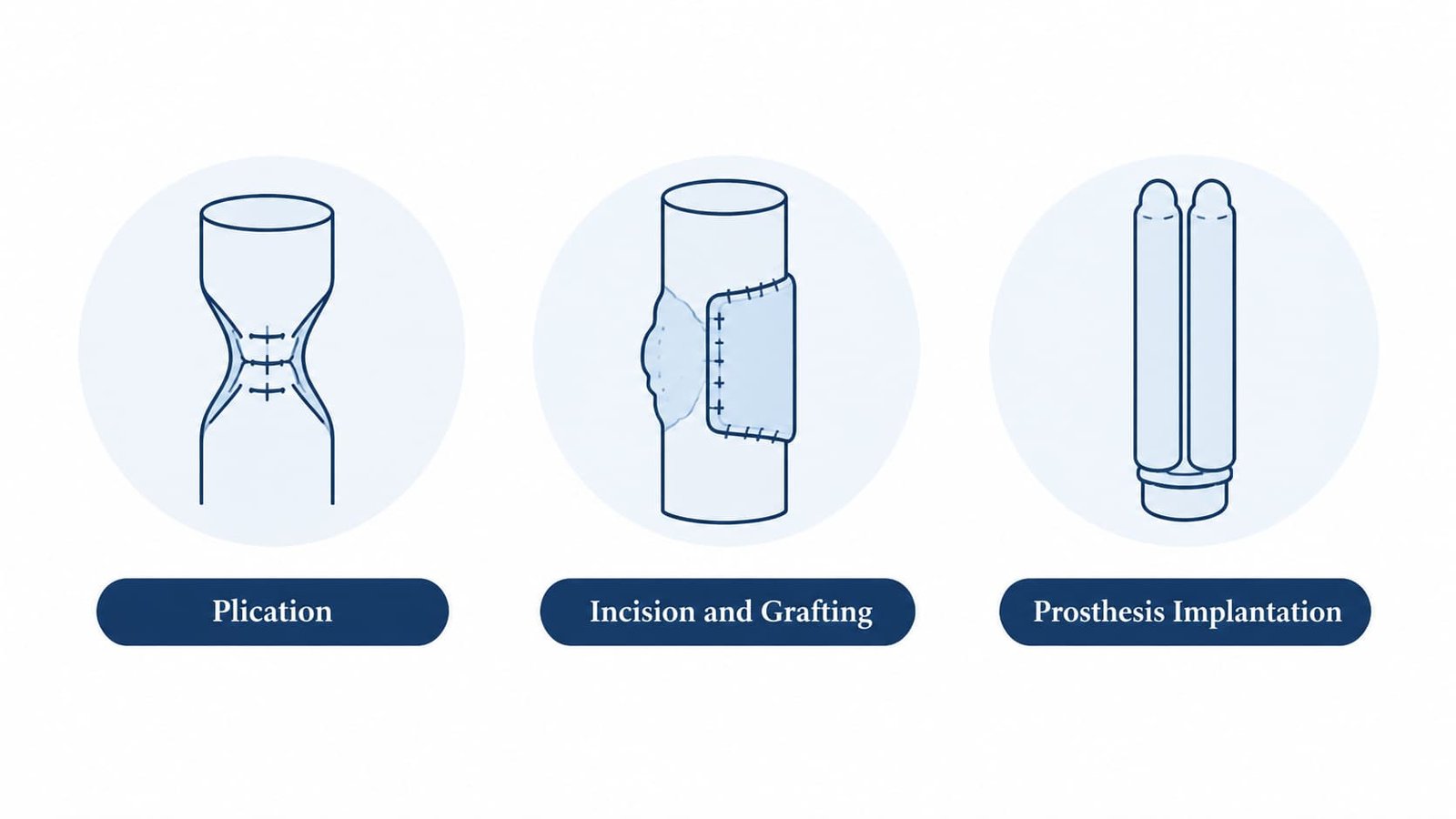
  • Common Questions About Erectile Dysfunction: What Doctors Hear Most Often

    Common Questions About Erectile Dysfunction: What Doctors Hear Most Often

    ✅Medically reviewed | Updated September 2026

    Erectile dysfunction remains one of the most common reasons men book a private consultation. Many men still hesitate to raise the topic openly. Silence around the condition often causes more distress than the condition itself. Doctors across general practice and specialist clinics hear the same recurring questions about erectile dysfunction. These patterns repeat from London teaching hospitals to Harley Street practices. This article addresses the questions about erectile dysfunction that clinicians hear most often. Coverage includes causes, diagnosis, established medical treatments, and newer non-surgical approaches. Information here draws on NHS guidance, NICE clinical knowledge summaries, and peer-reviewed research. Private clinics increasingly supplement NHS pathways for time-pressed patients. Both routes of care share the same underlying clinical evidence base. No single treatment suits every patient, and outcomes vary between individuals. This overview stays evidence-based rather than promotional. Readers can use it to prepare informed questions before a doctor’s appointment.

    Understanding Erectile Dysfunction: The Basics

    What Is Erectile Dysfunction?

    Erectile dysfunction means persistent difficulty achieving or maintaining an erection. The erection must be firm enough for satisfactory sexual activity. Occasional difficulty happens to most men and rarely signals a problem. A pattern lasting three months or more usually needs assessment. NICE clinical knowledge summaries use this three-month threshold as a working definition. A single difficult episode does not amount to a diagnosis.

    Does Erectile Dysfunction Ever Resolve on Its Own?

    Mild, stress-related episodes sometimes resolve without formal treatment. Removing a triggering factor, such as acute stress, can restore normal function. Chronic or worsening symptoms rarely resolve without addressing the underlying cause. Self-resolution should not replace proper medical assessment. Assuming symptoms will disappear alone risks delaying diagnosis of a treatable condition.

    How Common Is Erectile Dysfunction in the UK?

    Erectile dysfunction affects a large share of UK men. NHS estimates suggest around half of men aged 40 to 70 experience some erectile difficulty. Prevalence rises steadily with age. Younger men increasingly report symptoms too, often linked to stress or lifestyle factors. Age alone does not determine risk, since cardiovascular health plays an equally significant role. Rising rates among younger men reflect broader lifestyle and mental health trends.

    What Effect Does Erectile Dysfunction Have on Wellbeing?

    Erectile dysfunction often affects confidence and general wellbeing. Research links the condition to lower self-esteem and relationship strain. Anxiety about performance can worsen symptoms over time, creating a difficult cycle. Addressing the psychological impact matters as much as treating the physical cause. Support from a partner or counsellor often improves overall treatment outcomes.

    Questions About Erectile Dysfunction: Causes and Diagnosis

    What Causes Erectile Dysfunction?

    Diagram of physical and psychological causes of erectile dysfunction
    Erectile dysfunction usually stems from physical, psychological, or combined causes.

    Doctors frequently answer questions about erectile dysfunction causes during consultations. Causes generally fall into physical, psychological, or mixed categories. Most cases involve more than one contributing factor. Identifying the dominant cause guides the treatment plan.

    Physical Causes

    Physical causes include cardiovascular disease, diabetes, and high blood pressure. High cholesterol and neurological conditions also contribute significantly. Low testosterone and previous pelvic surgery increase risk further. Certain medications list erectile dysfunction as a known side effect. Healthy blood flow underpins erectile function, so vascular disease often causes the condition directly. Smoking and obesity compound vascular risk considerably over time.

    Psychological Causes

    Psychological causes include stress, anxiety, and depression. Relationship difficulties often play a contributing role. Performance anxiety alone can trigger a lasting cycle of difficulty. Mixed cases, combining physical and psychological factors, appear often in clinical practice. A thorough history helps separate these overlapping contributing factors.

    Is Erectile Dysfunction a Warning Sign of Other Health Problems?

    Erectile dysfunction sometimes signals an underlying cardiovascular condition. Symptoms can appear before other warning signs develop. Peer-reviewed urology research links erectile dysfunction to raised cardiovascular risk. Doctors often use the symptom as a prompt to check blood pressure and cholesterol. Ignoring persistent symptoms can delay diagnosis of a more serious underlying condition. Early investigation sometimes uncovers previously undetected diabetes or hypertension.

    What Tests Confirm a Diagnosis?

    Diagnosis usually starts with a medical history and physical examination. Blood tests check testosterone, glucose, and cholesterol levels. Doctors may also check blood pressure and perform a genital examination. Specialist vascular assessment follows in select cases only. A GP typically coordinates initial investigation before any specialist referral. Psychological screening sometimes forms part of a full assessment too.

    What Happens During a Specialist Consultation?

    A specialist consultation begins with a detailed medical and sexual history. Clinicians review current medications and existing health conditions carefully. Physical examination checks for signs relevant to erectile function. Blood tests often follow to rule out hormonal or metabolic causes. Clinicians then discuss suitable treatment options based on findings. Follow-up appointments monitor response and adjust the plan as needed.

    Why Do Many Men Delay Seeking Help?

    Stigma remains a major barrier to early treatment. Surveys on male health consistently report reluctance to discuss sexual symptoms. Embarrassment often outweighs concern about underlying health risks. Delay rarely improves outcomes and sometimes allows an underlying condition to progress unchecked. Private clinics offer an alternative route for men uncomfortable with NHS waiting times. Confidential consultation can reduce the barrier that stigma creates.

    Common Questions About Erectile Dysfunction Treatment Options

    Can Erectile Dysfunction Be Treated?

    Erectile dysfunction responds well to treatment in most cases. NICE guidance recommends addressing underlying causes first. Lifestyle changes should accompany any medical treatment plan. Treatment choice depends on cause, severity, and patient preference.

    Oral Medication

    Phosphodiesterase type 5 inhibitors remain first-line treatment for most men. Sildenafil, tadalafil, and vardenafil fall into this drug class. These medications increase blood flow to the penis during arousal. Sildenafil acts within about an hour and lasts several hours. Tadalafil lasts considerably longer, allowing more spontaneous use. Effectiveness varies between individuals, and medication does not suit everyone. Men taking nitrate medication should avoid this drug class entirely. A doctor should review medical history before prescribing any option.

    Lifestyle Modification

    Lifestyle changes support treatment and sometimes resolve mild cases alone. Regular exercise improves circulation and cardiovascular health markedly. Smoking cessation and reduced alcohol intake both help erectile function. Weight management addresses a major modifiable risk factor. NHS guidance treats lifestyle change as a foundation, not a replacement for medical care. Sleep quality also influences hormone levels relevant to erectile function. Dietary patterns rich in vegetables and healthy fats support vascular health.

    Vacuum Devices and Other Mechanical Options

    Vacuum erection devices draw blood into the penis using negative pressure. A constriction ring then maintains the erection during activity. These devices suit men who cannot take oral medication safely. Correct technique matters, so initial guidance from a clinician helps.

    Psychological Support and Counselling

    Sex therapy and cognitive behavioural therapy help men with psychological causes. Couples counselling sometimes addresses relationship factors contributing to symptoms. NHS talking therapies offer a recognised route to psychological support. Combining counselling with medical treatment often improves overall outcomes.

    How Do Doctors Choose Between Treatment Options?

    Doctors weigh cause, severity, and patient preference when recommending treatment. Cardiovascular risk factors influence which medications remain safe to prescribe. Psychological causes often prompt a referral toward counselling alongside medication. Patients unable to tolerate oral medication may explore mechanical or injectable options. A personalised plan generally produces better results than a standardised approach.

    Surgical Options for Persistent Cases

    Penile implants remain an option when other treatments fail repeatedly. Surgery carries recognised risks and requires careful patient selection. NICE guidance reserves this option for refractory cases only. Specialist urological assessment precedes any surgical referral.

    Risks and Side Effects of Common Treatments

    Side Effects of Oral Medication

    Common side effects include headache, flushing, and mild indigestion. Vision changes and nasal congestion occur less frequently. Serious side effects remain rare but require immediate medical attention. Priapism, a prolonged erection lasting several hours, needs emergency care.

    Safety Considerations for Injectable Treatments

    Platelet-rich plasma injections carry a lower allergic reaction risk than external agents. Bruising, swelling, and temporary discomfort commonly occur after injection. Infection risk remains low when a qualified clinician uses sterile technique. Patients should disclose bleeding disorders or blood-thinning medication beforehand. Mild numbness or tenderness can persist for a few days afterward. Clinicians should provide clear aftercare instructions following any injectable procedure.

    Non-Surgical Treatment for Erectile Dysfunction in London

    Clinician preparing P shot treatment for erectile dysfunction in London clinic
    Non-surgical treatments such as the P shot are performed under sterile clinical conditions.

    Private clinics across London increasingly discuss regenerative and injectable options with patients. These approaches sit alongside, rather than replace, established medical treatment. Interest has grown despite a still-developing evidence base. Regulatory oversight for injectable treatments differs from that governing licensed medication.

    What Is the P Shot Treatment?

    The P shot treatment, also called the Priapus shot, uses platelet-rich plasma from a patient’s own blood. Clinicians draw blood, process it, then inject the resulting plasma into penile tissue. Platelet-rich plasma contains growth factors that may support tissue repair. Clinicians classify the P injection procedure as a non-surgical treatment for erectile dysfunction in London and other UK cities. Clinics offering P shot London and Priapus shot London procedures position the treatment as an adjunct, not a cure. Sessions typically take place under local anaesthetic in an outpatient setting.

    Does Penile Injection Growth Have Supporting Evidence?

    Evidence for penile injection growth from platelet-rich plasma remains limited. Small studies report improved erectile function scores in some patients. Sample sizes stay small, and long-term data remain scarce. NICE has not issued specific guidance on this treatment. Claims of guaranteed size or performance gains lack robust scientific backing. Further randomised trials would strengthen confidence in reported outcomes.

    P Shot Before and After: What Realistic Outcomes Look Like

    Patients researching P shot before and after results should treat photographs with caution. Individual response varies considerably between patients. Results depend on baseline health, injection technique, and underlying cause. Marketing images rarely reflect the full range of outcomes. A qualified clinician should discuss realistic expectations before any procedure.

    How Does the P Shot Compare with Other Non-Surgical Options?

    Shockwave therapy represents another non-surgical option under clinical discussion. Shockwave therapy uses acoustic waves to stimulate blood vessel growth. Evidence for shockwave therapy remains similarly preliminary but is growing steadily. Clinicians sometimes combine approaches depending on individual assessment findings. Neither option currently replaces established first-line medical treatment.

    Priapus Shot Price and Access in the UK

    Priapus shot price varies between clinics and depends on sessions required. The P shot UK market includes specialist men’s health clinics and general aesthetic providers. Verifying practitioner qualifications matters before booking any procedure. Dr Syed Nadeem Abbas leads Pshots clinic in London, which offers this procedure alongside conventional erectile dysfunction assessment. Reputable providers should take a full medical history before treatment begins. Consultation beforehand should cover expected outcomes and possible limitations honestly.

    Emerging Research Directions

    Research into regenerative medicine for erectile dysfunction continues to expand. Ongoing trials examine platelet-rich plasma, stem cell therapy, and shockwave protocols. Larger, controlled studies would help clarify long-term safety and effectiveness. Peer-reviewed urology journals regularly publish updates on these developing treatments. Patients should view emerging treatments as promising rather than proven. Established, well-evidenced options remain the appropriate starting point for most men.

    When to See a Doctor

    Persistent difficulty lasting more than a few weeks warrants medical review. Sudden onset, especially in younger men, sometimes indicates a psychological trigger. Erectile dysfunction alongside chest pain or breathlessness needs urgent assessment. Delaying assessment rarely improves outcomes and may hide a serious cause. A GP remains the appropriate first point of contact for most men.

    Common Myths About Erectile Dysfunction

    Several persistent myths surround this condition and its treatment. Erectile dysfunction is not an inevitable consequence of ageing alone. Many older men maintain normal erectile function with good general health. Low testosterone causes only a minority of documented cases. Medication remains effective for many men despite common assumptions otherwise. Non-surgical injectable treatments do not offer guaranteed or permanent results. Erectile dysfunction never indicates a lack of attraction or interest. Effective treatment usually requires addressing the actual underlying cause directly. Accurate information helps counter misleading claims found online.

    Frequently Asked Questions About Erectile Dysfunction

    Can erectile dysfunction improve without treatment?

    Mild cases sometimes improve with lifestyle change alone. Most cases benefit from a structured medical approach.

    Does erectile dysfunction affect fertility?

    Erectile dysfunction does not directly affect sperm production. It can, however, complicate attempts at conception.

    Are P shot results permanent?

    Current evidence does not support claims of permanent results. Effects, where present, typically need maintenance sessions.

    Does diabetes increase the risk of erectile dysfunction?

    Diabetes damages blood vessels and nerves over time. This damage makes erectile dysfunction significantly more common among diabetic men.

    Should men discuss erectile dysfunction with a partner?

    Open communication often reduces anxiety around the condition. Research on sexual health supports this approach for treatment adherence.

    Does the NHS treat erectile dysfunction?

    NHS GPs assess and treat erectile dysfunction as standard practice. Referral to specialist services follows when needed.

    Can young men develop erectile dysfunction?

    Younger men can and do develop erectile dysfunction. Psychological factors and lifestyle habits often play a larger role at younger ages.

    Does NHS treatment cover every erectile dysfunction option?

    NHS coverage depends on the underlying cause and local policy. GPs can advise on eligibility during an initial assessment.

    How soon should erectile dysfunction be assessed after symptoms start?

    Assessment within a few weeks of persistent symptoms is reasonable. Earlier review matters more when cardiovascular symptoms also appear.

    Key Takeaways

    Doctors hear the same core questions about erectile dysfunction repeatedly. The condition remains widespread, treatable, and often misunderstood. Evidence-based care, not internet speculation, offers the clearest path toward improvement. Established treatments carry a strong evidence base already. Newer approaches, including the P shot treatment, need further research before firm conclusions. Private and NHS pathways both offer routes toward effective treatment. Choosing between options depends on individual circumstances and preference. Informed decision-making depends on accurate information and realistic expectations. Open dialogue with a qualified clinician remains essential throughout. Given the range of options now available, which questions about erectile dysfunction deserve closer research attention next?

    Read more: What Are the First Signs of Erectile Dysfunction?

    ED in Younger Men: Causes, Risk Factors and Treatment Options

    P Shot Treatment London

    Dr Syed Nadeem Abbas, MBBS, MRCSEd, MSc Aesthetic Plastic Surgery (Distinction) Medical Director, Pshot Clinic | CQC Regulated | Monday to Saturday 10:00–18:00 +44 7955 836986

  • Drugs Causing Erectile Dysfunction: Which Medications Are Most Likely?

    Drugs Causing Erectile Dysfunction: Which Medications Are Most Likely?

    ✅Medically reviewed | Updated September 2026

    Erectile dysfunction affects a substantial proportion of adult men, and lifestyle, vascular disease, and psychological stress usually dominate the conversation. A medicine cabinet, however, deserves equal scrutiny. Many prescribed and over-the-counter treatments interfere with the hormonal, neurological, or vascular pathways that control an erection. Understanding drugs causing erectile dysfunction helps men and clinicians distinguish a treatable side effect from an unrelated medical problem. Some men change or stop a prescription without medical advice once they suspect a link, which can create new health risks. This article sets out the evidence, explains the mechanisms, and outlines realistic next steps for men who suspect their medication plays a role.

    Understanding Erectile Dysfunction and Its Causes

    Erectile dysfunction means a persistent inability to achieve or maintain an erection sufficient for satisfactory sexual activity. NICE Clinical Knowledge Summaries describe multiple overlapping causes, including vascular disease, diabetes, hormonal imbalance, psychological factors, and certain medications. Erectile function depends on a precise sequence of nerve signals, hormone levels, and blood flow. Any drug that disrupts one of these systems can reduce erectile capacity, even when the underlying reason for prescribing the drug has nothing to do with sexual health.

    Clinicians increasingly recognise that drugs causing erectile dysfunction represent an underreported category of side effect. Men often attribute the problem to stress or ageing, and many hesitate to raise the issue with a prescriber. This under-reporting delays diagnosis and can lead to unnecessary anxiety about unrelated health conditions. NHS guidance encourages men to raise sexual side effects openly during routine medication reviews, since accurate reporting improves prescribing decisions for the whole population, not only for the individual patient.

    Erectile dysfunction also shares risk factors with cardiovascular disease, including smoking, obesity, and high cholesterol. A medication effect rarely acts in isolation. Instead, it typically adds to an existing vascular or hormonal vulnerability, which makes careful assessment essential rather than optional.

    How Medications Interfere With Erectile Function

    pathways by which drugs cause erectile dysfunction diagram
    Medications can disrupt erectile function through vascular, neurological, hormonal, or sedative mechanisms.

    Medications influence erectile function through several distinct mechanisms. Some drugs reduce blood flow to the penis by affecting blood vessel tone or nitric oxide release. Others interfere with the central nervous system pathways that trigger arousal and desire. A further group alters hormone levels, particularly testosterone, which supports both libido and tissue health within the penis. A smaller number of drugs act through sedation or fatigue, which indirectly reduces sexual activity without a direct physical cause.

    These mechanisms often overlap, which makes attributing erectile dysfunction to a single drug difficult. A man taking several medications for blood pressure, mood, and pain may experience a cumulative effect rather than one caused by a single agent. Clinicians therefore review the full medication list, including over-the-counter products and supplements, before assuming any one drug is responsible. Age, existing vascular disease, and psychological state also influence how strongly a given medication affects erectile function in an individual man.

    Which Drug Classes Are Most Linked to Erectile Dysfunction

    Antihypertensive Drugs

    Blood pressure medications remain among the most frequently discussed drugs causing erectile dysfunction. Older non-selective beta-blockers reduce nitric oxide release and constrict blood vessels, which lowers blood flow to erectile tissue. Thiazide diuretics show a similar association in several studies, though the evidence remains mixed for some agents. Centrally acting antihypertensives, such as clonidine and methyldopa, carry a well-documented negative effect on erectile function through their action on the central nervous system.

    Not every blood pressure medication carries the same risk. Angiotensin-converting enzyme inhibitors and angiotensin receptor blockers show a neutral or even positive effect on erectile function in comparative reviews. Calcium channel blockers also appear largely neutral. Newer beta-blockers such as nebivolol may support erectile function through nitric oxide release, unlike older agents in the same class. This variation means a change of brand or generation within the same drug category can sometimes resolve symptoms without compromising blood pressure control.

    Antidepressants

    Selective serotonin reuptake inhibitors, commonly prescribed for depression and anxiety, frequently cause sexual side effects. These include reduced libido, delayed ejaculation, and erectile dysfunction. Raised serotonin levels appear to suppress the hormonal signals that support arousal and erection. Some men experience persistent symptoms after stopping the medication, a condition described in medical literature as post-SSRI sexual dysfunction. Reported rates of sexual side effects with SSRIs vary widely between studies, partly because many trials rely on spontaneous reporting rather than direct questioning.

    Tricyclic antidepressants and certain other antidepressant classes also feature among drugs causing erectile dysfunction, though the strength of association varies between individual agents. Some newer antidepressants carry a comparatively lower reported risk, which clinicians may consider when depression and erectile dysfunction coexist.

    Antipsychotics

    Antipsychotic medications, prescribed for schizophrenia and other psychiatric conditions, commonly affect sexual function. These drugs block dopamine receptors and raise prolactin levels, both of which reduce libido and impair erectile capacity. This mechanism distinguishes antipsychotics from the vascular effects seen with blood pressure medication, and it explains why the sexual side effects can appear early in treatment, sometimes within days of starting the drug.

    Diuretics

    Thiazide diuretics, used widely to manage hypertension, appear in several studies among drugs causing erectile dysfunction. Spironolactone, an aldosterone receptor antagonist, carries an additional antiandrogenic effect that can reduce testosterone activity and worsen erectile function. Men prescribed spironolactone for hypertension or hormonal conditions should discuss this risk with a prescriber, particularly where the drug is used long term.

    Opioid Painkillers

    Opioid analgesics exert a pronounced effect on the hypothalamic-pituitary-gonadal axis. Long-term opioid use suppresses testosterone production, a condition sometimes termed opioid-induced hypogonadism. This hormonal suppression contributes to reduced libido and erectile dysfunction, and the effect appears particularly strong in younger men prescribed opioids for chronic pain. The risk increases with dose and duration of use, which supports regular review of long-term opioid prescriptions.

    5-Alpha Reductase Inhibitors

    Finasteride and dutasteride, prescribed for male pattern hair loss and benign prostatic hyperplasia, reduce the conversion of testosterone into dihydrotestosterone. Clinical trial data show a modest increase in erectile dysfunction risk, with reported rates around one to eight per cent depending on dose and indication. A small number of men report persistent sexual symptoms after stopping the drug, though large population studies have not consistently confirmed a lasting causal link. This category remains one of the more debated entries among drugs causing erectile dysfunction, and further long-term research continues into the mechanism behind persistent symptoms.

    Antiepileptic Drugs and Other Agents

    Certain antiepileptic drugs, lithium, and some non-steroidal anti-inflammatory drugs also appear in the medical literature as contributors to sexual dysfunction. Histamine-2 receptor antagonists, used for acid reflux, have been linked to antiandrogenic effects in some case reports. Chemotherapy agents and hormone therapies used in prostate cancer treatment carry a well-established and expected effect on erectile function, given their deliberate suppression of testosterone as part of cancer treatment.

    Recreational and Non-Prescription Substances

    Alcohol, tobacco, and recreational drugs including cannabis, cocaine, and anabolic steroids also feature among substances linked to erectile dysfunction. Anabolic steroid use suppresses natural testosterone production and can produce long-lasting effects on erectile function even after use stops. Excessive alcohol intake affects both the nervous system and hormone levels, and the effect is often dose-dependent rather than fixed.

    Medications With Neutral or Favourable Effects

    Not all cardiovascular drugs carry a negative reputation. Angiotensin-converting enzyme inhibitors, angiotensin receptor blockers, and calcium channel blockers show neutral or favourable profiles in comparative research. This distinction matters because switching within a drug class, rather than stopping treatment altogether, often resolves the problem without compromising blood pressure control. Clinicians weigh this evidence carefully when a man presents with both hypertension and new erectile difficulty.

    Why Individual Response Varies

    Two men taking the same medication at the same dose can experience entirely different outcomes. Genetic differences in drug metabolism, baseline vascular health, and psychological resilience all shape how strongly a drug affects erectile function. Age plays a further role, since older men typically have less physiological reserve to compensate for a hormonal or vascular disruption. Body weight, kidney function, and liver function also influence how a drug is processed, which affects the dose reaching target tissues.

    This variation explains why population statistics offer only a general guide rather than a personal prediction. A reported side-effect rate of five per cent in a clinical trial does not mean every fifth man will experience the problem; it means some men are considerably more susceptible than others. Clinicians therefore treat published figures as a starting point for discussion rather than a definitive forecast for an individual patient.

    Recognising Medication-Induced Erectile Dysfunction

    Several clues suggest a medication link rather than an unrelated cause. Symptoms that begin shortly after starting a new prescription point toward the drug itself. A close relationship between dosage changes and symptom severity strengthens the likelihood of a drug-related cause. Men who retain normal morning erections but struggle during sexual activity may also be experiencing a medication effect rather than a purely vascular problem, since morning erections rely on a different physiological trigger than those linked to arousal.

    NICE guidance recommends a full medication review as part of the standard assessment for erectile dysfunction. This review sits alongside blood tests for testosterone, glucose, and lipid profile, since drug effects frequently coexist with underlying vascular or hormonal conditions. A timeline of symptom onset, current medication list, and any recent dosage changes gives a GP the clearest picture for assessment.

    What To Do If a Medication May Be Causing Erectile Dysfunction

    GP medication review consultation for erectile dysfunction
    A structured medication review with a GP is the recommended first step before considering further treatment.

    Men should never stop a prescribed medication without medical advice. Abruptly discontinuing blood pressure treatment, antidepressants, or opioid medication carries significant health risks, including rebound hypertension, withdrawal symptoms, or uncontrolled pain. A GP can review the full medication list, consider alternative agents within the same drug class, and adjust dosage where appropriate.

    A structured medication review often resolves the problem without requiring additional treatment. Where switching drugs is not possible or does not fully resolve symptoms, further options exist to address the erectile dysfunction directly. A GP may also arrange blood tests to rule out diabetes, low testosterone, or thyroid dysfunction, since these conditions can present alongside or independently of any drug effect.

    Treatment Options Beyond Medication Review

    When changing or stopping a medication does not resolve erectile dysfunction, several established treatment options may help. The choice depends on the underlying cause, overall health and response to previous treatment.

    Established ED Treatments

    Oral PDE5 inhibitors are commonly used as a first-line treatment for erectile dysfunction. Vacuum erection devices provide a non-drug alternative, while penile injections such as alprostadil may be considered when oral medicines are unsuitable or ineffective.

    Emerging PRP Treatments

    Platelet-rich plasma (PRP) injections, sometimes marketed as the Priapus Shot or P shot treatment, are another non-surgical option offered by some private clinics in the UK. The procedure uses a preparation derived from the patient’s own blood and injects it into penile tissue.

    However, evidence for PRP treatment remains limited. Clinical studies have reported mixed results, and professional organisations consider PRP for ED an emerging treatment rather than an established first-line option. Men considering a P shot London provider should discuss the available evidence, potential benefits and limitations with a qualified clinician.

    Review the Underlying Cause First

    Men whose erectile dysfunction appears to result from medication should prioritise a medical review before considering procedural treatments. A doctor may assess whether the medicine can be changed, reduced or replaced safely. Patients should never stop prescribed medication without medical advice.

    If medication changes do not improve symptoms, a clinician can discuss appropriate alternatives based on the individual’s diagnosis, health and treatment preferences.

    Frequently Asked Questions

    Which medications are most commonly linked to erectile dysfunction?

    Beta-blockers, thiazide diuretics, SSRIs, antipsychotics, opioid painkillers, and 5-alpha reductase inhibitors appear most frequently among drugs causing erectile dysfunction in clinical literature.

    Should a man stop taking a medication that may cause erectile dysfunction?

    No. Stopping a prescribed medication without medical supervision carries risk. A GP can review alternatives safely and adjust treatment where needed.

    Does erectile dysfunction from medication reverse after stopping the drug?

    In many cases, symptoms improve after switching medication or adjusting dosage. Some drug classes, including SSRIs and 5-alpha reductase inhibitors, have been linked to persistent symptoms in a smaller subset of men.

    Can blood pressure medication be changed to avoid erectile dysfunction?

    Yes, in many cases. ACE inhibitors, ARBs, and calcium channel blockers generally carry a lower risk than older beta-blockers and thiazide diuretics.

    Is the P shot treatment a direct fix for medication-induced erectile dysfunction?

    The P shot treatment targets tissue quality and blood vessel growth rather than reversing a specific drug mechanism. It may suit men whose erectile dysfunction persists despite medication review, though evidence remains limited and results vary.

    How is medication-related erectile dysfunction diagnosed?

    A GP reviews the full medication history alongside blood tests and a physical assessment, following NICE Clinical Knowledge Summaries guidance for erectile dysfunction.

    Key Takeaways

    Drugs causing erectile dysfunction span a wide range of drug classes, from blood pressure treatment to antidepressants, opioids, and hormone-altering medication. Recognising this link allows men and clinicians to pursue a structured, safe review rather than assuming an unchangeable or purely psychological cause. Switching within a drug class, adjusting dosage, and addressing underlying vascular or hormonal health often resolve the problem without further intervention. Where erectile dysfunction persists, established pharmacological treatment and emerging non-surgical treatment for erectile dysfunction in London provide further options, each with its own evidence base and limitations.

    Given how many commonly prescribed medications carry this risk, should erectile dysfunction always prompt a medication review before any other investigation begins?

    Read more: What Are the First Signs of Erectile Dysfunction?

    ED in Younger Men: Causes, Risk Factors and Treatment Options

    P Shot Treatment London

    Dr Syed Nadeem Abbas, MBBS, MRCSEd, MSc Aesthetic Plastic Surgery (Distinction) Medical Director, Pshot Clinic | CQC Regulated | Monday to Saturday 10:00–18:00 +44 7955 836986